4 min readJaipurJun 9, 2026 12:30 PM IST
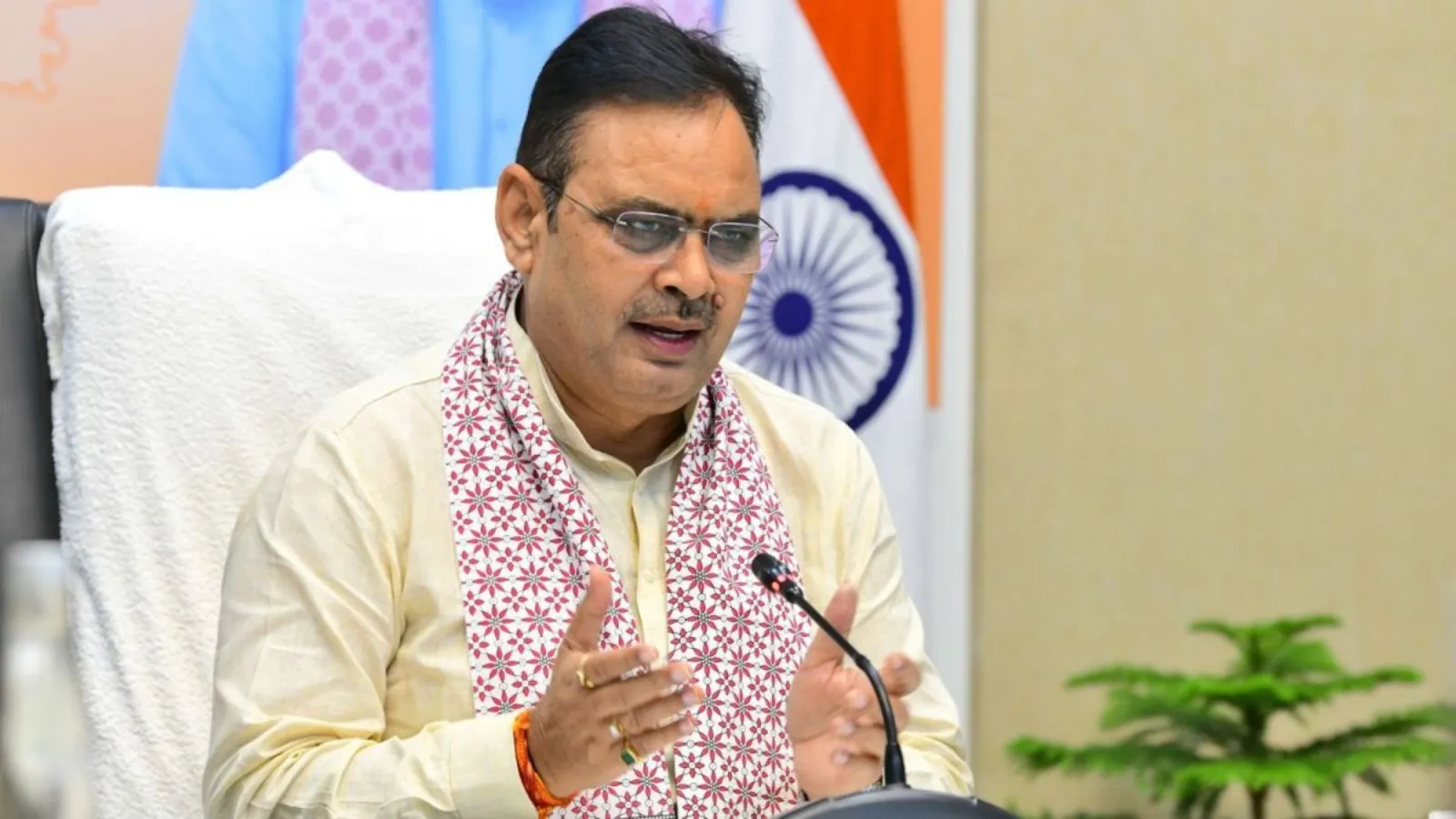
The Congress has likened the Rajasthan Chief Minister Bhajan Lal Sharma government to Mughal ruler Aurangzeb after two temples were shifted as part of an anti-encroachment drive by the Jaipur Development Authority (JDA) on Monday.
Sunil Sharma, president of Jaipur City Congress Committee, said, “We criticise Aurangzeb, saying that he demolished temples. But aren’t these governments doing the same thing? Then you should accept that if he was a Muslim Aurangzeb, then we are Hindu Aurangzeb.”

The Congress leader made the comments following the JDA’s drive in which a Shiv temple and a Bhomiya Ji temple, as well as the Noorani mosque, a mazaar and a satsang bhawan, were removed on Monday.
Sunil Sharma said, “There is a unanimous opinion in the entire state that if elections are held today, then the BJP will lose. Fearing this, BJP has been running away from holding panchayat and local body polls. The High Court has been directing them to hold elections, but the BJP is fearing they will lose. So, a worried CM figured out a way, why not hide behind Noorani masjid.”
“The result was that in the name of road widening, they went after a mosque bought in 1981, so that visuals of it being demolished are watched across the country, and it will be felt that Rajasthan is also following in the footsteps of Yogi (Adityanath, Uttar Pradesh CM),” Sharma alleged.
He claimed that the Muslim representatives “hampered” the government’s plans by readily agreeing to take land in Manoharpura instead. Sharma alleged that this didn’t suit the government’s plans, hence they backtracked and changed the offered land to Kho Nagoriyan, about 8-9 km away. He said that the Muslim representatives again showed “maturity” and agreed to take this land instead, “not wanting to give an issue to the BJP”.
“All in all, the government wanted the visuals of Noorani mosque being demolished to be seen across the country,” Sunil Sharma claimed.
Story continues below this ad
Issue for successive governments
The demolition of temples has been an issue for successive governments in Rajasthan. In April 2022, the Ashok Gehlot-led Congress government faced a massive political backlash after a 300-year-old Shiva temple in Alwar’s Rajgarh was demolished as part of an anti-encroachment drive. Amid the political blame game, the Congress claimed that the decision was passed by the Rajgarh municipal council, which was entirely controlled by the BJP and that it was the earlier BJP government (2013-18) that had promised a “Gaurav path” on the said road.
Between 2012 and 2015, primarily under the tenure of the Vasundhara Raje-led BJP government starting December 2013, 93 religious structures, including temples and some mazaars, were removed or shifted in Jaipur alone. The reasons were varied, from the structures posing “obstruction” to Metro work and transportation, or illegal construction or encroachment on government land.
The demolition of the temples hastened Raje down a collision course with the RSS. While most of the temples were demolished under the district administration’s drive against illegal structures, in line with Supreme Court orders, it was the demolition and relocation of six temples in the Walled City, to make way for Jaipur Metro, that apparently was the tipping point.
In July 2015, the RSS called the Raje government’s attitude “worse than that of Mughal Emperor Aurangzeb” and summoned nine BJP MLAs to its headquarters in Bharati Bhawan in Jaipur, asking them to explain their “inaction” over the demolition. Backing a ‘Mandir Bachao Sangharsh Samiti’, the RSS and its affiliates had also called a two-hour “chakka jam”, among other steps.
Story continues below this ad
Faced with protests, officials in her government claimed that “around 32 temples were demolished during the previous Ashok Gehlot government (2008-13)” and that “he did not demolish any Muslim shrine ever”.