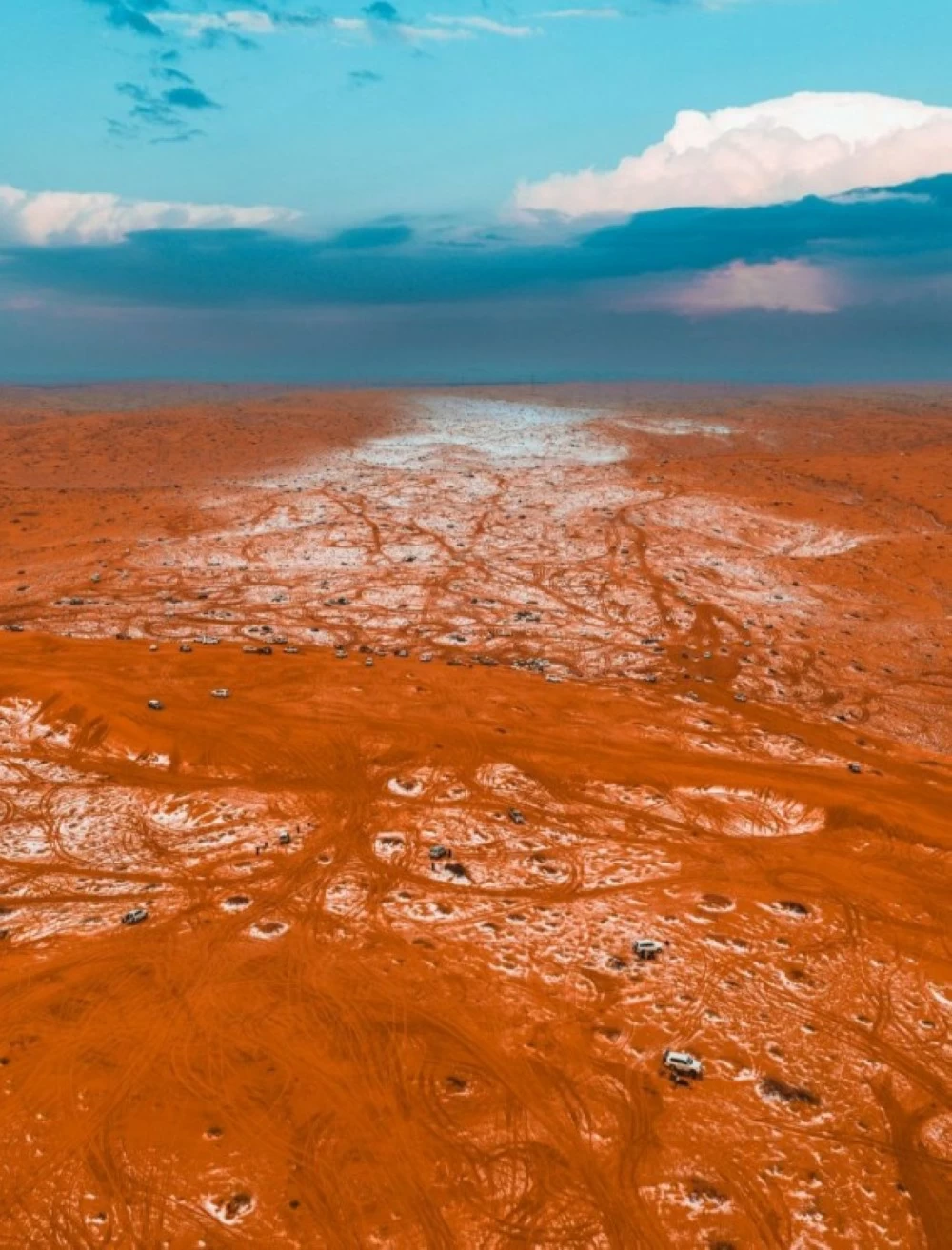

شهدت منطقة حائل اليوم (الثلاثاء) موجة أمطار غزيرة صاحَبَتها طبقات من البَرَد الأبيض، في مشهد أعاد تشكيل ملامح الطبيعة بين السهل والنفوذ والجبل، وفتح فصلاً جديداً من شتاء نجد أمام السكان والزائرين. الأمطار التي شملت المدينة وضواحيها صنعت تحولاً واضحاً في الغطاء النباتي، وظهرت مساحات خضراء واسعة عند سفوح جبال أجا، فيما ازدانت أودية المنطقة بتجمعات الأسر والمتنزهين الباحثين عن لحظة دفء تحت السماء الباردة.
في المشاهد الميدانية، بدت جبال أجا بلونها الصخري العميق تحيط ببساط أخضر تكوّن عقب الأمطار، بينما انتشرت العائلات في فسحات الوادي في مشهد يعكس علاقة سكان المنطقة بطبيعتها وتضاريسها. هذا التحول السريع أعاد للمكان هويته الشتوية التي تشتهر بها حائل كل عام، حيث تُعدّ السهول المحاذية لجبال أجا من أكثر المواقع جذباً في موسم الأمطار.
أما داخل المدينة، فبرز مشهد مختلف مع استمرار الأمطار الرذاذية على طرقات حائل وحدائقها العامة، حيث ظهرت المظلات في أيدي المارة، وبدت الحركة اليومية متكيفة مع الأجواء. وتزامنت الأمطار مع نشاط الجهات الخدمية والبلدية التي كثفت أعمالها لضمان انسيابية الحركة ومتابعة مواقع تجمع المياه.
وفي النفود، شكّل البَرَد الأبيض لوحة غير مألوفة على الرمال الحمراء، بعدما غطت حباته مساحات واسعة، فتحولت الرمال إلى مشهد بصري حادّ التباين بين الأبيض والبرتقالي. عشرات المركبات توافدت إلى تلك المواقع لرصد الحالة الجوية وتصويرها، وهو سلوك معتاد لسكان المنطقة مع كل موجة مطر.
تعكس هذه المشاهد مجتمعة موسماً مطرياً مبكراً، يفتح المجال لعودة الحياة النباتية في أودية حائل وسفوح جبالها، ويعيد للمدينة حضورها الشتوي الذي ارتبط بها في ذاكرة الزوار والسكان.
ومع استمرار الحالة الجوية، تتوقع الجهات المختصة مزيداً من الأمطار على المنطقة خلال الأيام القادمة، ما يجعل من الأسابيع القادمة فترة مثالية للتنزه ومراقبة التحولات الطبيعية المتسارعة.
The Hail region witnessed today (Tuesday) a wave of heavy rain accompanied by layers of white hail, in a scene that reshaped the features of nature between the plain, the dunes, and the mountains, opening a new chapter of winter in Najd for residents and visitors. The rain that covered the city and its suburbs created a noticeable transformation in the vegetation cover, with vast green areas appearing at the foothills of Jabal Aja, while the region’s valleys were adorned with gatherings of families and picnickers seeking a moment of warmth under the cold sky.
In the field scenes, the mountains of Jabal Aja appeared with their deep rocky color surrounding a green carpet formed after the rains, while families spread out in the valley spaces in a scene that reflects the relationship of the region’s residents with their nature and terrain. This rapid transformation restored to the place its winter identity that Hail is famous for every year, as the plains adjacent to Jabal Aja are among the most attractive sites during the rainy season.
Inside the city, a different scene emerged with the continued drizzling rain on the roads and public gardens of Hail, where umbrellas appeared in the hands of passersby, and daily movement seemed to adapt to the weather. The rain coincided with the activity of service and municipal authorities, which intensified their efforts to ensure smooth traffic and monitor water accumulation sites.
In the dunes, the white hail formed an unusual tableau on the red sands, as its pellets covered wide areas, turning the sands into a visually striking scene of sharp contrast between white and orange. Dozens of vehicles flocked to these sites to observe and photograph the weather conditions, a common behavior among the region’s residents with every wave of rain.
These scenes collectively reflect an early rainy season, opening the door for the return of plant life in the valleys of Hail and the foothills of its mountains, and restoring the city’s winter presence that has been associated with it in the memories of visitors and residents.
With the continuation of the weather conditions, the relevant authorities expect more rain in the region over the coming days, making the upcoming weeks an ideal time for picnicking and observing the rapid natural transformations.