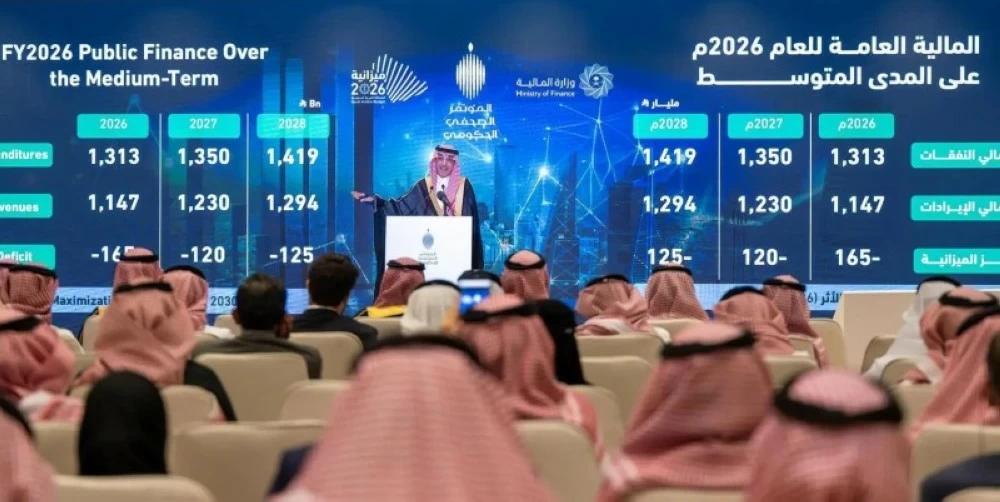

أكّد وزير المالية محمد بن عبدالله الجدعان أن حكومة المملكة مستمرة في الانفاق التوسعي خلال ميزانية 2026، منوهاً بأهمية الاستقرار والتخطيط على المدى المتوسط، مبيناً أن الإنفاق الإجمالي متوقع أن يبلغ تريليوناً و313 في 2026، وسيصل إلى تريليون و419 تقريباً في 2028، كما يتوقع نمو الإيرادات مدعومة بنمو متسارع.
وقال الجدعان خلال المؤتمر الصحفي الذي عُقد أمس، بمناسبة إقرار الميزانية العامة للدولة للعام المالي (1447/ 1448هـ) 2026: «بالرغم من كل الإنفاق على الإستراتيجيات والمشاريع الكبرى إلا أن الحكومة لا تزال تركز على الخدمات الأساسية وتحسينها بما يحسن الخدمات المقدمة للمواطنين ومنها التعليم، والصحة، والخدمات الاجتماعية، والخدمات البلدية لتصل إلى 533 مليار ريال في 2026»، مبيناً أن مرحلة تعظيم الأثر ستبدأ بإذن الله تعالى بداية العام القادم، وستتطلب الكثير من العمل سواء على مستوى الحكومة أو على مستوى القطاع الخاص.
وأوضح وزير المالية أن تصريح ولي العهد رئيس مجلس الوزراء رئيس مجلس الشؤون الاقتصادية والتنمية الأمير محمد بن سلمان بمناسبة إقرار الميزانية، تناول بوضوح ما تم وأُنجز خلال السنوات العشر الماضية في رحلة رؤية المملكة 2030، واهتمام الحكومة بالمواطن، وعن المستقبل والمرحلة الثالثة من مراحل رؤية المملكة 2030.
وتحدث وزير المالية عن ثلاثة عناصر؛ نبذة مختصرة عن رؤية المملكة 2030، ثم عمّا تم في 2025، وأيضاً عن أرقام 2026 بما في ذلك المالية والاقتصادية.
وبين الجدعان أن 93% من مؤشرات الأداء المستهدفة لروية المملكة 2030 تحققت أو تسير ضمن المسار الصحيح، و85% من المبادرات التي أُنجزت أو في المسار الصحيح، مشيراً إلى تحقيق 299 مؤشراً من مؤشرات الرؤية مستهدفاتها قبل 2030.
وتطرق عن المرحلة التالية التي ستبدأ بإذن الله من العام القادم وهي مرحلة تعظيم الأثر والاستعداد لما بعد 2030، متناولاً أرقام ميزانية 2025 التي انتهت بنفقات تقدر بتريليون و336 ملياراً، وإيرادات تقدر تقريباً بتريليون و91 ملياراً وعجز يقدر تقريباً بـ245 ملياراً.
وقال الجدعان: «تحدثت العام الماضي وسأكرر باختصار أن العجز في الميزانية يختلف بحسب استخداماته، فبالنسبة لنا في المملكة العربية السعودية في هذه الفترة المرحلة والسنوات السابقة كان العجز عجزاً إستراتيجياً مستهدفاً، وعجزاً مبنياً على سياسة حكومية قدّرت أن باستطاعة اقتصاد المملكة وقوتها المالية أن تنفق لتحقيق إنجازات، لتحقيق مشاريع، لتحقيق إستراتيجيات حتى لو اضطررنا إلى الاقتراض، الهدف هو أن يكون هذا الاقتراض الـ245 ملياراً يحقق عائداً أعلى من تكلفته، وهذا ما يحصل في المملكة، النمو اليوم في الاقتصاد وبالذات في الاقتصاد غير النفطي متوسطه 5% في آخر أربع خمس سنوات الماضية، وهذا النمو الحالي في أغلب النفقات التي ننفقها الآن سيأتي مردودها بعد سنوات وليس الآن، وبالتالي قد يكون من الجيد أن نستمر وهذا الذي سنستمر عليه بإذن الله في أعوام 2026 و2027 و2028، في زيادة الإنفاق طالما أن العائد على هذا الإنفاق بإذن الله أعلى من تكلفة الاقتراض».
وعرّج على ما ذكره ولي العهد أن الهدف الأساسي هو المواطن والدعم الذي يلقاه المواطن وهذه أمثلة بسيطة جداً من الدعم الاجتماعي المقدم في ميزانية 2025، موضحاً أن ركيزة عمل الحكومة هي المواطن والمواطنة وماذا ينفعهم مباشرة أو ماذا ينفعهم بطريقة غير مباشرة من مشاريع وإستراتيجيات توفر فرص عمل لأبنائنا وبناتنا وتحقق الأمن والاستقرار والسلام والرخاء.
وقال: «التحولات الهيكلية في الاقتصاد التي حدثت منذ انطلاق رؤية المملكة 2030 يصعب تحقيقها عادة في اقتصادات لفترة قصيرة منذ انطلاق الرؤية، سواء في ما يتعلق بالاستثمار الخاص كنسبة من الناتج المحلي الإجمالي أن يتغير بنسبة تقريباً 40% خلال فترة أقل من 8 سنوات منذ انطلاق التنفيذ الفعلي لبرامج الرؤية، من الصعب جداً أن تحرك نسبة الاستثمار الخاص في الناتج المحلي بنسبة 40% في هذه الفترة، لكنها تحققت في المملكة، وتدل على ثقة كبيرة جداً من المستثمرين في الاقتصاد السعودي»، مشيراً إلى أن مساهمة الأنشطة غير النفطية، ملفتة ونموها والمستوى الذي وصلت إليه المملكة تاريخي ببلوغها 55.4% متوقعاً تحقيق مستهدف 2030 بنهاية 2030 أو قبل ذلك.
وأفاد وزير المالية بأن الفائض في الميزان التجاري لقطاع السياحة يستمر بالزخم نفسه وبزيادة، مفيداً أن أرقام منتصف 2025 أعلى من أرقام منتصف 2024، وبالتالي يتحول العجز في الميزانية إلى فائض وهذا إنجاز يصعب تحقيقه في فترة قصيرة.
وتناول زيادة عدد المنشآت متناهية الصغر والصغيرة والمتوسطة في المملكة، التي بلغت تقريباً 500 ألف منشأة قبل عدة سنوات، ووصلت حالياً إلى مليون و700 ألف منشأة حالياً، وهذا يعني توفير مليون و200 ألف فرصة عمل تم إطلاقها وإنشاؤها من خلال رؤية المملكة 2030، مشيراً إلى أن رحلة السنوات الخمس القادمة ستكون بالتركيز على استمرار نمو جميع القطاعات، مستعرضاً القفزات التي حققتها المملكة دولياً في مجال الذكاء الاصطناعي ومجال التقنية بما في ذلك التقنية الحكومية.
وتوقع وزير المالية استمرار تزايد نمو الإيرادات من خلال نمو الاقتصاد، مؤكداً سعي الحكومة في تنمية إيراداتها من خلال تنمية الاقتصاد وتمكين القطاع الخاص، إذا تم تمكين القطاع الخاص والمستثمرين وريادي الأعمال، مفيداً بأن وكالات التصنيف الدولية أكدت نفس توجه حكومة المملكة بالرغم من زيادة الدين والعجز، إلا أن الوكالات إما أن تؤكد تصنيف المملكة أو ترفع التصنيف خلال العام.
كما توقع أنه بنهاية هذا العام 2025 سينمو الناتج المحلي الإجمالي الحقيقي إلى 4.4%، وسيتنامى الناتج المحلي الإجمالي الأسمى ليصل إلى 5.6 تريليون ريال بحلول 2028، مؤكداً استمرار عمل الحكومة في التعامل والحد من التضخم، مفيداً بأن أرقام المملكة الأقل على المستوى الدولي في نسب التضخم.
وأجاب وزير المالية محمد بن عبدالله الجدعان على أسئلة الصحفيين، متناولاً تقييم العجز والعائد في الاقتصادات الوطنية، وأنها لا تقتصر على العائد المالي المباشر، لافتاً الانتباه إلى نمو الإيرادات غير النفطية خلال الأعوام الثلاثة الماضية وهي من العوائد المهمة لكن ليست من العوائد الأساسية، مبيناً أن العوائد الاقتصادية تشمل تهيئة بيئة جاذبة للاستثمار وتوفر فرص عمل للمواطنين والمواطنات، وترفع جودة الحياة، وتعزز جاذبية المملكة للسياح والزوار، ما يسهم في تنشيط القطاعات الاقتصادية المختلفة.
وأفاد بأن العوائد يتحقق بعضها بشكل سريع وبعضها خلال سنوات طويلة، لاسيما في مشاريع البنى التحتية التي قد تمتد إلى سنوات، كالطرق والمطارات والسكك الحديدية، مؤكداً أن بعض المراحل قد تظهر فيها عوائد سلبية مؤقتة نتيجة استيراد المعدات والمواد، إلا أن المكاسب الحقيقية تتجلى على مدى سنوات وعقود لاحقة.
وأكد أن المملكة لم تصل بعد إلى مرحلة الاستدامة الكاملة، لكون الإيرادات الحكومية لا تزال تتأثر بأسعار النفط، مشدداً على أن مستوى الاستدامة على المدى الطويل يأتي مع تحقيق مستهدفات رؤية المملكة 2030.
وأوضح أن النفط عنصر مهم جداً وثروة وطنية كبرى ستستمر لسنوات وعقود قادمة، ويتم استخدامها في بناء اقتصاد متين يحقق إيرادات غير نفطية تغطي أكبر قدر ممكن إن لم يكن الكل من الميزانية، وتستثمر الباقي سواء من إيرادات غير النفطية أو إيرادات نفطية على المدى الطويل للأجيال القادمة.
وتحدث حول مرحلة الاستدامة، وما حققه صندوق الاستثمارات العامة من نمو كبير خلال السنوات الماضية؛ إذ بلغ النمو من 150 ملياراً إلى أكثر من 800 مليار خلال فترة قصيرة جداً، وهو إنجاز كبير، مؤكداً عدم توزيع الصندوق أرباحاً على الحكومة، مبيناً أن الهدف هو الاستثمار طويل المدى للأجيال القادمة، وأن بالإمكان نظرياً تقليل القروض من خلال طلب التوزيعات، لكن هذا لا ينسجم مع هدف الاستدامة.
وحول الإيرادات الضريبية، قال: «جميع الإيرادات الحكومية – باستثناء رسوم الأراضي البيضاء – تودع في حساب الخزينة الموحد بوزارة المالية دون استثناء، ثم تُعاد الإيرادات المخصصة إلى حساباتها المحددة، ضارباً مثلاً بإيرادات الزكاة التي تصل إلى حساب الخزينة ثم تُحوّل لاحقاً إلى حسابات مخصصة مثل الضمان الاجتماعي بوزارة العمل والشؤون الاجتماعية، وتتم تغطية أي فروقات من الحكومة إضافة إلى إيرادات الزكاة، أما إيرادات رسوم الأراضي البيضاء فتُوجه إلى تطوير قطاع الإسكان وتوفير منتجات ودعم للمواطنين والمواطنات».
وفي ما يتعلق بالإنفاق على الصحة والتعليم، أشار إلى أن الإنفاق يفوق 460 مليار ريال في العام القادم، مؤكداً أن ذلك لا يتعارض مع التخصيص، في حين تخصيص منشأة مثل المستشفى، فإن ذلك يعني نقل أصل كان يقدم خدمات مجانية للمواطنين إلى القطاع الخاص، مما يستلزم وضع ميزانية لشراء الخدمة من هذا المستشفى لصالح المواطنين.
وفي سؤال حول هيكلة المشاريع، أكد أنه عند التخطيط لفترة تمتد 15 عاماً يجب أن تكون هناك جاهزية للتفاعل مع جميع المتغيرات خلال تلك المدة، ما يعني إمكانية تقليص مشروع أو زيادة آخر وفق الحاجة والتطورات.
Finance Minister Mohammed bin Abdullah Al-Jadaan confirmed that the Saudi government will continue its expansionary spending during the 2026 budget, highlighting the importance of stability and medium-term planning. He indicated that total spending is expected to reach 1 trillion and 313 billion in 2026, and will rise to approximately 1 trillion and 419 billion by 2028, with revenue growth anticipated to be supported by accelerating growth.
Al-Jadaan stated during the press conference held yesterday, on the occasion of the approval of the state budget for the fiscal year (1447/1448 AH) 2026: “Despite all the spending on strategies and major projects, the government still focuses on basic services and improving them to enhance the services provided to citizens, including education, health, social services, and municipal services, which will reach 533 billion riyals in 2026.” He explained that the phase of maximizing impact will begin, God willing, at the start of next year, and will require a lot of work both at the government level and the private sector level.
The Finance Minister clarified that the statement by Crown Prince, Prime Minister, and Chairman of the Economic and Development Affairs Council, Prince Mohammed bin Salman, regarding the approval of the budget, clearly addressed what has been accomplished over the past ten years in the journey of Vision 2030, the government’s interest in the citizen, and the future and the third phase of the Vision 2030 stages.
He discussed three elements: a brief overview of Vision 2030, what was achieved in 2025, and also the figures for 2026, including financial and economic aspects.
Al-Jadaan indicated that 93% of the targeted performance indicators for Vision 2030 have been achieved or are on the right track, and 85% of the initiatives have been completed or are on the right path, noting that 299 indicators of the vision have achieved their targets before 2030.
He touched on the next phase, which will begin, God willing, next year, which is the phase of maximizing impact and preparing for what comes after 2030, discussing the budget figures for 2025, which ended with expenditures estimated at 1 trillion and 336 billion, revenues estimated at approximately 1 trillion and 91 billion, and a deficit estimated at around 245 billion.
Al-Jadaan said: “I spoke last year and will briefly repeat that the deficit in the budget varies according to its uses. For us in Saudi Arabia during this period and the previous years, the deficit was a targeted strategic deficit, based on a government policy that estimated that the Saudi economy and its financial strength could spend to achieve accomplishments, projects, and strategies even if we had to borrow. The goal is for this borrowing of 245 billion to yield a return higher than its cost, and this is what is happening in the Kingdom. The growth today in the economy, especially in the non-oil economy, averages 5% over the last four to five years. This current growth in most of the expenditures we are making now will yield returns after years, not now, and therefore it may be good to continue, and this is what we will continue to do, God willing, in the years 2026, 2027, and 2028, in increasing spending as long as the return on this spending, God willing, is higher than the cost of borrowing.”
He referred to what the Crown Prince mentioned that the primary goal is the citizen and the support that the citizen receives, providing very simple examples of the social support provided in the 2025 budget, explaining that the cornerstone of the government’s work is the citizen and what benefits them directly or indirectly through projects and strategies that provide job opportunities for our sons and daughters and achieve security, stability, peace, and prosperity.
He said: “The structural transformations in the economy that have occurred since the launch of Vision 2030 are usually difficult to achieve in economies over a short period since the launch of the vision, whether regarding private investment as a percentage of GDP changing by approximately 40% over a period of less than 8 years since the actual implementation of the vision programs began. It is very difficult to move the percentage of private investment in GDP by 40% in this period, but it has been achieved in the Kingdom, indicating a very high level of confidence from investors in the Saudi economy.” He pointed out that the contribution of non-oil activities is remarkable, and its growth and the level reached by the Kingdom is historic, reaching 55.4%, expecting to achieve the 2030 target by the end of 2030 or earlier.
The Finance Minister stated that the surplus in the trade balance for the tourism sector continues with the same momentum and increase, noting that the figures for mid-2025 are higher than those for mid-2024, thus turning the budget deficit into a surplus, which is an achievement that is difficult to realize in a short period.
He discussed the increase in the number of micro, small, and medium enterprises in the Kingdom, which reached approximately 500,000 enterprises a few years ago, and currently stands at 1.7 million enterprises, meaning that 1.2 million job opportunities have been launched and created through Vision 2030, noting that the journey over the next five years will focus on continuing the growth of all sectors, reviewing the leaps the Kingdom has achieved internationally in the field of artificial intelligence and technology, including government technology.
The Finance Minister predicted continued revenue growth through economic growth, affirming the government’s efforts to enhance its revenues by developing the economy and empowering the private sector. He stated that if the private sector, investors, and entrepreneurs are empowered, international rating agencies have confirmed the same direction of the Saudi government, despite the increase in debt and deficit, yet the agencies either confirm the Kingdom’s rating or upgrade it during the year.
He also anticipated that by the end of this year 2025, real GDP will grow to 4.4%, and nominal GDP will reach 5.6 trillion riyals by 2028, affirming the government’s continued efforts to address and limit inflation, noting that the Kingdom’s figures are the lowest internationally in terms of inflation rates.
Finance Minister Mohammed bin Abdullah Al-Jadaan answered journalists’ questions, discussing the assessment of the deficit and return in national economies, which is not limited to direct financial returns, drawing attention to the growth of non-oil revenues over the past three years, which are important returns but not the primary returns, explaining that economic returns include creating an attractive investment environment, providing job opportunities for citizens, and enhancing the quality of life, making the Kingdom more attractive to tourists and visitors, contributing to the activation of various economic sectors.
He stated that some returns are realized quickly while others take many years, especially in infrastructure projects that may extend over years, such as roads, airports, and railways, affirming that some phases may show temporary negative returns due to importing equipment and materials, but the real gains manifest over subsequent years and decades.
He confirmed that the Kingdom has not yet reached the stage of complete sustainability, as government revenues are still affected by oil prices, emphasizing that the level of sustainability in the long term comes with achieving the targets of Vision 2030.
He explained that oil is a very important element and a major national wealth that will continue for years and decades to come, and is used to build a strong economy that achieves non-oil revenues covering as much as possible, if not all, of the budget, and invests the remainder, whether from non-oil revenues or oil revenues in the long term for future generations.
He spoke about the sustainability phase and what the Public Investment Fund has achieved in terms of significant growth over the past years; it grew from 150 billion to over 800 billion in a very short period, which is a major achievement, affirming that the fund does not distribute profits to the government, stating that the goal is long-term investment for future generations, and that theoretically, it is possible to reduce loans by requesting distributions, but this does not align with the sustainability goal.
Regarding tax revenues, he said: “All government revenues – except for white land fees – are deposited in the unified treasury account at the Ministry of Finance without exception, and then the allocated revenues are returned to their designated accounts, citing the example of zakat revenues that reach the treasury account and are later transferred to designated accounts such as social security at the Ministry of Labor and Social Affairs, with any differences covered by the government in addition to zakat revenues. As for the revenues from white land fees, they are directed towards developing the housing sector and providing products and support for citizens.”
Concerning spending on health and education, he pointed out that spending exceeds 460 billion riyals next year, affirming that this does not contradict with privatization; when allocating a facility like a hospital, it means transferring an asset that provided free services to citizens to the private sector, which necessitates budgeting to purchase services from this hospital for the benefit of citizens.
In response to a question about project structuring, he confirmed that when planning for a period extending 15 years, there must be readiness to interact with all variables during that time, meaning the possibility of reducing one project or increasing another according to needs and developments.