4 min readUpdated: Jul 16, 2026 01:22 PM IST
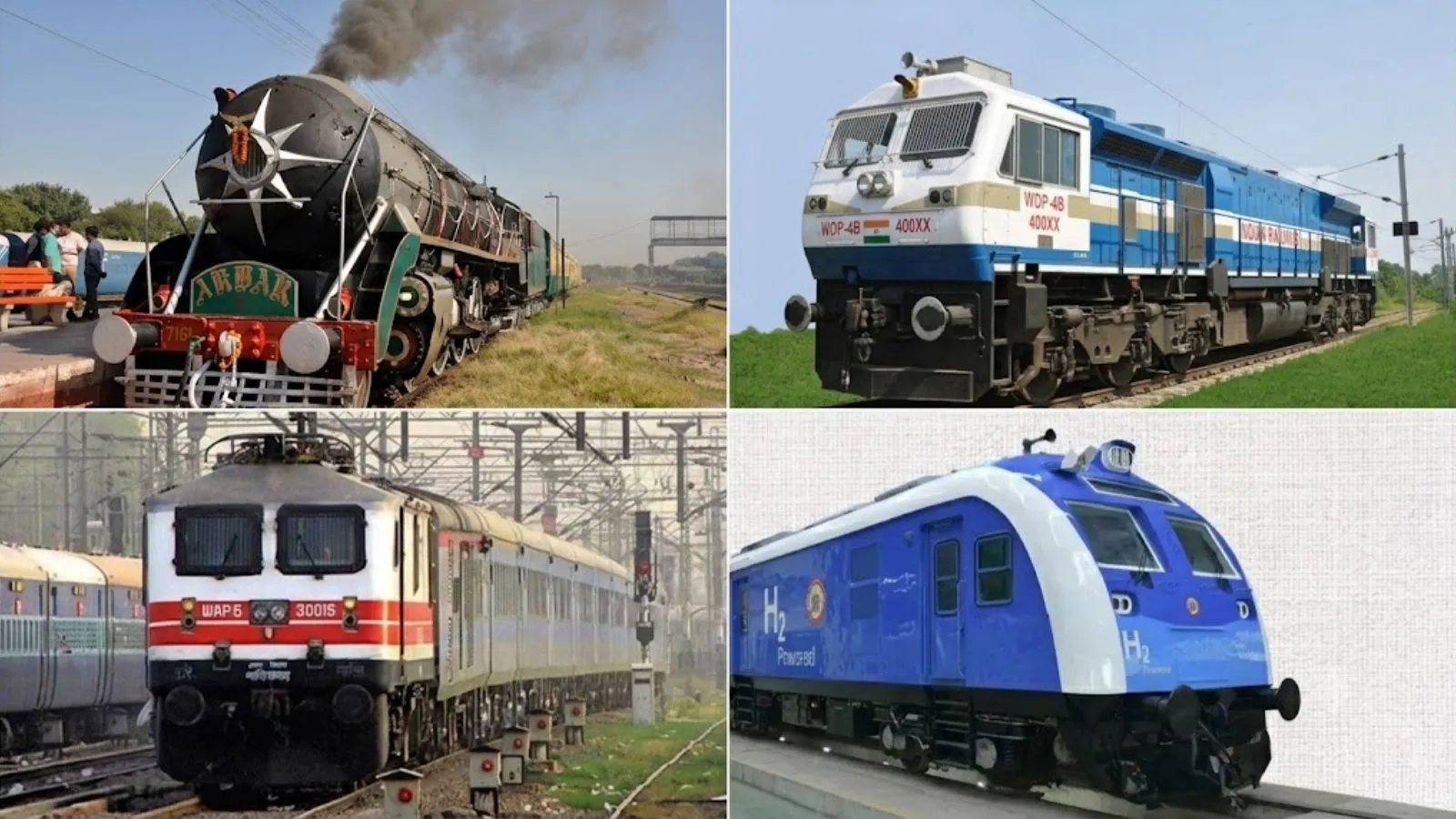
As Indian Railways (IR) prepares to introduce its first hydrogen-powered train on July 17, it marks another milestone in the national transporter’s technological evolution. Over the past 173 years, since the country’s first passenger train ran with a steam locomotive in 1853, the national transporter has undergone a major transformation, from steam to diesel, then electric, and now hydrogen-powered technology.
Transformation of Indian Railways
India’s first passenger train began its commercial journey from Mumbai’s Bori Bunder station (now Chhatrapati Shivaji Maharaj Terminus) on April 16, 1853. At the time, it was operated by the Great Indian Peninsula Railway (GIPR). In 1900, GIPR was merged with the Indian Midland Railway Company. The train completed its journey of approximately 35 km in 57 minutes. The train composed of 14 passenger carriages and was hauled by three steam locomotives: Sultan, Sindh and Sahib.

- Introduction of diesel and electric locomotives
During the 20th century, railway networks around the world began replacing steam locomotives with more efficient forms of traction. In India, the country’s first electric train ran between Bombay Victoria Terminus (now Chhatrapati Shivaji Maharaj Terminus) and Kurla in 1925.
IR entered the diesel era in the late 1950s with the import of its first lot of diesel locomotives from the American Locomotive Company (ALCo), USA.
According to Patiala Locomotive Works (PLW), the expansion of diesel locomotive fleet gained pace after the establishment of the Diesel Locomotive Works (DLW) at Varanasi in 1961. The facility enabled the regular production of diesel locomotives, significantly accelerating the transition from steam to diesel traction.
Beginning in 1985, the Railways gradually phased out steam locomotives, with train operations increasingly shifting to diesel and electric traction, which offered greater efficiency, higher speeds and lower operating costs.
⚡ Plan-wise Electrification Data RKM = Route Kilometre
| Plan Period | Target (RKM) | RKM Electrified | RKM Cumulative |
|---|---|---|---|
| Pre Indep. 1925–47 | — | 388 | 388 |
| 1948–2014 | — | 21,413 | 21,801 |
| 2014–15 | 1,350 | 1,176 | 22,977 |
| 2015–16 | 1,600 | 1,502 | 24,479 |
| 2016–17 | 2,000 | 1,646 | 26,125 |
| 2017–18 | 4,000 | 4,087 | 30,212 |
| 2018–19 | 6,000 | 5,276 | 35,488 |
| 2019–20 | 6,000 | 4,378 | 39,866 |
| 2020–21 | 6,000 | 6,015 | 45,881 |
| 2021–22 | 6,000 | 6,366 | 52,247 |
| 2022–23 | 6,500 | 6,565 | 58,812 |
| 2023–24 | 6,500 | 7,188 | 66,000 |
| 2024–25 | 2,405 | 2,701 | 68,701 |
| 2025–26 | 1,015 | 1,172 | 69,873 |
| 2026–27 Ongoing | 727 | 211 (upto Jun’26) | 70,084 (upto Jun’26) |
India’s cumulative railway electrification has crossed 70,000 RKM as of June 2026 — up from just 388 RKM before Independence in 1947.
Source: Ministry of Railways
It has set a target of becoming a Net Zero Carbon Emitter by 2030. To achieve this, the national transporter is expanding the use of non-fossil energy sources, reducing diesel consumption through large-scale electrification of railway tracks, and exploring clean technologies such as hydrogen-powered trains to further de-carbonise its operations.
Story continues below this ad
“The shift to electric traction has produced measurable benefits for the nation’s energy economy. Railway electrification saved approximately 180 crore litres of diesel in FY 2024-25, reducing the need for crude oil imports,” the Ministry of Railways said.
- Launch of hydrogen-powered train
In 2023, the Ministry of Railways announced ‘Hydrogen for Heritage’ initiative to introduce hydrogen-powered trains on heritage and low-traffic routes. As part of the program, the national transporter awarded a pilot project to retrofit a Hydrogen Fuel Cell on an existing Diesel Electric Multiple Unit (DEMU) rake, along with developing the required hydrogen production, storage and refuelling infrastructure on the Jind-Sonipat section of Northern Railway’s Delhi Division.
Now, a common question that arises is: Why is Indian Railways exploring hydrogen-powered trains after electrifying more than 99 per cent of its broad gauge network?
Speaking to Indianexpress.com, Keshav Chandra, a former Railway Board Member said that Indian Railways is not switching away from electrification. He said that it is a parallel technology initiative that India cannot afford to miss.
Story continues below this ad
“Hydrogen trains are not a replacement for the existing railway network or electric locomotives. India is developing high-speed rail technology with the Mumbai-Ahmedabad bullet train project. Similarly, hydrogen trains represent another emerging technology where India wants to remain involved and not fall behind globally,” he said.
The former Railway Board official added that the lesson is that emerging technologies take time to mature, but countries that invest early benefit when the technology expands.
“The same principle applies to hydrogen trains. The objective is not to replace the entire railway system or convert all route kms into hydrogen-powered tracks. It will initially remain limited to specific routes and applications where the technology makes economic and operational sense,” he said.