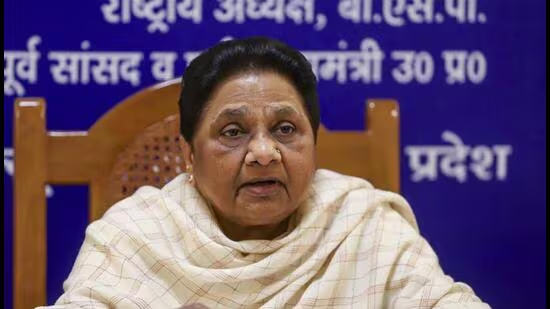
Bahujan Samaj Party national president Mayawati on Wednesday once again ruled out any electoral alliance ahead of the 2027 Uttar Pradesh assembly elections, asserting that her party would contest independently and accusing rival parties and sections of the media of running a “misinformation campaign” to create confusion among voters.
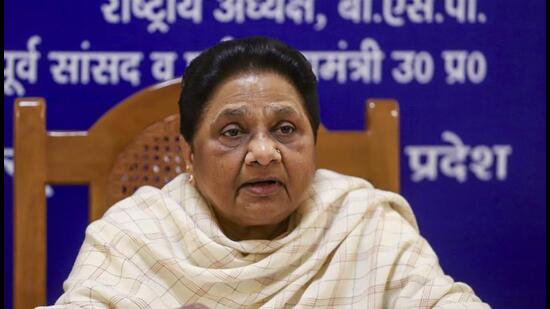
Addressing reporters in Lucknow, the former chief minister said speculation about a possible tie-up with parties such as the Samajwadi Party (SP), Congress, or the Bharatiya Janata Party (BJP) was “completely false” and politically motivated. “There is no question of alliance. The party will contest on its own strength,” she said, reiterating a position she had publicly articulated on October 9, 2025, during a gathering commemorating BSP founder Kanshi Ram.
Mayawati argued that past alliances were driven by the “electoral compulsions” of other parties rather than ideological convergence and had ultimately harmed the BSP’s long-term interests.
Her remarks come against the backdrop of the BSP’s fluctuating electoral strategy over the past decade and a half. The party formed a full majority government in 2007, a landmark victory built on its social engineering formula combining Dalit and Brahmin votes. However, subsequent attempts at coalition politics have yielded mixed results.
In the 2019 Lok Sabha elections, the BSP entered into a high-profile alliance with the SP, a move seen as an effort to consolidate Dalit-Yadav-Muslim votes against the BJP. Though the BSP improved its tally in that election, the alliance unravelled soon after, with Mayawati publicly blaming the SP for failing to ensure adequate vote transfer. Since then, she has maintained distance from pre-poll coalitions.
The BSP also experimented with alliances in earlier electoral cycles, including seat-sharing arrangements with the Congress in Uttar Pradesh and other states, but these failed to produce sustained political gains. In the 2022 Uttar Pradesh assembly elections, the BSP contested alone and suffered one of its worst performances.
Mayawati’s categorical stand also comes amid continued churn within the party’s leadership ranks over recent years. Several senior leaders have exited the BSP since 2017, weakening its regional network. Political analysts say Mayawati’s renewed emphasis on contesting alone may reflect a strategy to consolidate the BSP’s core Dalit vote base rather than depend on unstable caste arithmetic negotiated through alliances.
Framing the road ahead as “Mission 2027,” Mayawati said party workers had been directed to ignore “baseless and fabricated” reports about possible coalitions and focus on grassroots mobilisation. She claimed that as elections approached, attempts would intensify to politically isolate the BSP through “tactics and conspiracies,” a pattern she said had recurred in previous electoral cycles.
Political observers note that the BSP’s vote share, though diminished in recent elections, remains significant enough to influence triangular and quadrangular contests in Uttar Pradesh. A clear refusal to join alliances could complicate opposition arithmetic, particularly for the SP and Congress, which are exploring broader anti-BJP coordination.
Security cover and Delhi bungalow row
In the latter part of her statement, Mayawati addressed the controversy over the allotment of a Type-8 bungalow in Delhi, stating that it was granted strictly on security grounds.
Referring to the June 2, 1995 State Guest House incident in Lucknow—when she was attacked during a political crisis—she said she has been under high security cover since forming her first government in June 1995. The accommodation, she asserted, was consistent with security protocols applicable to a former chief minister and national party president facing persistent threat perceptions.
She dismissed allegations of political favouritism, noting that similar allotments had been made under previous governments at the Centre.