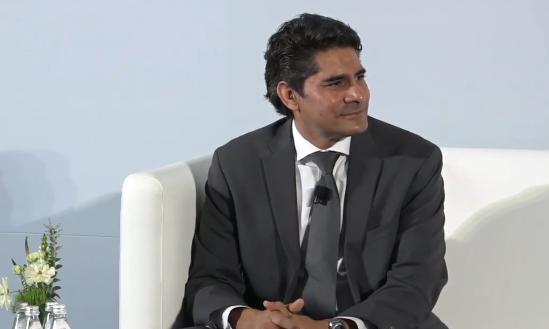

Hyderabad: American Medical Association (AMA) president Dr Bobby Mukkamala on Saturday highlighted the growing burden of high drug costs and inefficiencies in healthcare spending, while calling for stronger global collaboration, preventive care, and ethical medical practice. Dr Mukkamala, a board-certified otolaryngologist, became the first Telugu individual to be elected president of the AMA in June last.
Addressing a gathering of doctors hosted by medical associations here, Dr Mukkamala said the United States spends nearly $5 trillion annually on healthcare, much of it driven by high-priced pharmaceuticals and wasteful expenditure that does not strengthen the patient–physician relationship.
He pointed out that several widely advertised drugs in the US cost over $1,000 a month, with some running into tens of thousands of dollars, contributing to unsustainable healthcare economics.
US Consul General Laura Williams underlined the growing collaboration between the US and India across multiple sectors, including healthcare. She commended the AMA and the Indian Medical Association (IMA) for their shared commitment to improving healthcare access and outcomes for citizens in both countries.
IMA president Dr Dilip Bhanushali said the association was the world’s largest representative body of doctors and served as the collective voice of Indian physicians. AHPI (Association of Healthcare Providers (India) general secretary Dr Giridhar Gyani stressed the importance of accreditation standards, noting that improving quality benchmarks would help India emerge as a preferred global healthcare destination.
Dr Mukkamala also referred to his visits to Indian hospitals and interactions with the IMA and Commonwealth Medical Association, stating that the US could learn from India’s cost-effective care models and focus on prevention.
He said antimicrobial resistance (AMR) was rising in the USA due to the misuse of antibiotics and a growing shortage of trained physicians.
Explaining the reasons, Dr Mukkamala said antibiotics are often prescribed reflexively, either based on incomplete opinions or emerging tools such as artificial intelligence, without adequate clinical judgment. “In many cases, patients with symptoms like sneezing and coughing are put on antibiotics, even though nearly 70 per cent of the time these are viral infections that do not require such treatment,” he said.
He pointed out that the US is facing a shortage of physicians as there are nearly 80,000 which contributes to overburdened healthcare systems and inappropriate antibiotic use. “It is a combination of lack of knowledge and shortage of physicians that is accelerating antimicrobial resistance,” he noted.
Dr Mukkamala said the AMA viewed artificial intelligence as augmented intelligence, meant to support doctors rather than replace them. “AI should enhance our ability to care for patients, but clinical decision-making must remain with trained physicians,” he said, cautioning against over-reliance on technology in prescribing practices.
The head and neck surgeon said nearly 10 per cent of doctors in the US healthcare system were of Indian origin or second-generation Indian Americans, highlighting the importance of cultural and educational backgrounds in global healthcare.
He also called for greater collaboration between the AMA and the Indian Medical Association (IMA), particularly through knowledge exchange on disease management, medical education, and prevention strategies.