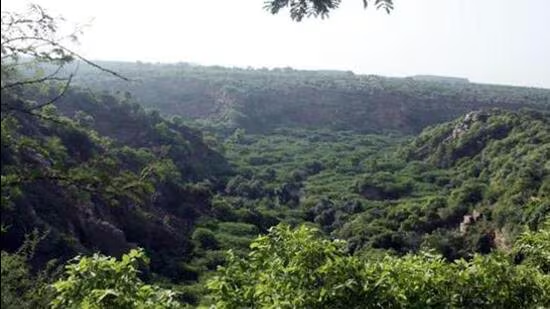
Members of the Aravalli Virasat Jan Abhiyan, a coalition of environmentalists, community leaders, social activists, researchers and concerned citizens, said on Thursday that they will begin a 700-km journey through the Aravallis, spread across four states, on January 24 to protest against the Supreme Court’s November 2025 ruling altering the definition of the Aravalli range.
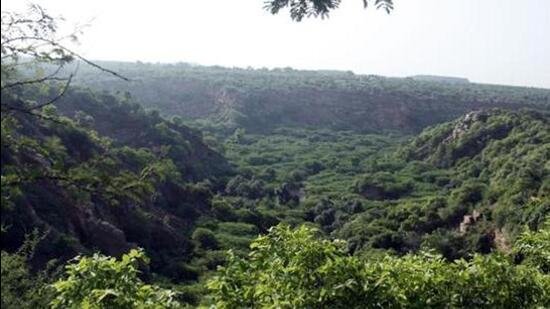
Terming the journey the “Aravalli Virasat Jan Abhiyan”, members said it was aimed at raising awareness about the importance of the range for the country’s ecology by interacting with communities dependent on the hills. Starting from Aravalli district in Gujarat, the congregation will cover three districts in the state before moving through 27 districts in Rajasthan and seven in Haryana, before reaching Delhi.
“Aravallis require strict protection, not senseless definitions to exclude the majority of areas from legal protection and so-called ‘sustainable mining plans’. Our demand is that the Supreme Court recall its November 20, 2025, judgment completely and scrap the regressive new definition of the Aravallis given by a committee spearheaded by the Union environment ministry,” said Neelam Ahluwalia, a member of the coalition, at a press conference in Delhi on Thursday.
On November 20, 2025, the Supreme Court accepted a new definition of the Aravalli Hills and Range based on the recommendations of a Union environment ministry-appointed committee, limiting the classification to landforms rising at least 100 metres above the local relief and clustering within specified distances. Environmental groups criticised the ruling, warning that the criteria could exclude large portions of the ancient range from legal protection and open them up to mining and development, undermining conservation efforts in one of north India’s most ecologically sensitive regions.
Other members raised concerns about the effects the altered definition could have, including damage to ecologically sensitive areas such as wetlands, wildlife habitats and watershed or catchment systems by allowing mining to occur in them, and called for all mining in the region to stop. Water activist Rajendra Singh, also part of the coalition, launched a book on the threats being faced by the Aravallis at the event.
“We want this journey to encourage everyone in the country to join the effort to protect the Aravallis. Additionally, there has been discussion regarding the creation of a barrier to protect the range, but this is not needed, as a natural barrier already exists and should be preserved,” he said, speaking to HT.
“All the different tribal communities living in the lap of the Aravallis rely on the forest for food, fuel, medicinal herbs and raw materials such as bamboo and tendu leaves. Hill slopes provide grazing land, while rain-fed terraces allow cultivation. Seasonal streams and water bodies supply drinking water and support small-scale fishing. The adivasi cultural identity, livelihood and sustenance depend directly on the health of the Aravalli hills, forests and their natural resources,” said Kusum Rawat, a leader of the Adivasi Ekta Parishad from the Bhil tribe.