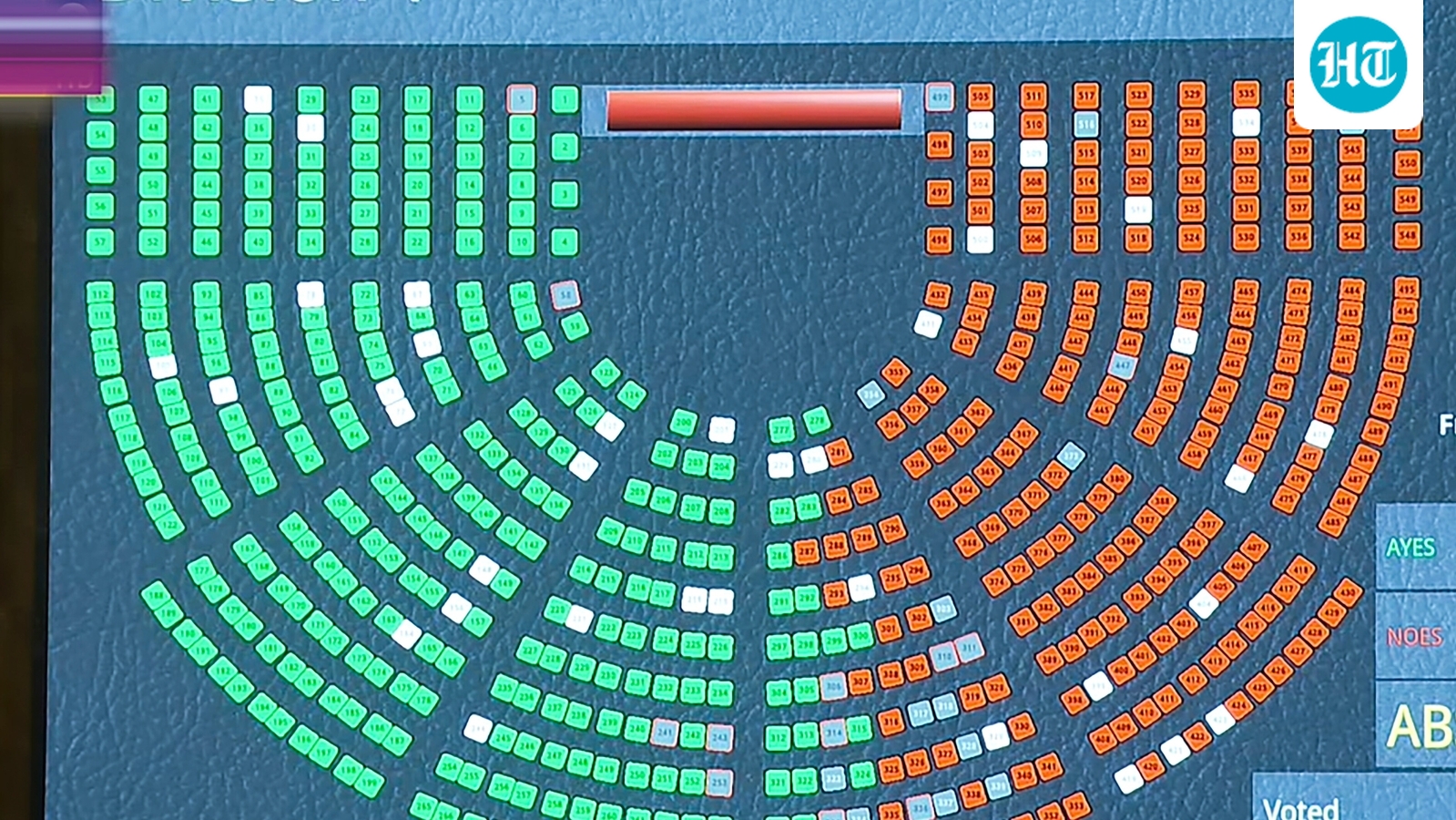
A day after the BJP-led NDA government’s Constitution (131st Amendment) Bill failed the Parliament test — it sought to hasten the implementation of 33% women’s quota in legislatures — Tamil Nadu’s ruling party DMK proposed a private member’s bill instead, delinking the reservation from any change in the total number and boundaries of constituencies.
The DMK bill proposed to implement the 33% reservation from the very next election, on the existing 543-seat Lok Sabha, without any seat-increase, delimitation, or census data new or old.
The bill, by DMK MP Wilson, is any Opposition party’s most direct legislative response so far to the BJP’s charge that rival parties blocked women’s reservation altogether.
But both Houses were adjourned indefinitely on Friday, hence the bill could not be taken up for now.
Delimitation question
The women’s quota was originally passed with almost all-party support in 2023; the question now was over a “hasty” delimitation being proposed based on the old, 2011 Census data, without addressing larger questions of regional distribution of seats and caste sub-quotas, Opposition leaders have pointed out.
The DMK bill proposed to amend the Constitution to make the 2023 women’s reservation operative immediately.
That would be in the Lok Sabha, state assemblies, and the union territory assemblies of Delhi, Puducherry and Jammu and Kashmir, without increasing the total number of seats and without waiting for a census or delimitation.
Unlike the government’s Nari Shakti Vandan Adhiniyam of 2023, which limited reservation to 15 years, the DMK bill also seeks to make the reservation permanent.
The DMK served a notice to the chairman of the Rajya Sabha under Rule 267, requesting suspension of the day’s business to facilitate an immediate discussion on women’s reservation without delimitation or census.
On April 17, PM Narendra Modi-led central government’s Constitution Amendment Bill on women’s quota failed in the Lok Sabha — votes went 298-230 in favour of the government, but not the required two-third majority — as the Opposition, including the DMK, argued against linking the quota to increase and redrawing of seats, that too on older data.
What counter-offer means
The DMK move sharpens the political confrontation that has defined the three-day special session.
The government introduced three bills bundling a tweak to women’s reservation with a sweeping delimitation exercise based on the 2011 census and an expansion of the House to 816 seats for now, and a maximum of 850 as per the bills.
After the Opposition voted these down, the BJP’s response was to accuse the Congress, TMC, DMK and Samajwadi Party of betraying 700 million women.
Both TMC and DMK are regional parties, in West Bengal and Tamil Nadu respectively, fighting the BJP in elections being held this month,.
Throughout the session, Opposition leaders argued that reservation could be implemented on the existing 543 seats without any of the contested provisions.
Congress’s KC Venugopal said in the Lok Sabha, “You (government) only made the provision that there shall be a census, followed by a delimitation, then the reservation will happen. We never said that.”
Leader of Opposition Rahul Gandhi said the Opposition would support the original 2023 women’s bill “100%” if the government brought it back without the delimitation link.
The government has not yet responded to the DMK bill. It has argued in the past that expanding the House altogether would protect current political leaders’ interests while also providing more space for women.
A Union cabinet meeting to be chaired by PM Modi is also scheduled for Saturday.
Why DMK, and the larger issues
But there are also larger questions about delimitation, which is constitutionally mandated to anyway follow any latest census after 2026.
These questions are about whether population alone can be basis for redrawing the electoral map. That could “punish” southern states as they have managed to control their population while the North, where th BJP is stronger, has not. This has been DMK’s contention for years now.
There is also the issue of possible reservations to OBCs once caste data is available as part of the ongoing census set to be completed in two years.