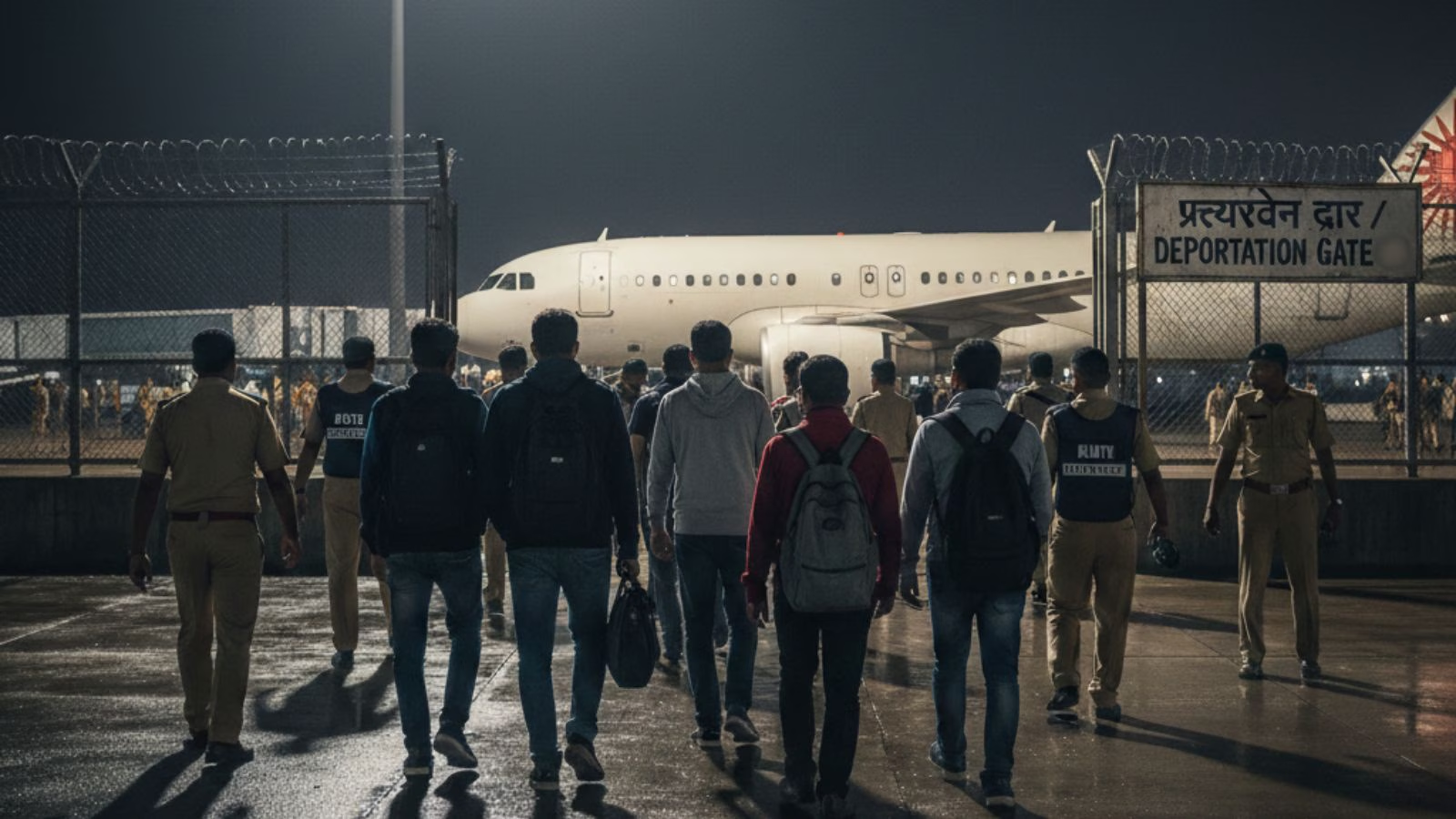
To prevent prolonged stays of foreign nationals due to legal delays, the Centre is learnt to have asked all law enforcement agencies to expedite the deportation of foreigners booked in drug cases by enabling the withdrawal of prosecution in suitable cases.
Following the directions of the Union Ministry of Home Affairs (MHA) and the Narcotics Control Bureau (NCB), police across states have started compiling lists of such individuals and submitting applications to withdraw cases.
The fresh directive was issued recently, two months after the MHA issued guidelines directing law enforcement agencies to deport those convicted of petty offences immediately upon completing their sentences or paying fines. If a fine remains unpaid, the individual should be deported and blacklisted according to MHA’s prevailing guidelines, sources told The Indian Express.
Immigration and Foreigners Act
According to the communication sent by Sanjeev Kumar Yadav, Deputy Commissioner of Police (Anti Narcotics Task Force of Crime Branch), on February 5 to all DCPs in the Delhi Police, the Immigration and Foreigners Act, 2025, which came into force from September 1, 2025, can be an effective tool to deal with such foreign offenders.
“It also provides for compounding certain offences committed under this Act, before or during trial by the notified officers, so that it becomes possible to deport a foreigner found without a valid passport or visa, instead of engaging in long drawn-out prosecution proceedings. It would be appropriate to mention here that district SP/DCP have been notified as Registration officer in pursuance of clause (r) of Section 2 of the Act to exercise power under the Act within their districts,” Yadav said.
“…As many accused are ongoing trial proceeding to prolong their stay in India and using jails to form drug trafficking networks, MHA has issued a standard operating procedure (SOP) on withdrawal from prosecution in cases filed against foreign nationals to facilitate their deportation, to address the issue, the States can make use of SOP for initiating appropriate action for withdrawal of prosecution against foreign drug offenders in appropriate cases for the purpose of their early deportation,” he said.
Story continues below this ad
A source said all the officers in the Delhi Police have been asked to look for low-quantity drug peddling cases.
Tracking foreign nationals
The Narcotics Control Bureau (NCB) said in its annual report that 660 foreign nationals were arrested across India on charges of drug trafficking in 2024, with Nepalese (203), Nigerians (106), Myanmarese (25), Bangladeshis (18), Ivorians (14) and Ghanaians (13), topping the list.
The directive communicated by MHA to additional chief secretaries (Home), DGPs, and principal secretaries of all states and Union Territories specifies that offences punishable by nominal fines or short imprisonment terms warrant swift deportation to the native country, a source said.
The move addresses multiple references received by MHA’s Foreigners Division regarding visa approvals for foreign nationals entangled in criminal proceedings. These include individuals released on bail whose presence is required for court appearances, or cases in which applications under Section 360 of the Bharatiya Nagarik Suraksha Sanhita (BNSS), pertaining to withdrawal from prosecution, have been filed.
Story continues below this ad
A Standard Operating Procedure (SOP), was issued in connection with the foreign nationals against whom an offence has been registered and he would be required in India during investigation, trial or till the consent of the trial court concerned is obtained for withdrawal from prosecution under Section 360 of BNSS. “A foreign national may require a visa for their stay in the country…and it is also necessary to keep a record of such foreign nationals and track their movements,” an official said.
This SOP also covers all such cases where the foreign national is on bail and the case is under trial, cases where the investigation of the registered case of a serious offences is on against the foreigner for their involvement, those where an application has been filed for withdrawal from prosecution, where the prosecuting agency has filed appeal against the orders of trial/acquittal court, and cases where the Supreme Court, High Court o the trial court, specifically orders for grant of visa to the foreign nationals to stay in India for completing of legal proceedings.
“At the time of being charge-sheeted or prosecuted, if the foreign national is holding any type of valid visa, the same will be cancelled by the FRRO concerned with immediate effect,” it said.
According to the NCRB report, released last year, 6,956 foreign national inmates, including 5,570 men, 1,364 women, and 22 transgenders, were confined in various Indian jails at the end of 2023. “Out of the 6,956 foreign national prisoners, 1,499 were convicts, 5,167 were undertrials and 25 were detenues. West Bengal reported the highest number of inmates (2,508), followed by Maharashtra (773), Delhi (751) and Uttar Pradesh (481), accounting for 36.1 per cent, 11.1 per cent, 10.8 per cent and 6.9 per cent of the total inmates,” the report said.