5 min readNew DelhiFeb 23, 2026 05:55 AM IST
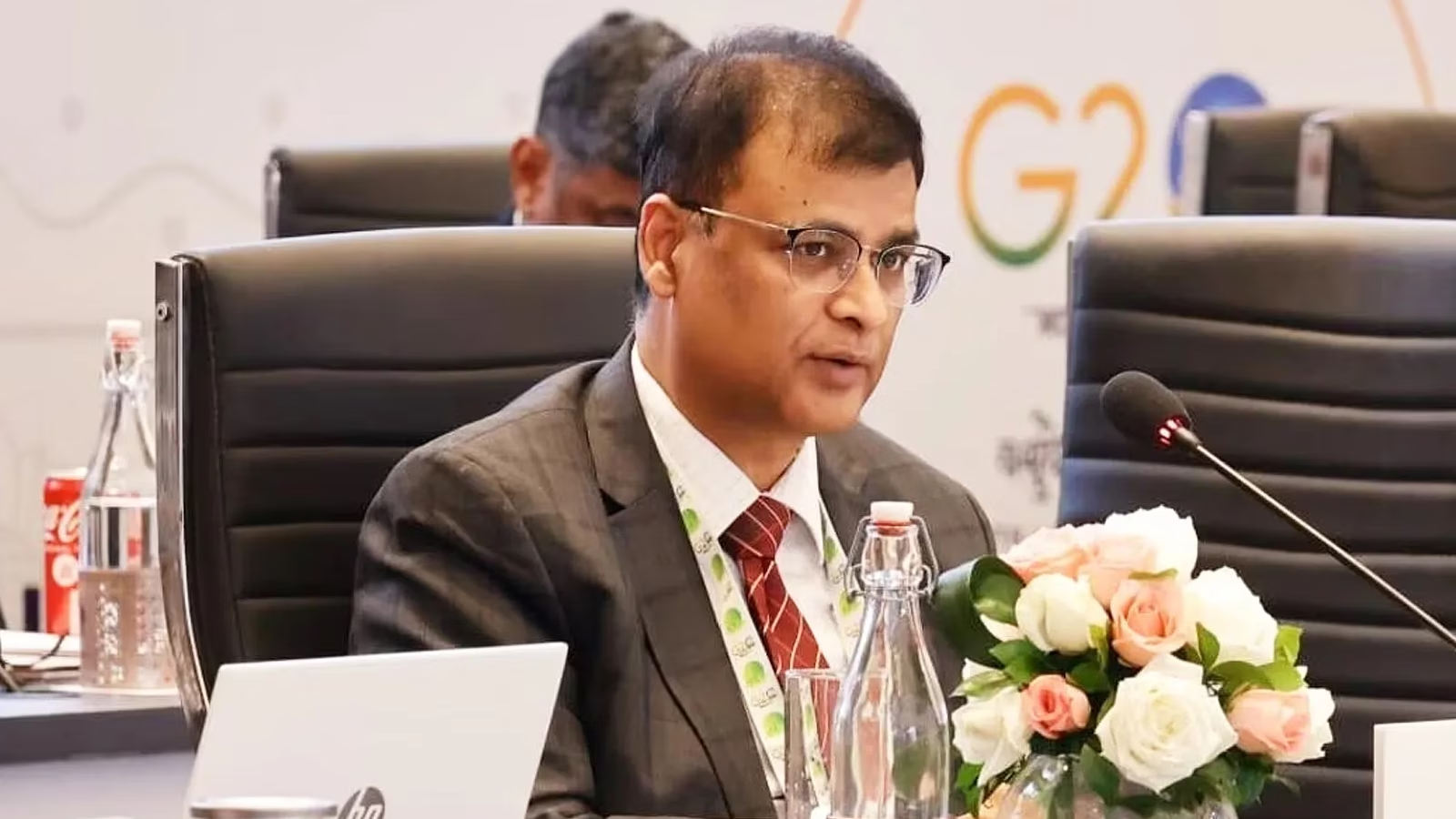
With courts repeatedly flagging “arbitrary summons” by the Enforcement Directorate (ED) and occasionally underlining that it must desist from “roving enquiries”, agency chief Rahul Navin is said to have emphasised “judicious” use of summons at the agency’s quarterly conference in Guwahati. The conference, which concluded on Sunday, also stressed upon conclusion of “long-pending investigations” and reducing “the lifecycle of new investigations to … one to two years”.
ARTICLE CONTINUES BELOW VIDEO
“The conference … emphasised that with significant statutory powers available under the PMLA comes a corresponding responsibility to exercise them with caution, fairness and accountability. It was advised that officers must remain mindful of the impact of enforcement actions and ensure that summons and other statutory notices are issued judiciously, based on clear necessity and proper application of mind,” the ED said in a statement.

In June 2025, the ED faced flak for issuing summons to Senior Advocates Arvind Datar and Pratap Venugopal concerning legal advice provided to a client in a money laundering probe. In a significant ruling on October 31, 2025, the Supreme Court issued binding directives to curb the arbitrary summoning of advocates by agencies protecting client-lawyer privilege.
The court had slammed the ED move, stating it “infringed the fundamental rights” of the lawyers and threatened the independence of the Bar. Following this backlash, the ED had issued an internal circular which now prohibits field officers from summoning advocates without permission from ED Director.
The conference is learnt to have also taken up the criticism of “roving enquiries”. The Director is learnt to have emphasised if cases were probed in a timebound manner and taken to logical conclusion, such criticism could be avoided.
“Emphasis was laid on expediting pending investigations, filing of prosecution complaints in appropriate cases, and strengthening follow-up in matters of confirmation, possession, and restitution of attached properties,” the ED statement on the conference said.
The Indian Express had reported earlier that the ED chief had directed the officers to fast-track probe and ensure 500 prosecution complaints were filed this financial year. In the Guwahati conference, it was decided to enhance this target.
Story continues below this ad
“The need for this enhanced target is to proactively conclude long-pending investigations and to systematically reduce the lifecycle of new investigations to a reasonable timeframe of one to two years, except in exceptionally complex cases. Zones were advised to identify mature cases fit for filing of final prosecution complaints and to minimise avoidable delays,” the ED statement said.
The ED has in the past faced criticism for its “never-ending” probes and cases that do not reach logical conclusion for years. Given stringent bail conditions under PMLA, this often leads to accused being incarcerated for several years without trial. Also, ED’s attachment proceedings lead to considerable financial strain on the accused.
A key theme of the conference was data integrity and consolidation, officials said. The discussions underscored the need for accurate, reconciled, and real-time data entry on the ED’s internal case management system, they said. Zonal heads were directed to ensure statistics relating to ECIRs, attachments, prosecution complaints, confirmations, and penalties are internally reconciled before the close of the financial year, so that the Directorate’s annual performance reflects credible and verifiable figures. “The importance of identifying significant new cases was also emphasised to ensure that the Directorate remains responsive to evolving patterns of economic crime,” an ED spokesperson said.
When courts pulled up the agency
- In 2023-24, in a significant federal-state standoff, the ED summoned five District Collectors in connection with the alleged illegal sand mining in Tamil Nadu. The Madras High Court initially stayed the summons, labelling them a “fishing expedition”. However, the Supreme Court later directed the Collectors to appear, emphasising that official summons must be respected.
- Through 2024-25, former Delhi CM Arvind Kejriwal repeatedly challenged ED summons as “illegal” and “politically motivated”. In January 2026, a Delhi court acquitted him in cases related to non-compliance with these summons, though this did not adjudicate the merits of the broader probe.
- In August 2024, the SC held that the ED cannot force an accused already in custody to make self-incriminating statements in a separate case, protecting the fundamental ‘right to silence’.
- In December 2025, the Delhi HC set aside non-bailable warrants issued against businessman Sachin Dev Duggal after he failed to comply with summons. The court ruled that warrants cannot be issued “mechanically” for mere non-compliance if the person is being summoned only as a witness and is not yet a formal accused.