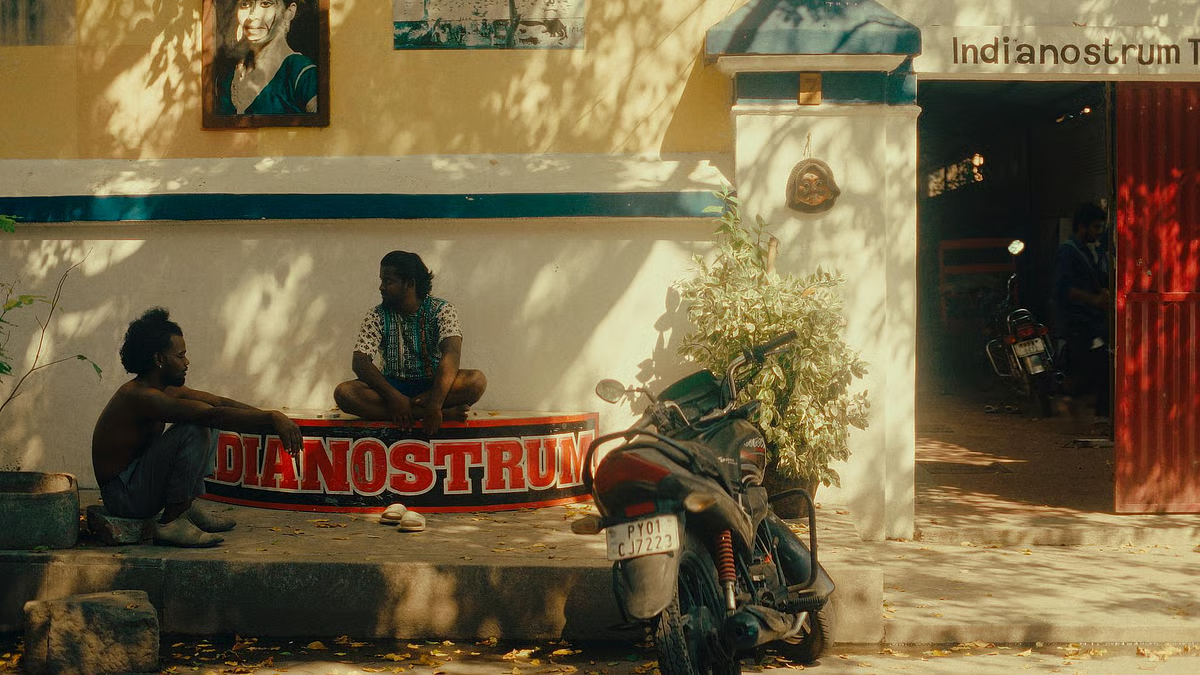
After the outlandish energy and cult success of Kadaseela Biriyani (2021), filmmaker Nishant Kalidindi returns with Theatre, a quieter and deeply observant second feature that marks a shift in both form and temperament.
Premiering at the International Film Festival of Kerala in the Indian Cinema Now section, the film was screened to packed audiences, once again underscoring Nishanth’s assured craft.
Set in the traditional urban quarters of Puducherry — the filmmaker’s hometown — Theatre unfolds within a local theatre troupe. Shot in Tamil and Malayalam, the film follows Das, a cowherd who leads a double life as an actor, and traces the fragile dynamics of a close-knit group as personal histories and unspoken tensions begin to surface.
Rooted in Nishanth’s close observation of the Indianostrum Theatre group in Puducherry and made within spaces he knows intimately, Theatre emerges as an unassuming yet precise portrait of artists, labour, and the conflicts that shape the act of creation.
Nishanth opens up about his journey in a chat with TNIE.
Excerpts:
After the success of Kadaseela Biriyani, why did it take so long for your next film to come out?
The film was actually ready about two years ago. But we wanted it to have a proper festival journey. This year, we had the opportunity to premiere it in Rotterdam, but that process takes time. Also, it was not conceived as a mainstream follow-up to Kadaseela Biriyani, but as an act of self-expression, a way of documenting my journey and memories with a group of artists I deeply admire. It didn’t come from a logical plan, but from an emotional need to get something out of my system.
The shift from a raw thriller to this film feels drastic. How did you grow personally through this journey?
I didn’t look at it as growth in that sense. I was excited to do something completely different, put myself in a vulnerable space. This film was made through an improvisational process inspired by theatre practices I observed, where characters are shaped through conversations with actors rather than a fixed script. You know the structure, but you don’t know exactly what the scene will become. That uncertainty was exciting. I wanted to dare myself, to find the edges of my abilities. I wasn’t trying to be unconventional. I just didn’t want to be overly organised.