For the last few weeks, Abdul Rashid Bhat has been worried. His daughter is getting married in two weeks, but he has been informed of a problem: a shortage of mutton in meat-loving Kashmir.
“Our butcher has informed us about the crisis,” he tells The Indian Express. “We have delayed the distribution of invitation cards for now. We hope the issue will be resolved by the time she gets married.”
Kashmir is facing an unusual problem: a shortage of mutton caused by Punjab’s levy on vehicles carrying livestock to the Valley. The levy, which traders claim began last year, has meant they have to shell out up to Rs 25,000 per truck at the border. Mutton, as a result, has also become more expensive — Rs 750 per kg from Rs 700.
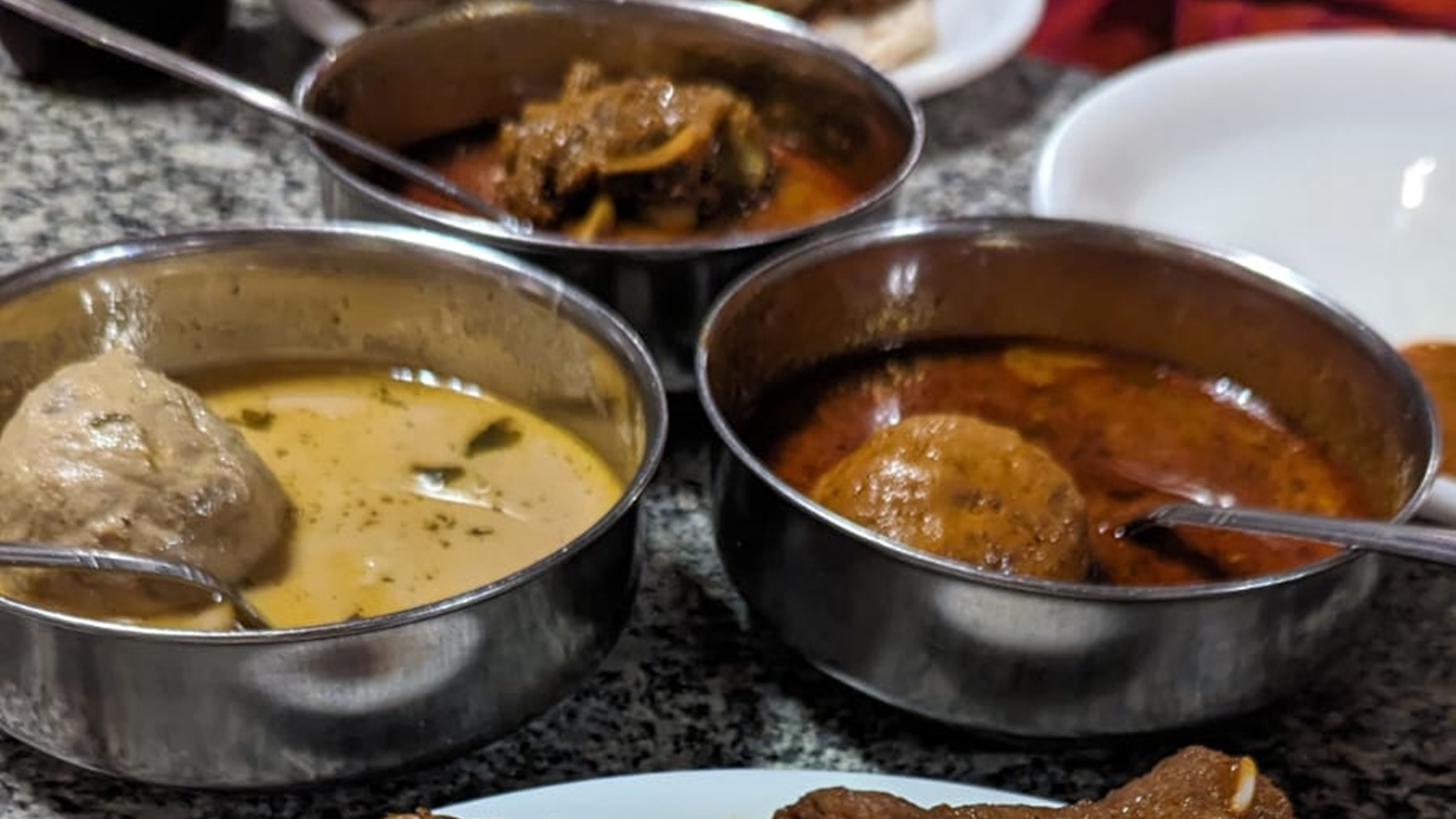
The crisis could not have come at a worse time: it has directly hit Kashmir’s ongoing marriage season, from April to October, leading to mutton dishes disappearing from the traditional Kashmiri multi-course meal, wazwan.
Officials call the levy “illegal and arbitrary”. In his letter to Punjab counterpart Bhagwant Mann, Chief Minister Omar Abdullah sought intervention for the “smooth, secure and unhindered” movement of livestock transport vehicles.
On the ground, the impact is visible. “Our sheep mandis (markets) are closed for the ninth straight day today,” Meraj-ud-din Ganaie, general secretary of the Kashmir Mutton Dealers Association, told The Indian Express. “We understand that it is wedding season, but we are helpless.”
 Mutton dishes have been disappearing from Kashmir’s traditional wazwan this marriage season, from April-October. (Express photo by Shawan Sarkar)
What is the tax
Story continues below this ad
With close to 90 per cent of the population being meat-eaters, Kashmir has one of the highest per capita mutton consumption rates in the country — over 600 lakh kg every year, according to official data. More than half of this comes from sheep brought in from Haryana, Delhi and Rajasthan.
According to traders, mutton dealers import 40-50 vehicles carrying sheep (around 8,000 animals) every day, though demand rises to 60-70 vehicles (around 11,000 sheep) during the peak wedding season.
For its part, Punjab officials call it a ‘cattle mandi tax’ — a levy states impose on livestock purchased from local markets.
“The issue is not about the imposition of any new tax, but relates to alleged evasion of mandi fees and other prescribed charges in Punjab’s cattle markets. In several cases, cattle are being transported to other states without adherence to regulations, leading to revenue losses,” one Punjab official said.
Story continues below this ad
But J&K traders contest this, saying Punjab is merely a transit state and they are therefore not liable to pay the tax.
“Our livestock vehicles coming from Haryana, Delhi and other states are stopped at the entry and exit points in Punjab. This has been happening for a year. Earlier, they would charge Rs 5,000 but with every passing day, they are raising the tax,” he said. “These days they are charging us as high as Rs 25,000 sometimes and it is becoming untenable.”
The levy has now prompted J&K Chief Minister Omar Abdullah to intervene on behalf of traders. In his letter to Mann, Abdullah said J&K had found that “transporters are reportedly being compelled” to make substantial payments per vehicle during transit, “without any apparent legal sanction”.
Before Omar, former chief minister Mehbooba Mufti had also spoken to Mann.
Story continues below this ad
“I have taken up this issue with the Punjab government, seeking immediate intervention to ensure the unhindered movement of livestock transport vehicles through Punjab,” Abdullah told reporters on the sidelines of a function here.
“They are just using the highway. There is no justification for unauthorised levies being imposed on the mutton dealers from Jammu and Kashmir.”
Following the letter, officials from both states are set to meet shortly to resolve the matter, a Punjab government official said.
“The meeting will be held at the director level in the Animal Husbandry and related departments of Punjab and Jammu & Kashmir. Only after this discussion will the Punjab government send a formal response to the letter received from the J&K chief minister,” the official said, adding: “Punjab is keen to settle the matter through coordination between the two states.”