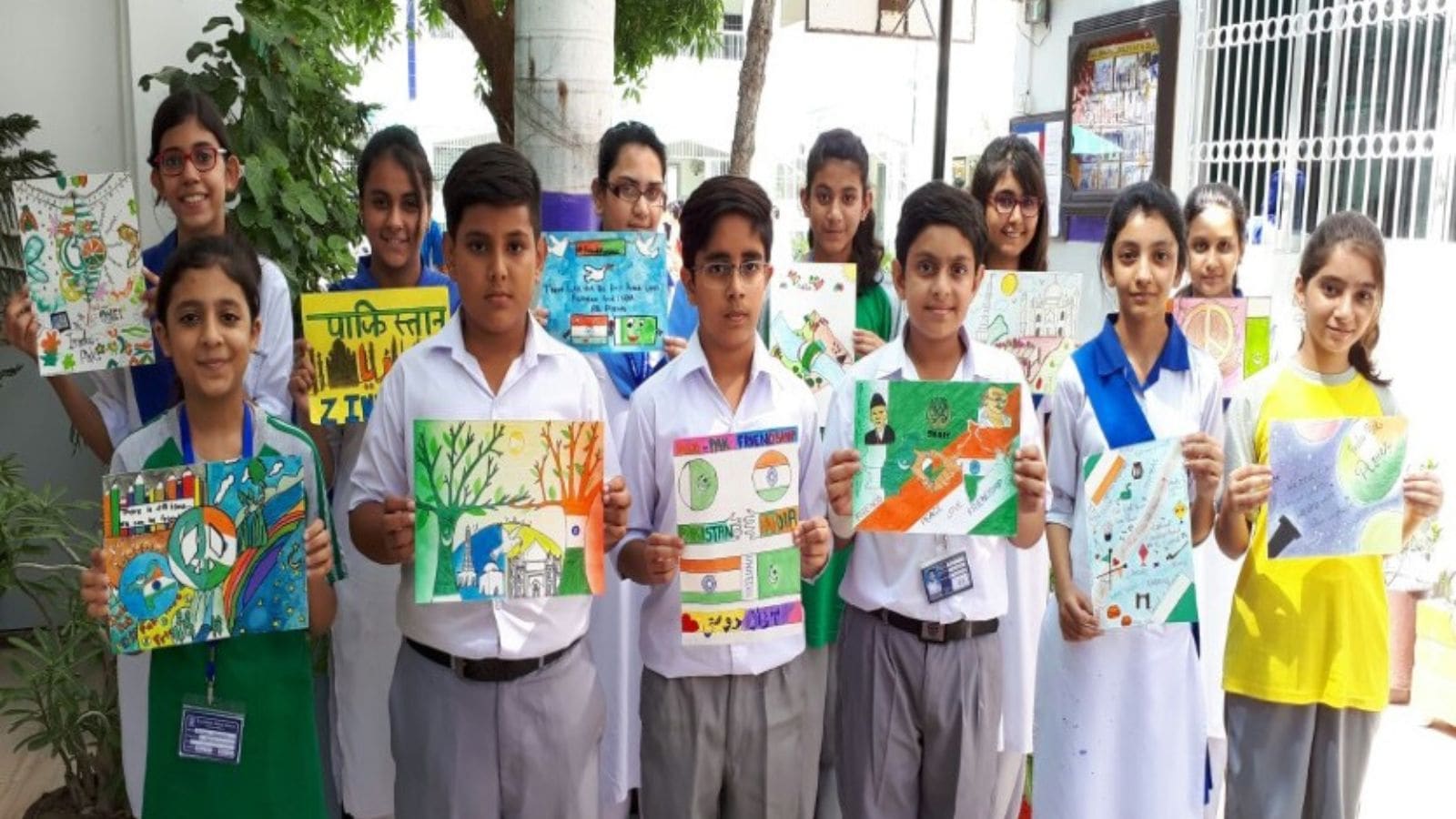
Despite the persistent chill and no visible signs of thaw in relations between India and Pakistan, a peace initiative by Aaghaz-e-Dosti and supported by participation of schoolchildren from both sides of the border, has entered its fourteenth year.
The 14th Annual Peace Calendar for 2026, carrying 12 artworks created by children from both sides of the border (six from each side), was released by Aaghaz-e-Dosti at an event in Punjab’s Anandpur Sahib Wednesday. The Peace Calendar initiative gives an opportunity to children from both India and Pakistan to paint their idea of peace on the canvas.

Notably, since the first peace calendar came out in 2012, it has been published uninterrupted every year, the diplomatic chill notwithstanding.
“The highs and lows in diplomatic relations will continue but the young minds should not stop dreaming about peace. That would be the most dangerous. There’s no future without peace, and our future is our children,” Devika Mittal, co-founder Aaghaz-e-Dosti, and sociology professor at an undergraduate college under the University of Delhi, says.
This year’s calendar was published in collaboration with Gallery Art’est — An Art Abode and the Gandhian Society, with the theme “Together We Rise” on how both countries can progress together.
Aaghaz-e-Dosti, meaning the beginning of friendship, was started in 2012, seeks to create “unwavering bonds of peace and friendship” between India and Pakistan. The peace calendar, they say, is a “reflection of shared dreams and hopes of people from both sides of the border for a better tomorrow”.
Story continues below this ad
This year’s calendar also features an artwork by Laila Babar, a student from Roots IVY International School, Faisalabad, Pakistan, who has painted Indian and Pakistani cricketers shaking hands on the grounds, with a vision that cricketers from both countries should inculcate some sportsman spirit.
ALSO READ | Under-19 Asia Cup: No handshake between India and Pakistan captains
On how the initiative has continued for 14 years even as both countries faced numerous ups and downs in the bilateral relations, Mittal says that the foundation’s effort is that “people-to-people peacebuilding initiatives should not be disrupted at any cost”.
“We have continued to work with children on both sides of the border as it is important to nurture their minds towards peace right from the beginning. We received over 200 paintings from India this year while 40-50 were received from Pakistan. We try to keep in touch with Pakistani schools we have already worked with,” she adds.
Story continues below this ad
Highlighting that the peace calendar was published even during Covid though there was no physical launch, Ravi Nitesh, co-founder, Aaghaz-e-Dosti says, “There are several situations and reasons due to which the diplomatic relations between two countries face highs and lows but we believe that civilian peace initiatives should be strong enough to help the government as well as foster young minds. Future generation leaders are children and our aim is to keep their minds away from weapons”.
Nitesh says that the paintings received from children from both countries every year reflect how the current events involving both countries affect their thought process and they try to express their opinion via art.
“We have observed that children know everything, whatever happens between both countries. This year’s theme was ‘Together We Rise’ and children painted how both countries can rise and progress together. Some even painted how both nations can collaborate in the field of Artificial Intelligence (AI). When the Kartarpur Corridor was opened in 2019, many children had painted around it. And similarly, they had also painted Indian Olympian Neeraj Chopra’s mother who had appreciated his Pakistani counterpart Arshad Nadeem. So children observe everything and appreciate what they think is right,” he adds.
This year paintings were received from children in Karachi, Lahore and Faisalabad on the Pakistan side, and Delhi, Punjab, Maharashtra, Karnataka and Madhya Pradesh on the Indian side. The peace forum also encourages children on both sides to write handwritten letters.
Story continues below this ad
“Until 2017, we were actually posting those letters and children in both countries could feel that love and emotions by holding those letters in their hands. However, even then, it would take ages for letters to reach. Then from 2019 onwards the postal exchange stopped between India and Pakistan. (Now) we just scan those letters and teachers take print-outs and give them to children to read,” Mittal concludes.