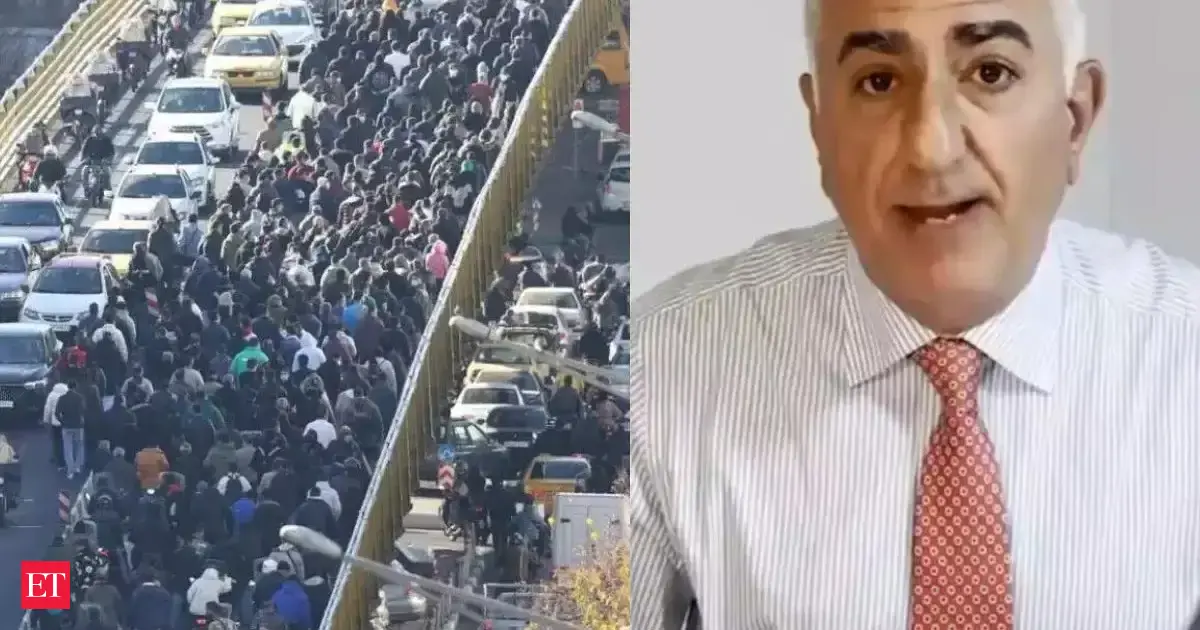
Tens of thousands of Iranians filled the streets of Tehran and other major cities this week, heeding a call by exiled Crown Prince Reza Pahlavi to protest against the religious clerical leadership led by Iranian Supreme Leader Ayatollah Khomeini, even as the government cut off internet and phone services nationwide. The demonstrations mark a dramatic new phase in unrest that began more than a week ago over economic hardship and are now testing public support for figures once thought distant from everyday Iranians.
The protests, which have spread to at least 90 cities across Iran, are driven by waning patience over spiralling prices, job losses and a deepening economic crisis. Security forces have responded with force, and at least 42 people have died, while thousands have been detained.
Iran protests escalate after Reza Pahlavi’s call from exile
On Thursday evening, crowds poured into the streets and chanted slogans against the ruling clerics and Supreme Leader Ayatollah Ali Khamenei, even as authorities cut off internet access and telephone lines across the country in a sweeping communications blackout. The blackout came just hours after Reza Pahlavi, the son of Iran’s last monarch, called for nationwide demonstrations, urging people to “shout their demands” from streets, rooftops and even their homes.
Also Read: Iran Death toll rises to 42 amid internet and phone blackout

“Great nation of Iran, the eyes of the world are upon you. Take to the streets and, as a united front, shout your demands,” Pahlavi said in a public statement shared on social media.
Who is Iranian exiled crown Prince Reza Pahlavi
Reza Pahlavi was born on October 31, 1960, in Tehran as the eldest son of Mohammad Reza Shah Pahlavi, Iran’s last monarch, and Empress Farah. His family ruled until the 1979 Islamic Revolution, when the shah was forced into exile.Pahlavi was named crown prince as a child and left Iran with his family in 1978, months before the revolution ended centuries of monarchical rule and installed a theocratic government under Ayatollah Ruhollah Khomeini.
Since then, he has lived mostly abroad and emerged as a vocal critic of the Islamic Republic. In recent years, Pahlavi has urged secular reforms and called on Iranians, including security forces, to reject the current regime.
From economic anger to political challenge
What began as widespread dissatisfaction with soaring inflation and a plunging currency has taken on political overtones. In a shift not seen in many years, some protesters openly called for the return of the monarchy, evoking chants tied to the Pahlavi dynasty.
Pahlavi, who has lived abroad for decades, is seen by some as a symbolic figurehead around whom discontent might coalesce. His intervention comes at a time when many Iranians express frustration not only with economy but with the clerical establishment’s grip on power.
Reza Pahalavi’s test of influence and momentum
The latest unrest represents a key test of whether Pahlavi’s appeal resonates with ordinary Iranians, many of whom have lived all their lives under the Islamic Republic. While chants invoking the shah are widespread in protests, analysts caution that the movement remains largely decentralized and not clearly tied to any single leader.
International reactions are already emerging. U.S. President Donald Trump publicly backed Iranian protesters, condemning violence against them and warning Tehran of consequences if the crackdown intensifies.
As demonstrations continue into a second week, the coming days will test both the protesters’ endurance and the government’s willingness to tolerate dissent — and how far an exiled figure like Reza Pahlavi can shape Iran’s moment of crisis.