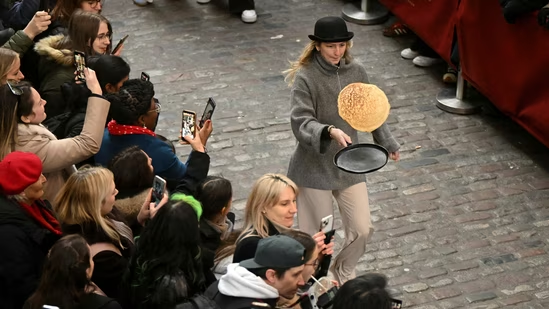
Known as Mardi Gras in French-speaking regions, Fat Tuesday is also prominent as Carnival Tuesday, Shrove Tuesday, and Pancake Tuesday. No matter the name it is given, the celebration centers on feasting, festivities, and parades prior to the commencement of Lent.

Fat Tuesday is observed worldwide, from New Orleans and Paris to Rio de Janeiro and Venice. While the holiday has significant religious origins, it has evolved into a cultural event over the last hundred years, now commonly linked with beaded necklaces, king cakes, masquerade masks, and spirited alcohol consumption.
What is Fat Tuesday or Mardi Gras?
Traditionally, this day is known for its indulgence, following the custom of savoring rich and fatty foods before the Christian season of Lent, which is defined by fasting and abstinence.
Ash Wednesday occurs immediately after on February 18, signifying the start of the Lenten season, a period of 40 days dedicated to reflection leading up to Easter.
Frequently linked with extravagant festivities, Mardi Gras is regarded as the final and “most significant day of celebration,” as stated by Mardi Gras New Orleans, where one of the largest celebrations takes place.
What are the other names for Mardi Gras?
Whether referred to as Fat Tuesday, Shrove Tuesday, or the conclusion of Carnival, Mardi Gras is known by various names.
Shrove Tuesday derives from the tradition of “shriving,” which involves purifying oneself through confession prior to Lent, as noted by the Old Farmer’s Almanac. It is also known as “Carnival,” which signifies the festive period that commences on January 6.
Additionally, the day is recognized by other titles. In south-central Pennsylvania, it is referred to as Fasnacht Day. In Europe, it is commonly called Pancake Day.
How do people commemorate Fat Tuesday?
Fat Tuesday is observed with extravagant banquets, lively masquerade celebrations, spirited parades, and enthusiastic drinking and dancing.
Participants frequently adorn themselves in purple, gold, and green, wear costumes, and sport masks and beaded necklaces to enhance the atmosphere of joy and festivity. King cakes are a traditional feature at these feasts, and grand parades and balls are conducted by organization known as krewes.
What is the origin of Fat Tuesday?
According to historians, Fat Tuesday has its roots in ancient Roman times, dating back thousands of years.
Initially, it was celebrated to honor the harvest season; however, as Christianity spread across Europe, the holiday was adapted from its original pagan customs into a period of indulgence preceding Lent.
Despite its strong religious connections, the celebration has remained similar to contemporary practices — featuring festivities, feasting, masquerades, and dancing.
Fat Tuesday is recognized worldwide, as European colonizers introduced their customs to the territories they occupied.
What is a king cake?
A classic king cake is crafted from a luxurious brioche dough and offers various filling choices such as chocolate, cinnamon, and cream cheese, topped with a glaze and vibrant sprinkles in gold, green, and purple, as stated by southernliving.com.
King cakes are prepared without a central core and contain a small plastic baby figurine placed within. Each color symbolizes a specific meaning:
Gold: signifies power
Green: linked to faith
Purple: represents justice.