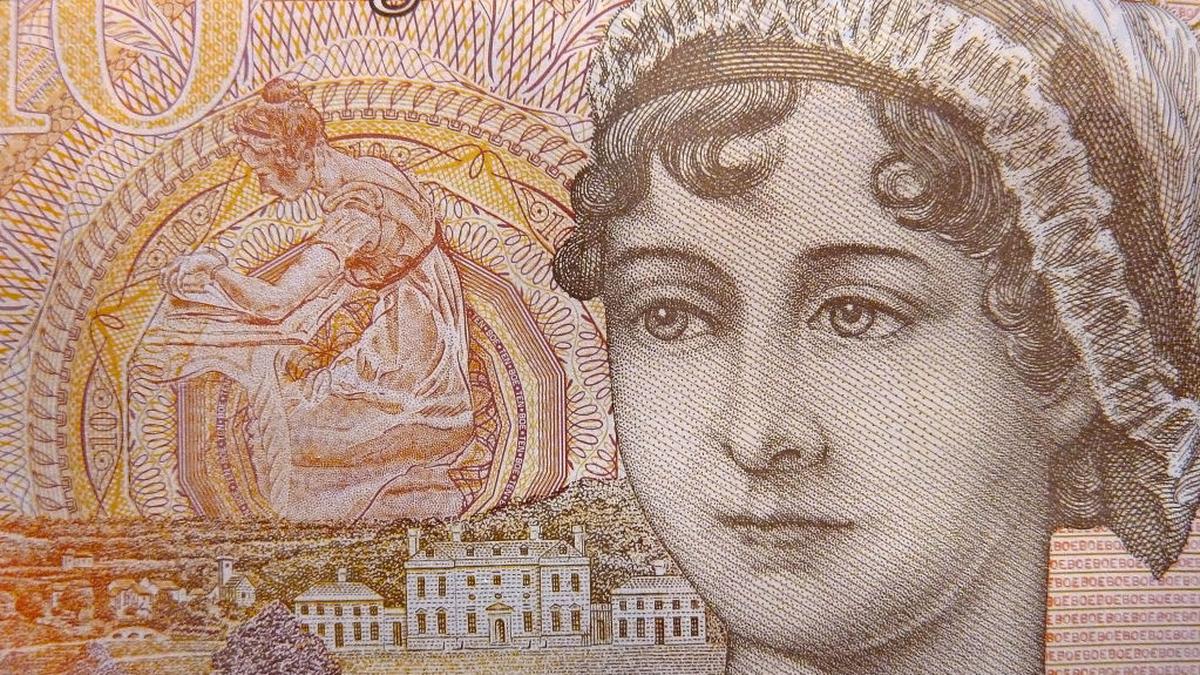
It is a fact widely acknowledged that Jane Austen is one of the most popular novelists in the English language. But it remains a well-kept secret that most of the people who read Austen with the fondest admiration have got her wrong. Speaking satirically in the persona of a “Jane Austenite”, E.M. Forster wrote in 1923 that he was “slightly imbecile about Jane Austen… I read and re-read, the mouth open and the mind closed”. Even now, 250 years after Austen was born, there are countless readers world-wide who do much the same.

The popular Jane Austen is the writer who virtually invented the plot in which boy meets girl and then wedding bells ring on the last page of the novel. But in her complex version, there is at first sight, not love, rather misunderstanding and sustained friction. It then takes a whole book-length of twists and turns of revelatory events before true understanding can dawn, and love that had been slumbering all the while in the dark cave of the subconscious can awaken and be acknowledged for what it is.

This pattern evolved to become at the hands of Austen’s numerous successors the default setting for the English novel. Some variations that were introduced marked not an improvement on Austen but rather a watering down. The Mills-and-Boon variety of romances in our day proved even more popular among open-mouthed readers than Austen’s novels. They harked back to the simpler and sweeter archetype of medieval romances which Austen had boldly departed from and, in fact, satirised in the very first novel she wrote, Northanger Abbey.
Of love and matrimony

Keira Knightley (centre) and Rosamund Pike as Elizabeth Bennet and Jane Bennet, respectively, in a 2005 movie adaptation of ‘Pride & Prejudice’.
Austen sabotaged some other conventions of the novel too in innovative ways. The most beautiful young lady in her novels is never the heroine but a minor character: Jane, and not Elizabeth, in Pride and Prejudice, Harriet, not Emma, in Emma, Mary Crawford, and not Fanny, in Mansfield Park. The heroine had to stand out not through this biological accident but by demonstrating mental and moral qualities of the head and the heart. Further, it is not the heroines who are hard to please in Austen but rather the heroes who hold back and must be brought around: Mr. Darcy, Mr. Knightley, and Edmund, respectively, in the novels named above.

An illustration by C.E. Brock (1895) for ‘Pride and Prejudice’.
| Photo Credit:
Wiki Commons
But perhaps an even more radically realistic departure that Austen made was to candidly acknowledge that there was more to matrimony than just love. All her heroines, except possibly Emma, are distinctly poorer than the heroes they marry. In an age when avenues to formal education and dignified employment were not open to women, “marrying up” or indeed marrying at all was a pragmatic option. The sensible Charlotte Lucas, friend of Elizabeth in Pride and Prejudice, chooses to marry a pompous parson whom Elizabeth has already rejected. As she forthrightly says, marriage is “the only honourable provision” for a woman in her indigent situation.

A colourised portrait of Jane Austen.
| Photo Credit:
Getty Images
Austen, equally indigent herself, never married, for reasons not clearly ascertainable. The poet W.H. Auden, who leaned towards Marxism in the 1930s, wrote a poem in that decade in which he said about Austen that he was shocked to find: An English spinster of the middle class…/ Reveal so frankly and with such sobriety/ The economic basis of society.”
Delving into the psychology
The open-mouthed readers of Austen are so spellbound by the exuberant wit and playful banter in her novels that they do not suspect the gritty ironies that lie underneath. Austen was self-reflexively aware of the risk she was taking in this respect and said in retrospect that she had probably made her most popular novel, Pride and Prejudice, “a little toolight and bright and sparkling”.

Yet another subtle aspect of Austen’s novels is her ability to delve deep into the psychology of her major characters when they retire from the bustle of gay social interaction and are by themselves. “The hair was curled, the maid sent away, and Emma sat down to think and be miserable.” This prompted Virginia Woolf to surmise that had Austen not died at 41 but lived on to be 60 and written another six novels in the late style she was beginning to develop in her last novel, Persuasion, she would have proved to be “the forerunner of Henry James and Proust”. Perhaps no other novelist has ever been posthumously hailed as a precursor to both Marx and Freud.
The writer taught English at Delhi University.