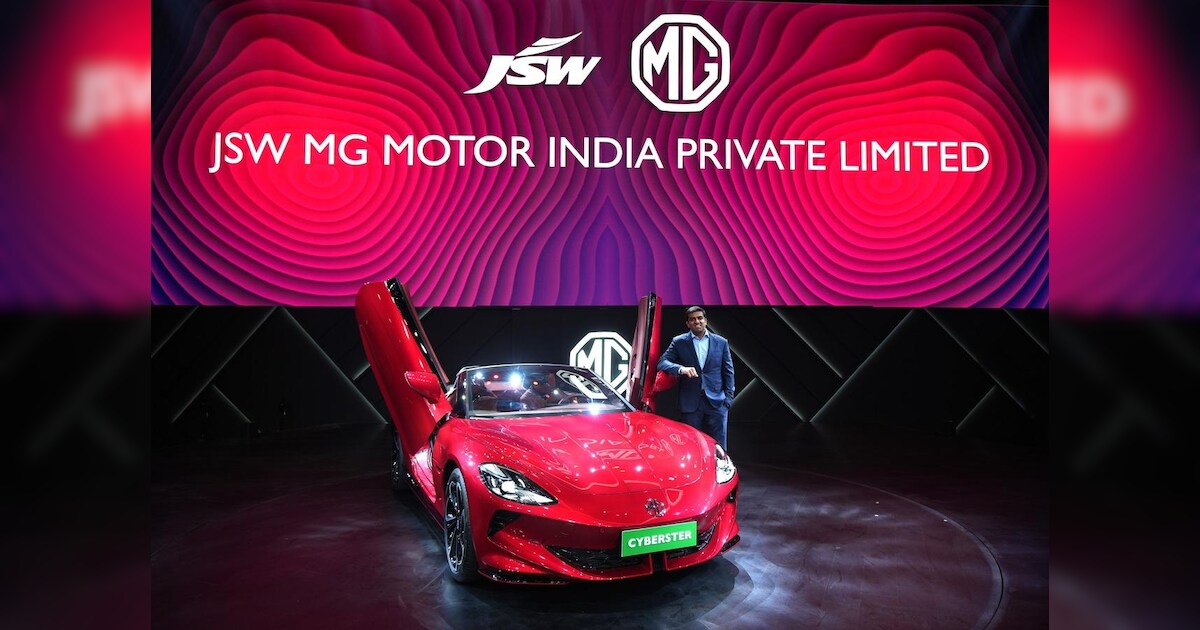
JSW MG Motor India will launch four new models this year, and is planning to invest between Rs 3,000 crore-Rs 4,000 crore in the country over the next couple of years.
The new models include a plug-in hybrid, an electric vehicle, the Majestor SUV and one additional model yet to be disclosed.
“The intent would be to look at all options of funding. I have never seen two shareholders (JSW and SAIC) this deeply engaged. They are talking at a frequency that is phenomenal, and it allows for faster decision making,” said Anurag Mehrotra, managing director, JSW MG Motor India, during a media roundtable.
On February 12, the company showcased the MG Majestor, positioned as a D+ SUV, after first displaying it at the Bharat Mobility Global Expo 2025. The 4×4 SUV’s pre-bookings have opened and prices will be announced closer to launch in April. The Majestor will compete with cars such as Toyota Fortuner, Jeep Meridian, Skoda Kodiaq and Nissan X-Trail in India.
On India-China business ties, Mehrotra said the situation has improved compared to a couple of years ago. He pointed to easier movement on visas and flights and greater business engagement.
He said there has been a noticeable rise in TLAs (technical licensing agreements), particularly between Indian and Chinese auto component makers. These agreements allow Indian suppliers to access and use technology developed by foreign partners.
JSW MG Motor India is structured as a joint venture between India’s JSW Group and China’s SAIC Motor. SAIC holds 49 per cent of the company, while JSW Group owns 35 per cent. The remaining 16 per cent is held by Indian stakeholders, including financial institutions with 8 per cent, dealers with 3 per cent and employees with 5 per cent.
On concerns around technology transfer from SAIC, Mehrotra said risk is inherent in business, but must be managed. “Risk is there while crossing the road, but does it stop you from crossing the road?” he said, arguing that companies cannot avoid risk altogether.
He added that deeper localisation reduces exposure to global disruptions, whether in supply chains or shipping. As an example, he pointed to volatile sea freight rates. Container shipping costs rose to about $2,400 at one point last year, fell to around $700, and have since climbed back to roughly $1,500. Such swings, he said, underline why companies need stronger domestic supply chains.
On electric vehicles, Mehrotra acknowledged that EV penetration has moderated after GST rationalisation in September last year made petrol and diesel cars relatively cheaper.
However, he said the long-term economics of EV ownership remain strong. Buyers save significantly on fuel, and operating costs are lower over time.
He also pushed back against the perception that EV demand is limited to metro cities. Adoption, he said, is visible in Tier-II and Tier-III towns as well, with some smaller markets reporting EV penetration levels higher than the national average.
While recent tax changes have had a short-term impact, he said the wave of new EV and hybrid launches across manufacturers should support a recovery. More product choices, he added, will bring more consumers into the segment over time.