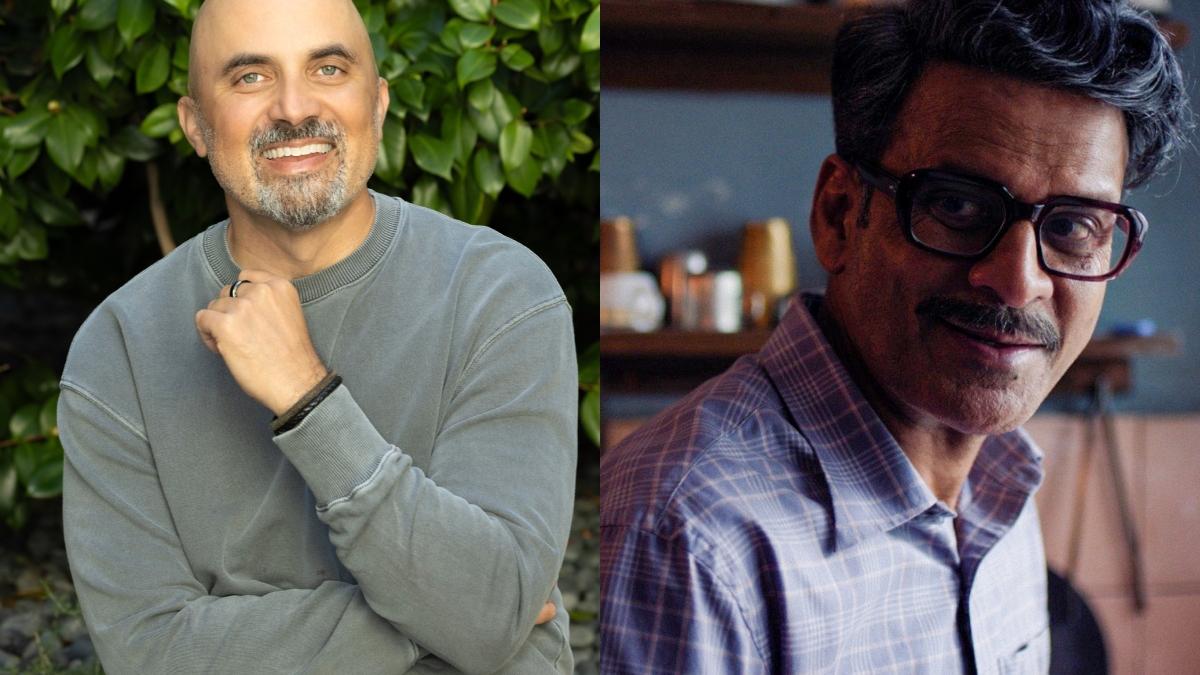
A stout battle between the old and new deconstructs the anxieties of the urban middle class dream in Ben Rekhi’s Last Man in Tower. The feeble, lifeless and singularly revolting voice of its frail protagonist, Masterji (Manoj Bajpayee) becomes an extension of his old housing society’s slow decay, which has witnessed the erosion of values and morals in its residents dampen the stature of its own cracked walls. The neighbours are pitted against Masterji as he is resolute to fight against the whims of the builder, Dharmen Shah (Boman Irani), whose plans to make a huge tower lulls everyone else to comply.
“If this was a film from the ‘70s or ‘80s, everyone would get behind Masterji and throw that builder out. But in 2026, its every man for himself and in many ways the residents are tempted by the villain,” says Ben over a virtual conversation. The film captures the sorrow that comes with the loss of empathy and death of conscience, and how individuals are pitted against their friends and families over a larger capitalistic dream. Its burning concerns feel stirringly contemporary where the rising heights of modernity have brought a blinding resolve to human values.
“These days, we value money above everything. In the past, money was of course important, but things like community, tradition and morality had equal weight with material things,” Ben says stressing on the materialistic turn that the world has taken in recent times. “You are told to climb the ladder at any cost. If someone is standing in your way, you are told its okay to bulldoze over them if your survival depends on it. We are on this race towards the future and progress but what are we giving up in the process?”
Masterji represents that lonely lamp of idealism against the sturdy winds of change brought about by capitalism. Ben feels that the rate of change has been fast not just for the older generation of Masterji but also for the younger folks in terms of the shifting nature of technology, social media, politics, climate and AI — all of which he describes as being “intensely disorienting”. “That disorientation is the heart of the film. Even if it took us ten years to make, it has come out just at the right moment. It’s quite rare that these changes in the outer world overlap with the themes of the film as it has seen such a long journey. It’s become bigger than us now. We would have never expected for the timing to be so perfect,” Ben says.

Manoj Bajpayee in ‘Last Man in Tower’
| Photo Credit:
Special Arrangement
The filmmaker credits writer Aravind Adiga for being “ahead of his times” for seeing these nuances early on. Ben had been a fan of Adiga’s Booker Prize winning debut novel, The White Tiger and was introduced to Last Man in Tower by a friend. He was “blown away” after reading it. “If The White Tiger was this loud debut, Last Man in Tower was like a quiet whisper that revealed a lot more complexity,” he opines as he reflects about adapting the novel. Ben was fascinated with Adiga’s distinctive literary voice, which he describes as being rooted in satire and “based in reality where everything is quirky and heightened.”

After reading Last Man in Tower, he reached out to the author to officiate the process of adaptation, long before The White Tiger was made into a film. Ben then sought the help of Sooni Taraporevala for the adaptation of the 430 pager, knowing that she would “bring great wisdom” from her earlier experience in bringing books to screen with Such a Long Journey and The Namesake.
“We developed it for several years. There were different false starts and going back and forth. It was really when The White Tiger became a film on Netflix that there was a lot of interest in Adiga’s other books,” Ben says, reflecting on the arduous process of writing the film and how initially, they were considering to make a limited series to make sense of the novel’s detailed landscape with richer back stories of characters.

Manoj Bajpayee in ‘Last Man in Tower’
| Photo Credit:
Special Arrangement
“The hardest part was deciding what to lose because you couldn’t keep it all. That’s where a great writer comes in. Sooni was so good at the economy of storytelling of taking three chapters and putting its essence into two lines of dialogue,” Ben says.
The adapted screenplay retains much of the denseness of ideas and themes of the book, as the film begins to feel novelistic in scope in how it unravels multiple layers of complexity to define the varied shades of Masterji. Even then, the film cannot completely match the book’s stature and Ben understands the differing nature of the two as he chimes in with his thoughts about the age old book versus movie debate. “We need to get over this comparison as they are two different mediums. But the question really is: is it a good film on its own? Does it entertain you on its own? The judgement shouldn’t be coloured by how you imagined the book to be and put it against what the film ultimately becomes,” Ben says. He had a conversation about this even with Adiga as he recalls with a smile, “I told him that if the film doesn’t turn out to be good, people are going to say that the book was better. If the film turns out good, more people would want to read the book. So, either way it’s a win-win!”
Although Adiga was not directly involved with the film’s writing, Ben reveals having conversations with him about the book’s underlying philosophy. One of them was about a law of physics. “What happens when an irresistible force meets an immovable object? He gave these concepts to me to look at the story from a high level and would constantly send me articles about societies getting redeveloped,” Ben says.
Adiga wrote the book from his own experience of living in an old housing society in Mumbai’s Vakola when he was working on The White Tiger. He suggested Ben to visit the place in order to acquaint himself with its flavour. Ben then spent time with the residents, made friends with the security guard and spoke to builders as well. “Aravind sent me back to the original inspiration of what made him write the book in the first place,” Ben adds, saying that the primary and secondary research helped him to understand the diversity of Mumbai as an Indian-American. He feels that as an outsider, he was able to latch on to the raw, human element in the story and identify with the emotion underneath which had a strong universal appeal.

Manoj Bajpayee in ‘Last Man in Tower’
| Photo Credit:
Special Arrangement
“As an outsider, I am able to pay more careful attention to details without being caught up in troupes of storytelling that can add a feeling of sameness to the front. But this, hopefully, has a different texture and DNA to it because it is told by an outsider,” Ben says while also crediting his team for filling in whenever there were gaps in understanding, including the actors, who would come up with ideas which he had not thought before.
The filmmaker also praises the integrity of Manoj Bajpayee for being truthful to the character without thinking of how he would look on-screen. “I told him that the character is not always likeable. He is going to do things that will upset the audience. He said, ‘I love that. I don’t have to be likeable. I just have to play the truth.’ That was quite brave as a lot of actors want to be liked by audience,” says Ben.

In his observations, Ben found that Manoj was quite private about his preparation process but has “incredible intuition and muscle memory” as an actor. “He showed up on set one day with a posture that gave a beat-down feeling. You could see that there are things that he had done to his physicality,” Ben says. “His body interprets the script. I mentioned to him about the posture and he said he didn’t even realise it was happening. It happened subconsciously to him. That’s the mark of a true veteran; it only comes with experience.”
Last Man Standing is currently running in theatres