Indian equity markets have entered a choppy phase, unsettling investors who had stepped into the new year with high expectations from the earnings season. Recent concerns around labour code adjustments, highlighted by early signals from IT bellwether TCS, appear to have added to the nervousness, even as broader fundamentals remain intact.
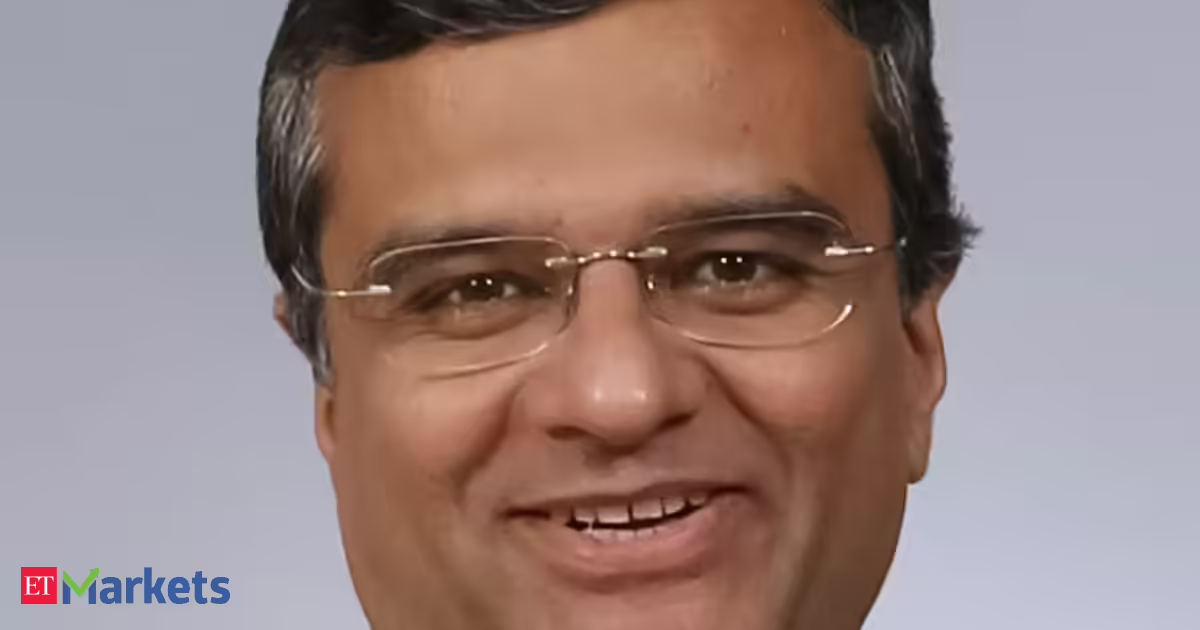
Dipan Mehta, Director, Elixir Equities admits to being surprised by the recent correction. “Even I am perplexed. I was very positive from Diwali and into the New Year and expected the earnings season to bring good tidings. At least for the time being, I have been proved wrong,” he said. However, Mehta cautioned against reading too much into short-term market movements, noting that volatility is part and parcel of equity investing. He remains optimistic that the current earnings season could turn out to be one of the better ones seen in the last seven to eight quarters and potentially lay the foundation for a fresh rally beyond previous highs. While markets are yet to decisively cross those levels, he believes 2026 could still shape up as a strong year for portfolios, even if investors have to endure a phase of turbulence in the near term.
On the theme of financialisation of savings, Mehta prefers selective exposure rather than a broad bet on asset management companies (AMCs). While acknowledging that AMCs remain a good long-term story, he believes wealth management firms offer greater flexibility and resilience. He pointed to the strong performance of companies like Anand Rathi Wealth and 360 One, as well as mutual fund distributor Prudent, as better plays on this trend. According to him, AMCs face intense competition and periodic regulatory interventions on pricing and commissions, whereas wealth managers benefit from diversified business models. He also flagged stockbroking platforms as an emerging opportunity, citing Groww’s rapid scale-up and its potential to diversify its product offerings. That said, Mehta added that he would continue to stay invested in AMCs and expects another strong year for the segment.
After a prolonged period of underperformance, Mehta is also turning incrementally positive on the IT services sector. “I am getting supportive on IT and gradually more positive,” he said, highlighting artificial intelligence as the next growth catalyst. While he is uncertain whether AI can immediately drive double-digit growth for large IT services firms, he believes several midcap companies are well placed to benefit from this transition. Tata Elxsi’s recent performance, aided by a revival in software-defined vehicle projects in the automotive vertical, is one such example. With valuations now reasonable, investor positioning light, and base effects turning favourable, Mehta sees scope for IT stocks to outperform after nearly a year and a half of lagging the market. For conservative investors, he believes large-cap IT names remain a safe bet, pointing out that AI already contributes around 6% to TCS’s revenues and is growing at a healthy sequential pace.
Commenting on Infosys’ quarterly performance, Mehta described the numbers as largely predictable, stressing that the real focus should be on management commentary and the contribution of AI-led projects. He views software services as a long-term play, acknowledging that even if 2026 proves muted, a tipping point driven by AI adoption could emerge later this year or early next year, leading to an improvement in growth rates.

Looking across sectors, Mehta expects earnings recovery to be broad-based. Excluding exporters heavily dependent on the US market, he believes most domestic-facing industries should post healthy numbers, aided by a strong festive and wedding season. Autos, cement, metals and, over time, IT services are among the sectors he expects to do well. He is particularly upbeat on metals, citing higher prices and the potential for strong results from companies such as Vedanta, Hindustan Copper, NMDC and Nalco. Banking and NBFCs also appear to be on solid footing, supported by encouraging pre-quarter updates and robust business momentum, as seen in Bajaj Finance’s December-quarter performance. In Mehta’s view, if earnings continue to improve, capital flows—domestic or overseas—will eventually follow.
On Reliance Industries, however, Mehta strikes a more cautious note. He believes the stock’s outlook is less about near-term earnings and more about its evolving corporate structure. As Reliance increasingly resembles a holding company, the prospect of separate listings for Jio and the retail business raises the possibility of a holding company discount being applied to the parent. While the oil-to-chemicals business remains a strong cash generator, Mehta questions whether it merits a higher valuation multiple. He argues that a formal demerger, allowing shareholders to directly own Jio and Reliance Retail, would unlock maximum value, though management has so far shown little inclination to pursue that route. Still, he concedes that Reliance’s management has a history of surprising the market and that strong operating conditions across its core businesses could yet translate into a standout quarter. For now, Mehta’s approach remains earnings-focused. Markets may sway unpredictably in the short term, he says, but sustained improvement in corporate profits is what ultimately drives durable rallies.