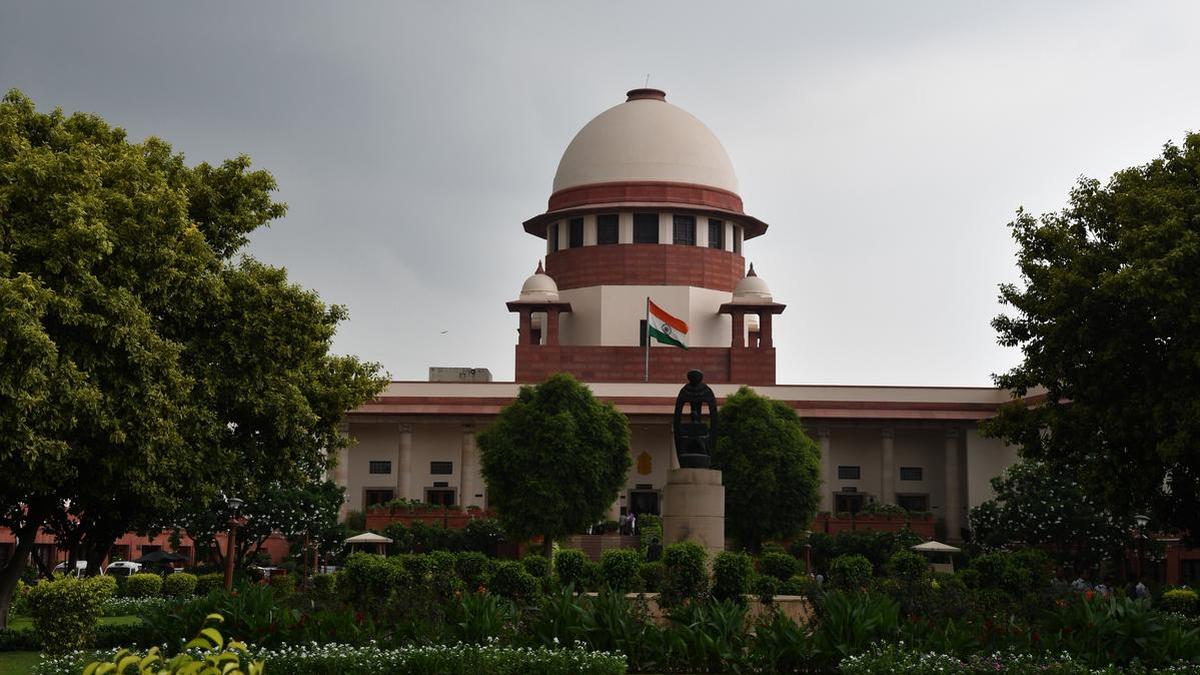

Chief Justice of India (CJI) Surya Kant on Wednesday (September 9, 2026) questioned the issuance of a show cause notice by the Executive Magistrate, Third, Greater Noida Commissionerate, to a student of Gautam Buddha University (GBU) in connection with the NEET-UG protests at Jantar Mantar, despite a clear Supreme Court order barring any coercive action against students.
The notice was reportedly withdrawn shortly after its issuance.
“How can the Magistrate issue a notice? How dare…we had made it clear that no coercive action against any student,” Chief Justice Kant observed.

The Chief Justice orally assured that the court would seek an explanation on the issuance of the notice.
The notice had asked the student, Akshat Tripathi, to show cause why he should not furnish a personal bond of ₹5 lakh. He was accused of “spreading anti-government propaganda” and “inciting” university students to join the Jantar Mantar protests.
The plea was orally mentioned by senior advocate Biswajit Bhattacharya, who said the action of the Magistrate amounted to contempt of the Supreme Court. The senior counsel said the notice was in clear violation of the Supreme Court prohibition.
Chief Justice Kant, at one point, said the Magistrate had withdrawn the notice already.
Mr. Bhattacharya stated that the contempt was prima facie committed against a specific Supreme Court order. He emphasised that contempt cannot be purged. He also mentioned that the student was only aware of the withdrawal of the notice through media reports.

“Uttar Pradesh and Noida authorities cannot create fear psychosis among students,” the senior counsel said.
“We will ask for his [Magistrate] explanation… Let him explain,” Chief Justice Kant addressed Mr. Bhattacharya.
On September 1, the Supreme Court quashed FIRs registered against protesters, who were overwhelmingly students, involved in the agitation against the NEET-UG question paper leaks.
The Court had exercised its absolute powers under Article 142 of the Constitution to do “complete justice” and ensure that the “FIRs will not be investigated, and will be closed for all intents and purposes”.
The Court had clarified the order was not confined to Delhi, but extended to States and Union Territories which saw the protests. The Court had said the Centre would be at liberty to ensure that States or Union Territories did not register any fresh FIRs with respect to CJP protests held between July 20 and July 25.