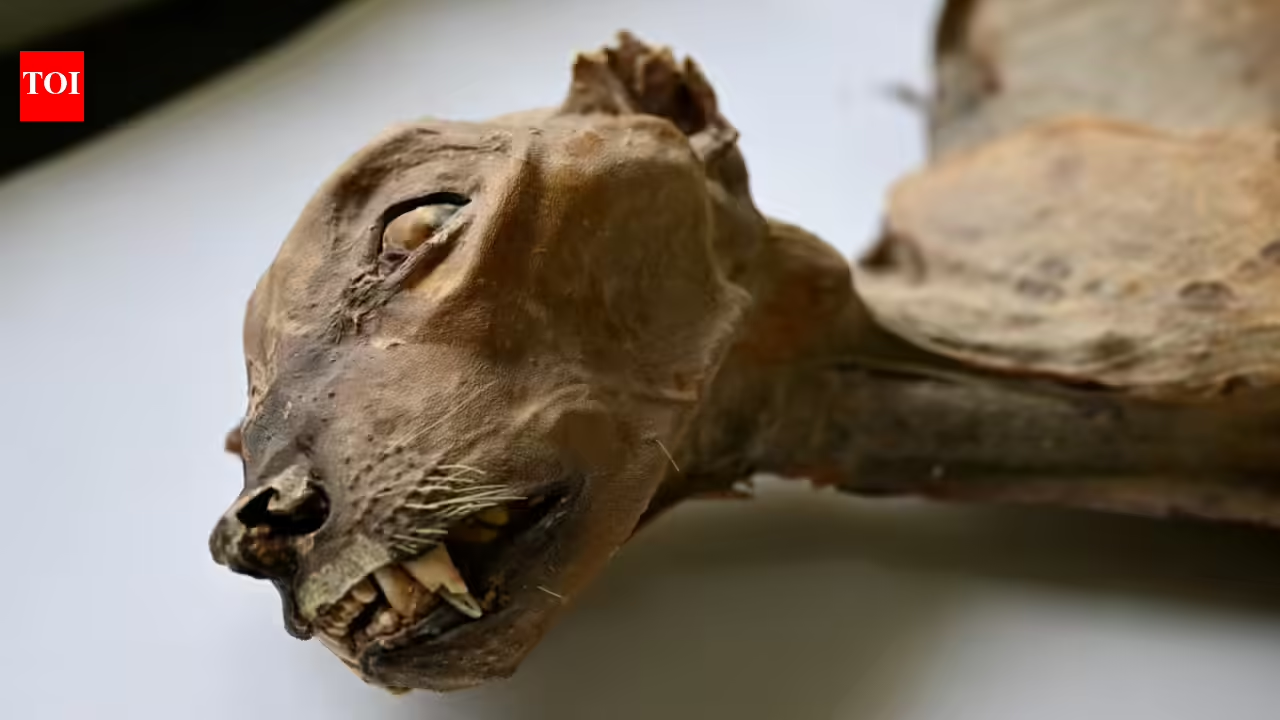

Remains of mummified cheetah (AP photo)
Scientists have found the mummified remains of cheetahs in caves in northern Saudi Arabia, a discovery described as extremely rare, as the Associated Press reported.The remains are between 130 and more than 1,800 years old. Researchers uncovered seven cheetah mummies along with the bones of 54 other cheetahs at a site near the city of Arar.

(AP photo)
Mummification slows down decay and helps preserve bodies after death. While Egypt’s mummies are the most famous, mummification can also happen naturally in places such as deserts, glaciers and bogs.The newly discovered cheetah mummies have cloudy eyes and shrunken limbs, making them look like dried husks.“It’s something that I’ve never seen before,” said Joan Madurell-Malapeira with the University of Florence in Italy, who was not involved with the discovery.Scientists are not certain how the cheetahs were preserved so well. However, the study suggests that the caves’ dry conditions and steady temperatures may have helped. The findings were published on Thursday in the journal Communications Earth and Environment.

Researchers have previously found mummified remains of other cats, including a saber-toothed cat cub in Russia. Still, it is rare for large animals to be preserved in such good condition. Apart from the right environment, the bodies must also escape scavengers like birds and hyenas.Finding such well-preserved evidence of ancient cheetahs in this region is highly unusual.To find such intact evidence of cheetahs that lived long ago in this part of the world is “entirely without precedent,” study author Ahmed Boug with the National Center for Wildlife in Saudi Arabia said in an email.Cheetahs once lived across much of Africa and parts of Asia. Today, they occupy only about 9% of their former range and have not been seen in the Arabian Peninsula for decades. Experts say habitat loss, hunting and a lack of prey are key reasons for their decline.For the first time, scientists were also able to study the genes of naturally mummified large cats. They found that the cheetahs were most closely related to modern cheetahs from Asia and northwest Africa. This information could help future efforts to bring cheetahs back to areas where they no longer live.