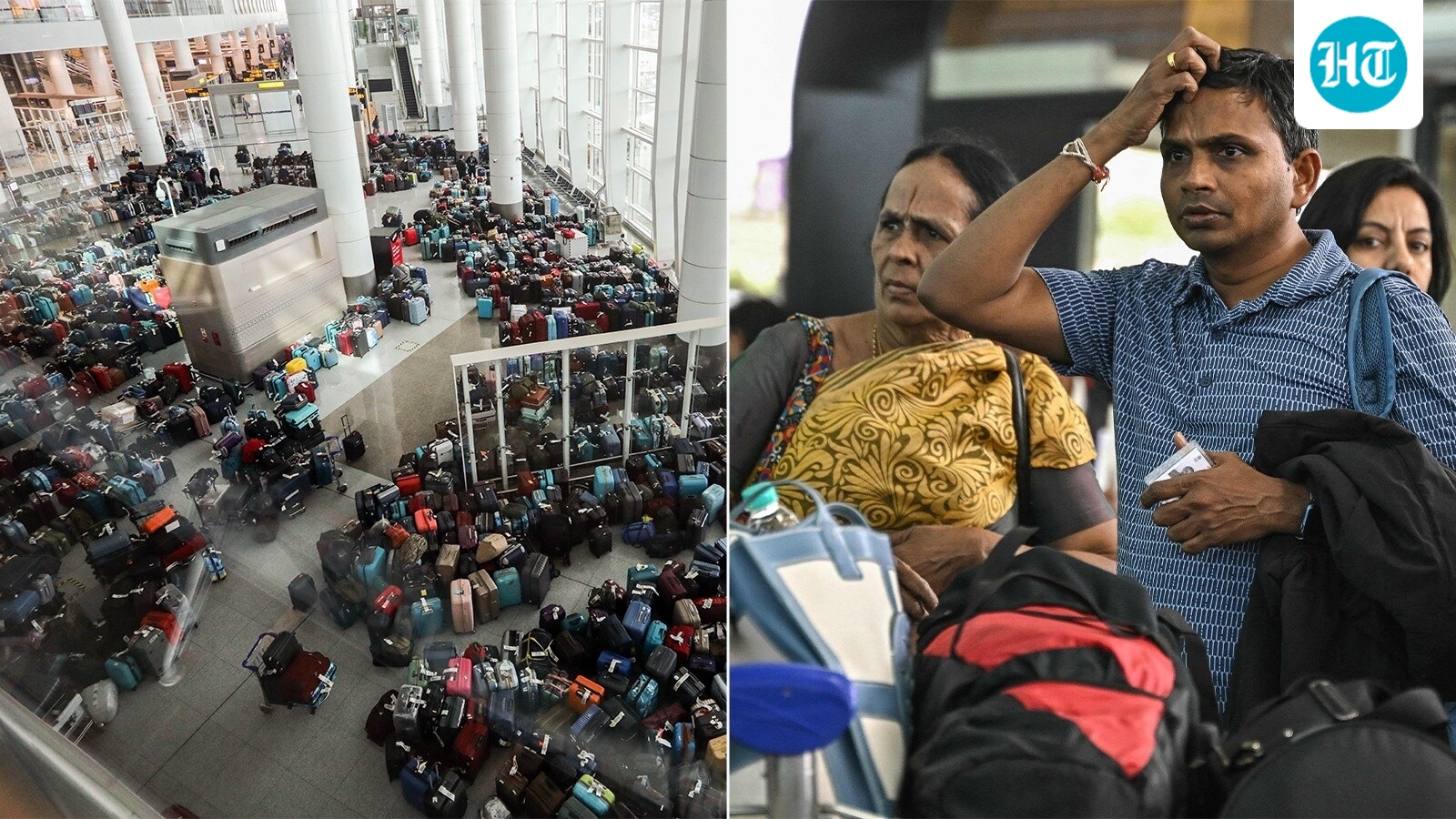
IndiGo, India’s largest domestic airlines, is battling its worst-ever operational crisis, having cancelled more than 4,500 flights since Tuesday last week as disruptions entered their seventh straight day on Monday. Despite urgent interventions by the government and widespread passenger relief measures by the airlines, delays, confusion, and airport overcrowding continue across the country.

Track Live updates on IndiGo flight cancellations here
The timeline of flight cancellations shows the IndiGo crisis spiralling rapidly:
Tuesday: Over 150 cancellations
Wednesday: Nearly 200 cancellations; IndiGo’s on-time performance drops to 19.7%
Thursday: 300+ cancellations with significant international disruption
Friday: Around 1,600 cancelled – the worst single-day collapse
Saturday: Around 850 cancelled
Sunday: Around 650 flights cancelled
Monday: Travel disruption continues across major airports. Already over 300 cancellations have been reported from Delhi, Chennai and Bengaluru.
Major airports remain crippled
Delhi, Mumbai, Bengaluru, Hyderabad and Kolkata continue to see the largest operational setbacks.
Monday’s airport-specific disruption included:
Bengaluru: 65 arrivals and 62 departures cancelled
Delhi: 134 cancellations
Chennai: 77 cancellations
Cancelled flights left terminals packed well into the night as passengers scrambled to rebook or locate their luggage. At Delhi’s Terminal 1, IndiGo’s biggest hub, unclaimed baggage lined the arrival area, forcing people to sift through rows of suitcases.

Scenes of meltdown persisted through Monday as stranded customers camped out at airports, some without accommodation or assistance.
How did IndiGo, India’s dominant airline, unravel?
The IndiGo crisis is a result of multiple failures converging at once:
- A persistent pilot shortage
- Delays triggered by an Airbus A320 software advisory
- Sudden enforcement of strict Flight Duty Time Limitations (FDTL)
- The airline’s aggressive winter schedule expansion since October 26
New fatigue rules, designed to limit night operations and ensure longer crew rest, forced hundreds of pilots into downtime after delayed weekend flights stretched past midnight. IndiGo’s “high-utilisation, red-eye-heavy model” could not withstand the sudden loss of crew availability.
Also read: Why are IndiGo flights getting cancelled across India? Airlines’ crisis explained
Pilot bodies say IndiGo misjudged staffing, delayed recruitment and left itself without operational buffers – despite having two years to prepare for FDTL rollout.
DGCA steps in as accountability questions grow
The aviation regulator issued a show cause notice to IndiGo’s CEO, flagging inadequate arrangements to handle new crew rostering rules. IndiGo sought more time to respond and was granted a one-day extension.
To ease the crunch, DGCA also withdrew a strict provision that disallowed substituting leave for weekly rest – providing immediate rostering relief.

How IndiGo is trying to restore trust
IndiGo has issued multiple public apologies acknowledging a “serious operational crisis” and has announced major support initiatives:
- ₹610 crore in refunds processed
- Full waiver on cancellations and rescheduling for Dec 5–15 travel
- Thousands of hotel rooms and ground transport arranged across cities
- Food support inside terminals
- Lounge access for senior citizens where available
- 3,000 pieces of baggage recovered and delivered
- Additional customer support staff + AI-based assistance
Passengers have been repeatedly urged not to reach the airport if their flight is already marked cancelled online.
Tourism and passenger confidence take a hit
The aviation duopoly, IndiGo and Air India, has left passengers with few alternatives. Travel operators report holiday plans shelved and high-season bookings collapsing as uncertainty lingers.
“My flight from Delhi was cancelled three times. We’re now paying for extra hotel nights out of pocket,” said one stranded flyer.
Others facing medical or family emergencies say the situation is “beyond stressful.”
When will normal operations resume?
The airline says it expects stability by December 10, earlier than initial projections of Dec 10–15, with 137 of 138 destinations now active.
IndiGo’s Board Crisis Management Group is meeting daily to track progress, with CEO Pieter Elbers telling staff in an internal message that the airline is recovering “step by step.”
But operational buffers remain slim – and a resurgence of delays could push recovery timelines further.