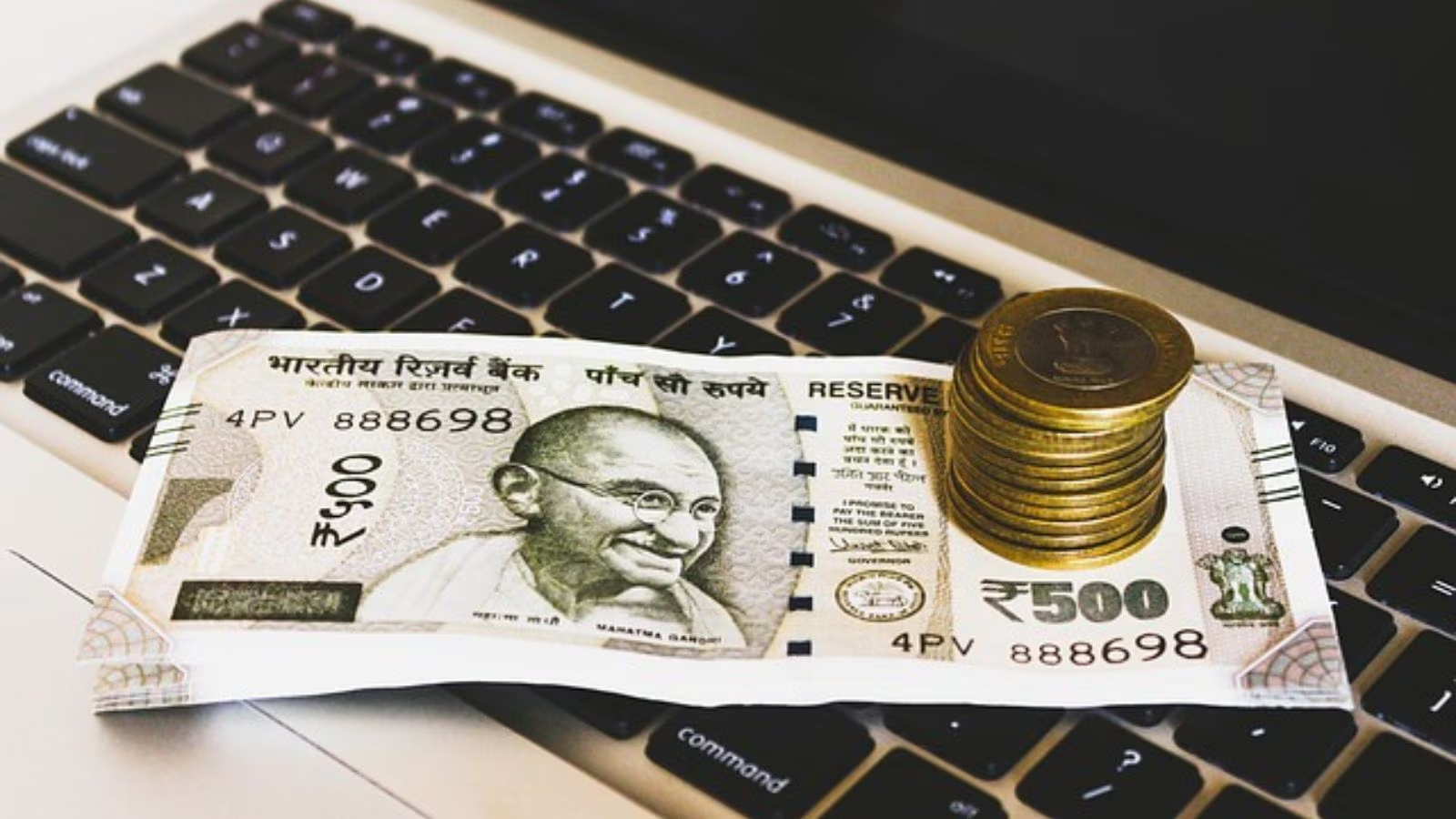
Financial Changes from January 2026: The New Year brings with it many compliance changes as financial tweaks introduced earlier kick in from a given date. In many cases, it is the start of the calendar year. As we step into 2026, have a look at the key financial changes which will come into effect from the New Year. The upcoming changes are expected to significantly influence banking, taxation and household budgets.
Mandatory PAN card-Aadhaar linking
Citizens who are yet to link their PAN and Aadhar, should do the same by December 31, 2025, since failure to do so might restrict their access to Banking and Government services. Linking has been deemed mandatory by the government, to prevent accounts from being freezed and services from being blocked. By linking the same, Citizens can continue using essential services such as filing tax returns and receiving refunds without any heavy penalties.

8th Pay Commission comes into effect from January 1
The 8th Pay Commission would come into effect from January 1. With this, the tenure of which is scheduled to end on Thursday. The entry of a new term indicates that central government employees and pensioners can expect changes in their salaries and pensions, although the actual hike wouldn’t reflect immediately, with the process taking time. The 8th Pay Commission aims to adjust the income of millions of employees and pensioners, helping them keep pace with the rising costs of living and inflation.
The revised pay structure will take effect only after the 8th Pay Commission submits its recommendations and the Union Cabinet gives its approval, a process expected to be completed after May 2027.
Revised LPG and fuel prices
The government is expected to introduce Revised Prices for domestic and commercial LPG cylinders, as well as Aviation Turbine Fuel (ATF), the impact of which is yet to be reflected on household budgets and airfares. These revised prices determine the monthly cost for every kitchen and impact the final cost of transported goods.
Redesigned income tax return (ITR) forms
Taxpayers are expected to see a redesigned ITR form from January 1, 2026. The form will most likely be pre-filled with data from your Bank, GST Filings, and Stock brokers. The move has been undertaken in lieu to simplify the process of form filling.
Enhanced security on digital payment apps
Banks will enforce more stringent checks on UPI transactions and tighter SIM verification norms for messaging apps such as WhatsApp and Telegram in their step to combat fraud. The enhanced security is directed at creating a more inclusive, safer and scam-free environment.
Story continues below this ad
A few changes that will come into effect in 2026 are as follows:
Weekly credit score updates
Replacing the current 15-day cycle, from April 1, 2026, credit bureaus will update customer data every week. The reform indicates a positive reinforcement, as loan repayments and defaults would reflect much faster in your credit score, an indication of whether you’re eligible for a loan or not. Faster updates mean that if you pay off debts, your eligibility for new loans increases instantly rather than waiting for a long.
Renovated framework for gold and silver loans
The Reserve Bank of India (RBI) issued the Reserve Bank of India (Lending Against Gold and Silver Collateral) Directions, 2025 on June 6, 2025, bringing together and standardising norms for loans against gold and silver collateral across banks and NBFCs. The directions aim to establish uniform regulatory standards, strengthen consumer protection and ensure greater transparency in valuation practices across lenders.
Under the framework, the RBI has introduced loan-to-value limits, capped the quantity of jewellery and coins that can be pledged, and mandated standardised valuation procedures for gold and silver collateral.
Story continues below this ad
Mandatory farmer IDs for the PM-Kisan Scheme
The government has taken the initiative of introducing New Farmer IDs for the PM-Kisan Scheme. New applicants must have a unique digital farmer ID. Existing beneficiaries won’t be impacted, however, the new applicants are supposed to register, if they want to receive the Rs 6000 annual support. The unique ID directly links farming benefits to verified bank records, ensuring financial support to the right people, whlist operating in a fraud-free environment, symbolising integrity and transparency.