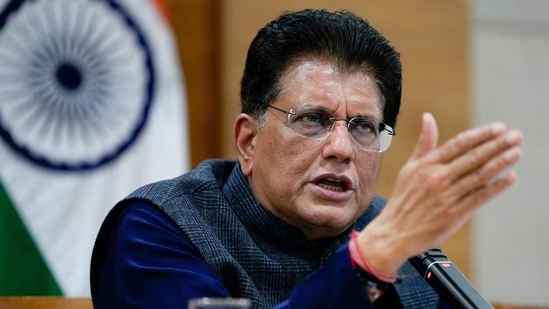
Commerce and industry minister Piyush Goyal said restrictions on the H-1B visa did not feature in his recent discussions with US counterparts, as he reportedly downplayed the concerns regarding the tighter rules within the Indian industry.

According to Goyal, feedback from the Indian industry suggests companies are largely unfazed by the changing visa landscape, reported CNBC-TV 18.
Goyal was speaking to the news channel days after India and the United States finalised the interim framework of a trade deal, which brought down steep US tariffs on Indian goods to 18%. Against that backdrop, questions were raised on whether visa issues, particularly H-1B, were part of the broader engagement.
On post-COVID work models
During the conversation, Goyal said Indian companies remain confident about accessing skilled talent when needed. He pointed out that shifts in global work practices after the COVID-19 pandemic have significantly reduced dependence on relocating employees abroad.
“H-1B lost its significance significantly post-COVID. We’ve already seen the impact of that with the growing number of GCCs that are now operating in India,” he told CNBC-TV 18.
The Union minister underlined that the rise of Global Capability Centres (GCCs) has changed how global firms deploy talent, with more work now being delivered from India rather than from high-cost overseas locations.
GCC boom
India currently hosts around 1,800 GCCs, and that number continues to grow, the commerce minister said, adding that multinational companies are increasingly relying on offshore delivery models instead of moving employees to cities in the US, the UK, or other global hubs.
This shift, he added, brings multiple benefits at home. GCC growth boosts domestic incomes, strengthens tax collections, attracts investment flows, and adds to foreign exchange earnings, as Indian professionals live and work locally while servicing global markets, according to the report.
H-1B visa changes
For decades, the H-1B route was central to the Indian-American story. Indian students arriving in the US on F-1 visas often found jobs with employers willing to sponsor H-1B visas and, later, employment-based green cards. That pathway helped build a 5-million-strong Indian diaspora in the US.
However, after the Trump administration’s announcement, employers will now have to pay a fee of $100,000 for each new petition, a sharp increase from the earlier cost of about $2,000 to $5,000 per petition, depending on the size of the employer.
The move significantly raises the cost burden on companies seeking to sponsor foreign workers under the programme.