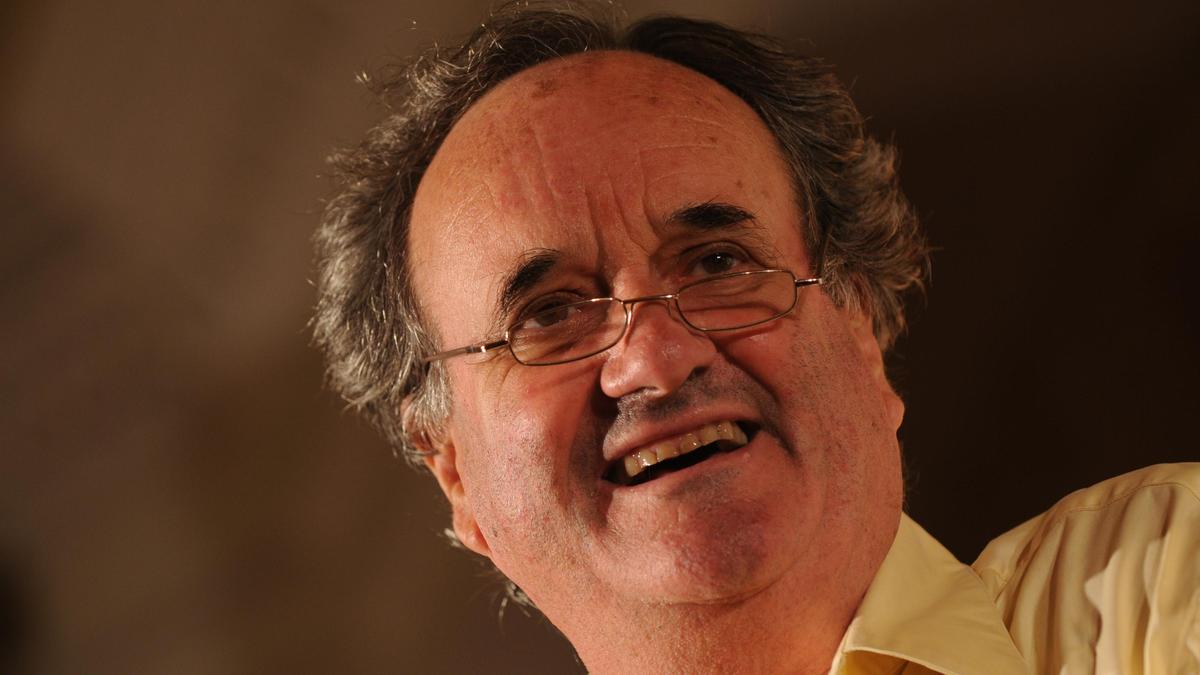
Mark Tully, who passed away at a private hospital in Delhi on Sunday (January 25, 2026), aged 90, once said that working at the BBC for decades had made him a household name in South Asia, but had also quietly changed his way of writing. “For some reason, I would stop writing after typing 300 words,” he recalled at a book launch at the British Council, explaining that his work in the BBC allowed him 300 words for a news report and writing one word extra was discouraged as it would go against the norm of news writing for the radio. Yet for Tully, irrespective of the medium, it was always the story that was the most important. And the story that fascinated him most was that of modern, independent India.
Early life
Mark Tully was born in Kolkata in 1935 to William Scarth Carlisle Tully and Patience Trebi. The same year, the Government of India Act was passed, setting in motion the transfer of power that would be completed 12 years later. His father was a senior partner at Gillanders and Arbuthnot, a trading agency, and the family lived comfortably in what was then Calcutta. Outside, the world was rocked by the Quit India movement, communal violence and World War II; at home, Tully was being groomed by the ethos of the fading Raj.
Also read |Sir Mark Tully on his book Non-stop India and why he supports India when we play England
One day, his nanny slapped him after finding out that the family driver was teaching him to count in Hindi. “That’s the servant’s language, not yours!” she shouted. The tough nanny had prevented him from learning Indian languages, but Tully returned to India in the early 1960s to be an Assistant Representative at the BBC’s New Delhi bureau. Though as a child, Tully had seen Indian festivals like Kartik Purnima in Puri and Durga Puja in Kolkata, he was shaped by his childhood and education in the UK. That’s why, often in conversations with friends, he loved referring to himself as a “relic of the Raj”.
Carving out a space for BBC
Tully’s BBC career was challenging from the outset. In the 1960s, Akashvani ruled the airwaves, and big names like Melville De Mellow were undisputed rulers. It was no easy task making space in the world of radio broadcast dominated by Akashvani and Radio Ceylon. Despite the hardships and government pressure, the BBC under Tully carved out its space by covering the 1965 India-Pakistan war, the 1971 Liberation War and the birth of Bangladesh, the Emergency of 1975, the insurgency in Punjab of the early 1980s and the Operation Blue Star on June 5, 1984. Coverage of these landmark events gave Tully a front-row seat to history.
Also read | Dalits are people, have lives, wives and children: Mark Tully
In December 1979, the Soviet Union invaded Afghanistan. As Soviet tanks rolled in, foreign news agencies left Afghanistan. Tully and his intrepid colleague Satish Jacob started waiting outside the arrival terminal of New Delhi International Airport and put together news stories on the situation in Afghanistan by interviewing passengers who arrived on Kabul-Delhi flights. It was during these encounters that they discovered Murtaza Bhutto, the elder son of Pakistan’s murdered Prime Minister Zulfikar Ali Bhutto, was making frequent visits to India in the hope of getting support from Indira Gandhi as he plotted revenge against Pakistan’s military government led by General Zia ul Haq. Later, Tully and Jacob met Murtaza at a central Delhi hotel, sharing scotch whiskey and conversation.
Mark Tully legends
Delhi’s journalistic fraternity is rich in Mark Tully legends. One such episode from the Emergency of 1975 was recounted by Tully himself in his book India’s Unending Journey (2007, Ebury Publishing). Hours after Indira Gandhi imposed Emergency rule, rumour spread that Tully had broadcast on the BBC that a Senior Minister had resigned in protest and that other Cabinet members were under house arrest. Information and Broadcasting Minister Inder Kumar Gujral received an order from “Indira Gandhi’s inner circle” saying, “Send for Mark Tully, pull down his trousers, give him a few lashes, and send him to jail.” Gujral later told Tully that he declined the order, saying imprisoning people was the Home Minister’s job, not his. I K Gujral checked the monitoring reports of the government and found Tully had read out no such report.
Tully served as the BBC’s Chief of Bureau in India for 22 years. After ending his stint with the radio, he turned to documentary filmmaking and authored multiple books on India. Knighted in 2002 and awarded the Padma Bhushan in 2005, Sir Mark was a familiar face in the Press Club of India and India International Centre—always available for a quick conversation, be it on Mother Teresa or Sheikh Mujibur Rahman, the characters he reported on. These were the qualities that made Sir Mark Tully transcend from being the BBC Chief of Bureau to become the “voice of India”.