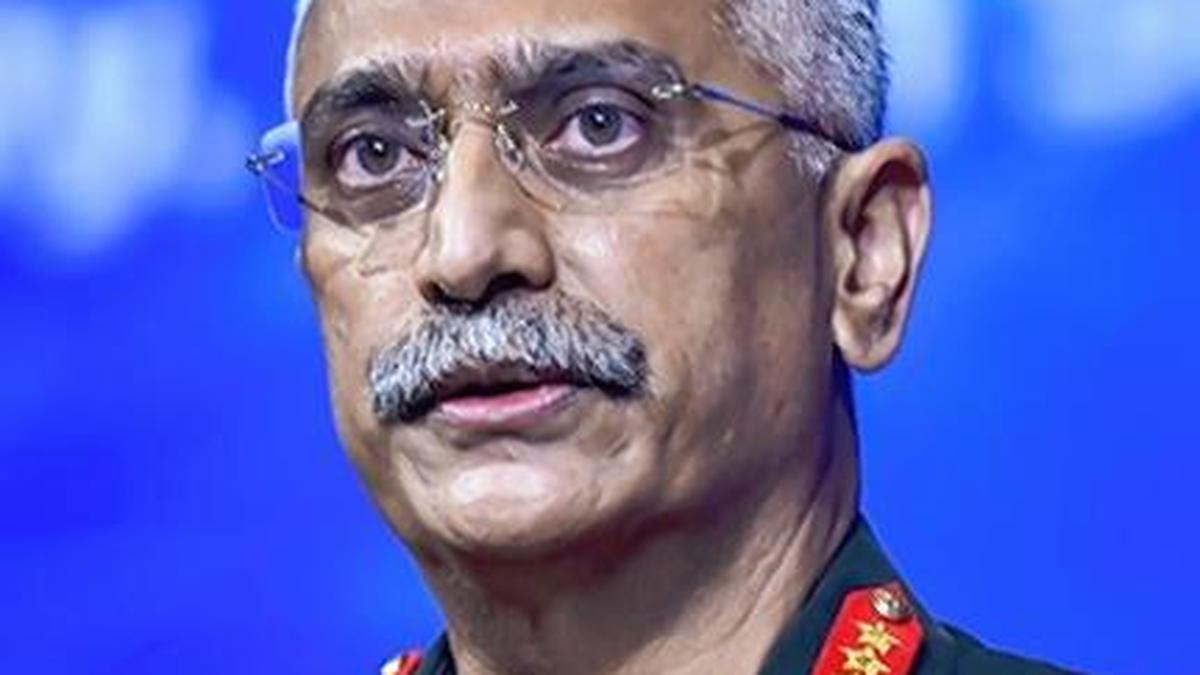

The “unresolved” nature of the India-China “boundary” is at the heart of bilateral problems, said former Army chief General Manoj Mukund Naravane (retd.). Speaking on his newly published novel The Cantonment Conspiracy: A Military Thriller at the Dibrugarh University International Literature Festival (DUILF) on Thursday (February 19, 2026), the former chief of the Indian Army said that the India-China boundary remains “nebulous” and India has always emphasised that it will not tolerate “unilateral use of force” by China.
“China is a very important neighbour of ours with whom we have had a troubled relationship. We have to understand that the trouble that we are having is because of the unresolved nature of the boundary between the two countries,” said General Naravane, while pointing out that he is using the term ‘boundary’ with extra emphasis as ‘boundary’ and ‘border’ cannot be used interchangeably in case of the Line of Actual Control between India and China. “It has been our principled position for a long time that unilateral use of force will not be acceptable to us,” he added.
Indian and Chinese soldiers clashed at Galwan valley in eastern Ladakh in June 2020 during the time when General Naravane was leading the Indian Army and this episode had featured prominently in his unpublished memoir Four Stars of Destiny that was to hit the stands in 2024. However, the book has remained unpublished though parts from it were published in Caravan magazine earlier this January that had triggered controversy as it highlighted a lack of clear orders from the political leadership to the then Army chief during the early moments of the clashes.
In Thursday’s book launch event, however, he did not respond to questions from the audience about when the memoir would be available to readers.


Comparing the India-China boundary with the India-Bangladesh border, Mr. Naravane said: “The India-Bangladesh border is recognised by both the countries and marked on the map. The India-China border is notional.”
‘Genesis of problem’
“That is the genesis of the problem and that is why from time to time when these differences of opinion [on the boundary] arise, we have clashes along various parts of this boundary — whether in eastern Ladakh, in central sector, in Sikkim or in Arunachal [Pradesh],” said General Naravane emphasising that these clashes can be avoided as there are a number of agreements between the two countries to prevent escalation of such situations.
He cited the Land Boundary Agreement with Bangladesh that was sealed after years of negotiation and said a similar agreement can be arrived at also with China and said, “We could solve such a vexatious problem with Bangladesh in 2015 with the Land Boundary Agreement with exchange of territories – through give and take [of territories]. We did that in good faith.”
“It’s not that boundary issues cannot be resolved. It can be resolved but it has be resolved through dialogue and discussion,” said General Naravane.
(The reporter is being hosted by DUILF where he is a guest speaker)