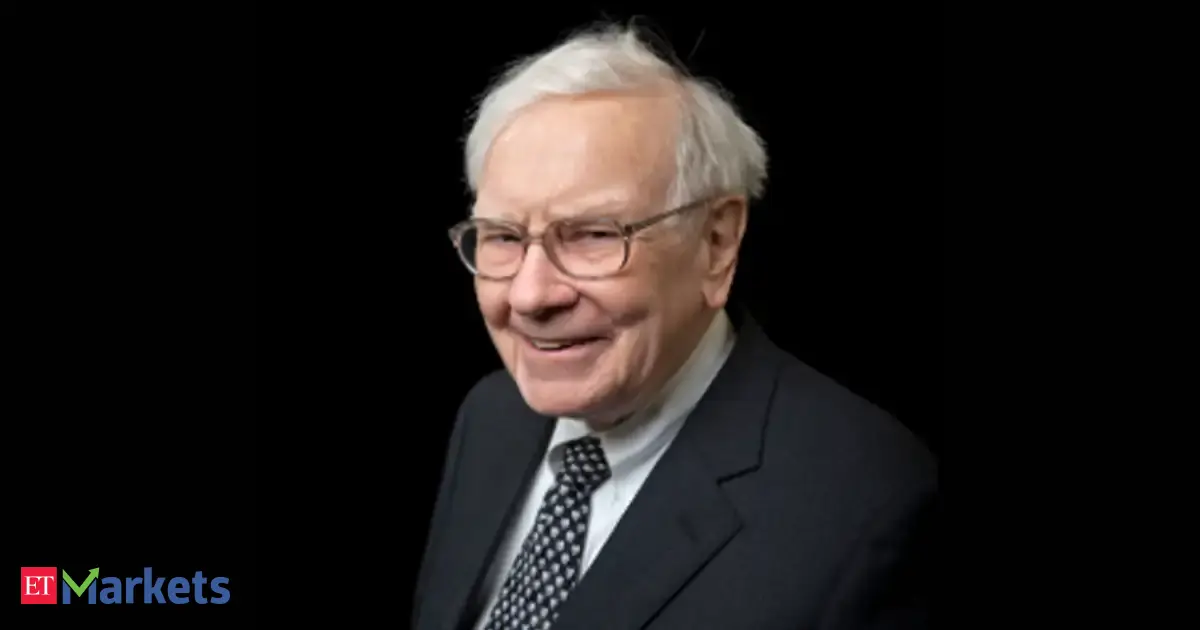
Warren Buffett steps down as chief executive of Berkshire Hathaway today, closing one of the longest and most consequential tenures in modern corporate history and forcing investors to confront whether America’s most venerated conglomerate can thrive without the man who defined it?
The Buffett method
What changes without Buffett?
A more ordinary Berkshire?
The man and the manual
The retirement, announced at Berkshire’s annual shareholders’ meeting earlier this year, hands day-to-day control to vice-chairman Gregory Abel from January 1. Buffett, now 95, will remain chairman and has said he will still come to the office. But his exit from operational leadership ends a six-decade chapter that transformed a struggling textile maker into a sprawling financial colossus and reshaped the contours of American capitalism.
Today, Berkshire is the ninth-most-valuable company in the United States. It is the country’s second-largest property and casualty insurer, with tradeable stocks, bonds and cash worth nearly $700 billion, and it controls roughly 200 operating businesses. Those range from BNSF, one of America’s four “class 1” railroads, to a vast utilities portfolio and consumer brands such as Brooks running shoes and See’s Candies. The annual shareholder meeting in Omaha, anchored by Buffett’s marathon question-and-answer sessions, has long been treated by devotees as a kind of capitalist pilgrimage.
The Buffett method
Berkshire is often viewed as a monument to Buffett’s investing genius, though he resisted easy labels. He began as a classic value investor, buying companies trading below the accounting value of their assets, and later made some of the most lucrative growth bets of modern times. The most notable was Apple, accumulated between 2016 and 2018 and now Berkshire’s most profitable investment.

Buffett embraced the idea of economic moats, durable competitive advantages that allow companies to earn returns above their cost of capital. Berkshire owns Apple stock worth about $65 billion, Coca-Cola worth $28 billion, and regulated or brand-protected franchises such as Bank of America, valued at about $32 billion, Moody’s, worth roughly $13 billion, Visa worth about $3 billion, Mastercard valued at around $2 billion, and American Express, of which Berkshire owns about a fifth, valued at $58 billion.
His most important innovation, however, was not simply how he invested, but how he funded those investments. The 1967 purchase of National Indemnity, followed by GEICO and a large reinsurance operation, gave Berkshire access to insurance float, which are premiums collected before claims are paid. That pool of capital financed some of Berkshire’s biggest deals, including BNSF and the quarter stake in Occidental Petroleum.
What changes without Buffett?
The succession to Abel will be closely watched. Unlike Buffett, Abel is not known as a stock-picker, having risen through Berkshire’s energy business. That makes the December departure of Todd Combs, one of Buffett’s key investment lieutenants, to JPMorgan Chase a point of concern for some investors.
Berkshire’s operating record is also uneven. Profit margins at BNSF have disappointed since its acquisition, and the Kraft-Heinz investment with 3G Capital, once a bold wager on cost-cutting, has ended badly, with the company announcing a split in September. Buffett’s defining hands-off approach, avoiding forced synergies between subsidiaries, now becomes a legacy Abel must decide whether to preserve intact.
Capital allocation looms as Abel’s first major test. As interest rates fall, the opportunity cost of Berkshire’s $380 billion cash pile rises. The company could pursue another large acquisition, possibly in insurance, where it already owns an 8% stake in Chubb, or expand further into utilities or Japanese trading houses, areas where Abel has experience, according to The Economist. The cash hoard also positions Berkshire to act during a market crash, though its influence may be diminished without Buffett at the helm.
A more ordinary Berkshire?
Another option is returning cash to shareholders. Berkshire has not paid a dividend since 1967, and its internal valuation rules limit buybacks at current prices. Introducing dividends, appointing its first general counsel, which it recently has, and expanding financial disclosure would move Berkshire closer to conventional corporate governance, The Economist noted.
Buffett’s annual letters, celebrated for their candour and moral clarity, were often light on numbers. Under Abel, more disclosure appears likely. Rising institutional ownership of Berkshire’s “class B” shares and the eventual conversion of Buffett’s own stake point toward a more typical governance structure over time, according to The Economist.
The man and the manual
Buffett leaves behind more than a company. He leaves a philosophy shaped by patience, restraint and enjoyment of the work itself. “I have a lot of fun doing what I do every day,” he said in 1999. “You better enjoy it as you go along… the trick is to enjoy what you’re doing that day.”
He often credited luck, being born when and where he was, and spoke candidly about early mistakes, from his first stock purchase at 11 to the pinball machines he placed in Omaha barber shops as a teenager. He was equally blunt about wealth and responsibility. “Leave your kids enough money that they could do anything, but not enough so they could do nothing,” he said in 1992.
Last month, Buffett accelerated the dispersal of Berkshire stock to foundations set up by his three children, totalling about $1.3 billion. In his Thanksgiving letter, he reminded readers: “Kindness is costless but also priceless.”
Today, Berkshire stands at a historic handover. The office, the routines and much of the philosophy remain. What departs is the singular force that bound them together, and the certainty that came with it.
(Disclaimer: Recommendations, suggestions, views and opinions given by the experts are their own. These do not represent the views of the Economic Times)