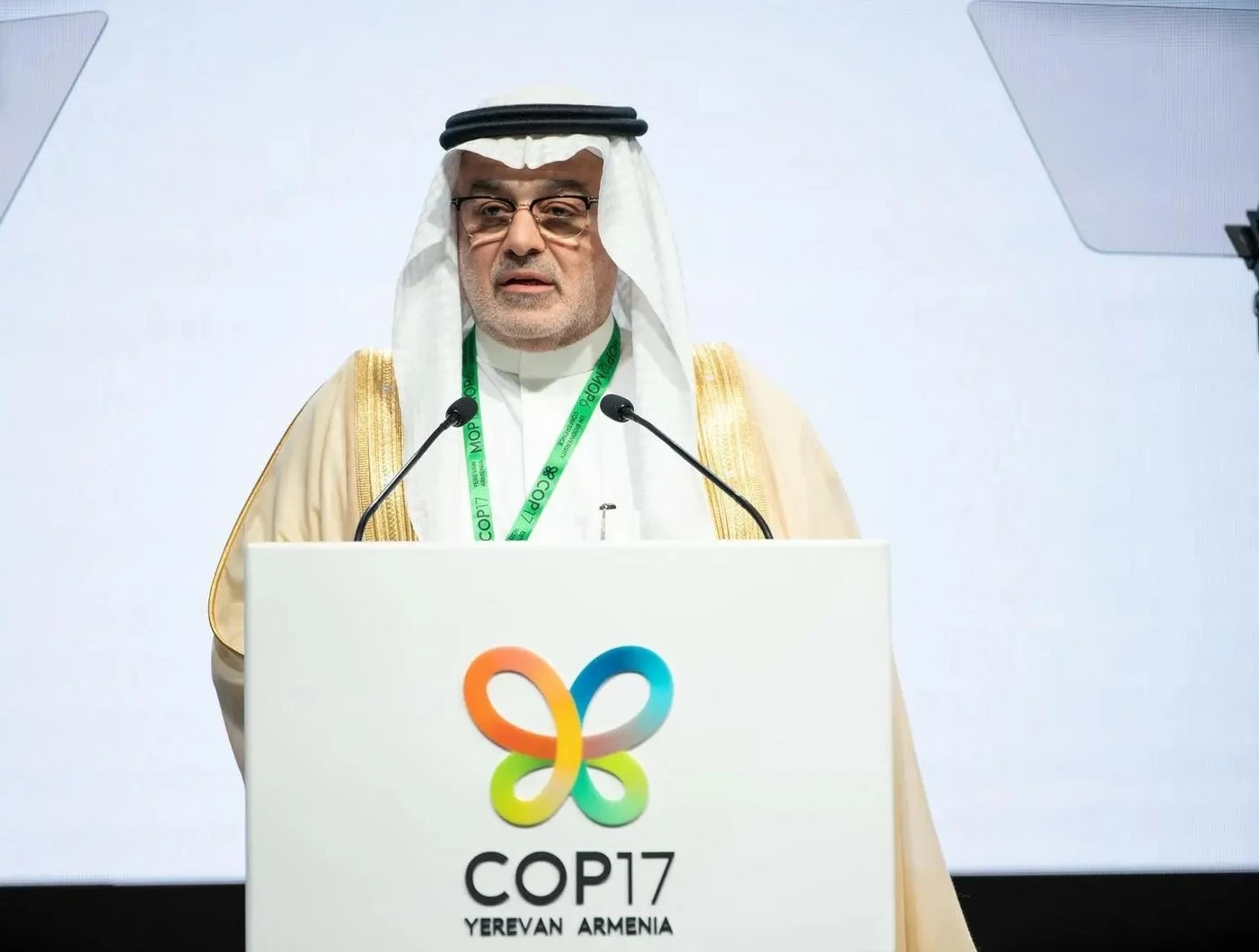

أكدت المملكة أهمية تعزيز التعاون الدولي وتسريع تنفيذ الأهداف العالمية للتنوع الأحيائي، من خلال تحويل الالتزامات البيئية إلى قرارات واستثمارات وشراكات تحقق نتائج ملموسة، مشددة على أن المحافظة على الطبيعة تمثل استثمارًا في استقرار الدول وأمنها الغذائي والمائي واستدامة تنميتها.
جاء ذلك في كلمة المملكة التي ألقاها الرئيس التنفيذي للمركز الوطني لتنمية الحياة الفطرية، الدكتور محمد بن علي قربان، رئيس وفد المملكة المشارك في مؤتمر الأطراف السابع عشر لاتفاقية الأمم المتحدة للتنوع الأحيائي (COP17)، خلال قمة القادة للتنوع الأحيائي التي عُقدت في العاصمة الأرمينية يريفان أمس، ضمن الفعاليات المرتبطة بالمؤتمر، الذي تنطلق اجتماعاته الرسمية في 19 أكتوبر وتستمر حتى 30 أكتوبر الجاري.
وأوضح الدكتور محمد قربان أن المملكة، بقيادة خادم الحرمين الشريفين الملك سلمان بن عبدالعزيز آل سعود، وصاحب السمو الملكي الأمير محمد بن سلمان بن عبدالعزيز آل سعود، ولي العهد رئيس مجلس الوزراء، -حفظهما الله-، تولي المحافظة على التنوع الأحيائي اهتمامًا كبيرًا، انطلاقًا من رؤية السعودية 2030 التي أرست نهجًا يدمج الاستدامة البيئية في التخطيط الوطني، ويعزز المحافظة على الموارد الطبيعية واستدامتها.
وأشار إلى أن المملكة أقرت إطارًا وطنيًا شاملًا للتنوع الأحيائي، يتوافق مع إطار كونمينغ – مونتريال العالمي للتنوع الأحيائي، ويتضمن 22 هدفًا وطنيًا تحدد أولويات العمل البيئي، وتوجه جهود القطاعات المختلفة نحو تحقيق المستهدفات الوطنية والدولية.
واستعرض أبرز المنجزات الوطنية في المحافظة على التنوع الأحيائي، مبينًا أن نسبة المناطق المحمية في المملكة بلغت 18.3% من مساحتها البرية و16.2% من مساحتها البحرية، ضمن جهودها لتحقيق مستهدف المحافظة على 30% من المناطق البرية والبحرية بحلول عام 2030.
وفي مجال استعادة النظم البيئية وتنمية الغطاء النباتي، أشار إلى أن المملكة أعادت تأهيل أكثر من مليون هكتار من الأراضي المتدهورة، وزرعت ما يزيد على 159 مليون شجرة، في إطار جهودها لتحقيق مستهدف إعادة تأهيل 40 مليون هكتار من الأراضي.
واستعرض جهود المملكة في تنمية الحياة الفطرية، التي شملت إطلاق أكثر من 10 آلاف كائن فطري في موائلها الطبيعية، بما يسهم في المحافظة على الأنواع المهددة بالانقراض، واستعادة التوازن البيئي، وتعزيز استدامة المجموعات الفطرية في بيئاتها الطبيعية.
وتطرق إلى جهود المملكة في تطوير منظومة إدارة النفايات، من خلال إنشاء المركز الوطني لإدارة النفايات وتنظيم القطاع، بما يدعم التحول نحو الاقتصاد الدائري، ويعزز إعادة التدوير واسترداد الموارد، ويسهم في الحد من التلوث وآثاره على النظم البيئية.
وفي مجال التنوع الأحيائي البحري، أوضح أن المملكة تولي المحافظة على الشعاب المرجانية والسلاحف البحرية في البحر الأحمر اهتمامًا خاصًا، مشيرًا إلى إنشاء المؤسسة العامة للمحافظة على الشعاب المرجانية والسلاحف في البحر الأحمر، لتعزيز جهود المحافظة على هذه الكائنات وموائلها الطبيعية، وإعادة تأهيل الشعاب المرجانية ومواقع تعشيش السلاحف البحرية.
وأشار إلى دعم المملكة للتعاون العلمي الدولي من خلال المنصة العالمية لتسريع أبحاث وتطوير الشعاب المرجانية، التي أُطلقت خلال رئاسة المملكة لمجموعة العشرين عام 2020، بهدف تعزيز البحث العلمي وتطوير الحلول المبتكرة للمحافظة على الشعاب المرجانية واستدامتها.
وأكد الرئيس التنفيذي للمركز الوطني لتنمية الحياة الفطرية أن تحقيق المستهدفات العالمية للتنوع الأحيائي يتطلب الانتقال من الالتزامات إلى التنفيذ، من خلال تعزيز الشراكات الدولية وتبادل المعرفة والخبرات، وتوجيه الاستثمارات نحو المبادرات التي تحقق أثرًا ملموسًا في المحافظة على الطبيعة واستعادة النظم البيئية.
وشدد في ختام كلمة المملكة على أهمية أن تسهم مخرجات قمة القادة للتنوع الأحيائي في تسريع تنفيذ الأهداف العالمية، وتعزيز التعاون بين الدول، معربًا عن تطلع المملكة إلى أن يشكل “نداء يريفان للعمل” خطوة إضافية نحو تحويل الطموحات المشتركة إلى إجراءات عملية، مؤكدًا استمرار المملكة في العمل مع شركائها الدوليين للمحافظة على التنوع الأحيائي واستدامة الموارد الطبيعية للأجيال القادمة.
ويُعقد مؤتمر الأطراف السابع عشر لاتفاقية الأمم المتحدة للتنوع الأحيائي (COP17) في العاصمة الأرمينية يريفان خلال الفترة من 19 إلى 30 أكتوبر 2026، بمشاركة ممثلي الحكومات والمنظمات الدولية والمؤسسات العلمية والجهات المعنية بالتنوع الأحيائي، لمناقشة التقدم المحرز في تنفيذ إطار كونمينغ – مونتريال العالمي للتنوع الأحيائي، وتعزيز التعاون الدولي لتحقيق مستهدفاته بحلول عام 2030.
The Kingdom emphasized the importance of enhancing international cooperation and accelerating the implementation of global biodiversity goals by transforming environmental commitments into decisions, investments, and partnerships that yield tangible results, stressing that the conservation of nature represents an investment in the stability of nations and their food and water security, as well as the sustainability of their development.
This was stated in the Kingdom’s speech delivered by the CEO of the National Center for Wildlife Development, Dr. Mohammed bin Ali Qurban, head of the Kingdom’s delegation participating in the seventeenth Conference of the Parties to the United Nations Convention on Biological Diversity (COP17), during the Leaders’ Summit on Biodiversity held in the Armenian capital, Yerevan, yesterday, as part of the events related to the conference, which will officially commence on October 19 and continue until October 30.
Dr. Mohammed Qurban explained that the Kingdom, under the leadership of the Custodian of the Two Holy Mosques King Salman bin Abdulaziz Al Saud and His Royal Highness Crown Prince Mohammed bin Salman bin Abdulaziz Al Saud, -may God protect them-, places great importance on biodiversity conservation, based on Saudi Vision 2030, which has established an approach that integrates environmental sustainability into national planning and enhances the conservation and sustainability of natural resources.
He pointed out that the Kingdom has adopted a comprehensive national framework for biodiversity, which aligns with the Kunming-Montreal Global Biodiversity Framework, and includes 22 national goals that define environmental work priorities and direct the efforts of various sectors towards achieving national and international targets.
He reviewed the most significant national achievements in biodiversity conservation, indicating that the percentage of protected areas in the Kingdom has reached 18.3% of its land area and 16.2% of its marine area, as part of its efforts to achieve the target of conserving 30% of terrestrial and marine areas by 2030.
In the field of ecosystem restoration and vegetation development, he noted that the Kingdom has rehabilitated over one million hectares of degraded land and planted more than 159 million trees, as part of its efforts to achieve the target of rehabilitating 40 million hectares of land.
He highlighted the Kingdom’s efforts in wildlife development, which included the release of more than 10,000 wild organisms into their natural habitats, contributing to the conservation of endangered species, restoring ecological balance, and enhancing the sustainability of wild populations in their natural environments.
He also touched on the Kingdom’s efforts in developing a waste management system by establishing the National Center for Waste Management and regulating the sector, which supports the transition to a circular economy, enhances recycling and resource recovery, and contributes to reducing pollution and its impacts on ecosystems.
In the field of marine biodiversity, he clarified that the Kingdom pays special attention to the conservation of coral reefs and sea turtles in the Red Sea, noting the establishment of the General Authority for the Conservation of Coral Reefs and Sea Turtles in the Red Sea to enhance efforts to conserve these organisms and their natural habitats, and to rehabilitate coral reefs and sea turtle nesting sites.
He pointed out the Kingdom’s support for international scientific cooperation through the global platform to accelerate coral reef research and development, which was launched during the Kingdom’s presidency of the G20 in 2020, aimed at enhancing scientific research and developing innovative solutions for the conservation and sustainability of coral reefs.
The CEO of the National Center for Wildlife Development emphasized that achieving global biodiversity targets requires moving from commitments to implementation by enhancing international partnerships, exchanging knowledge and experiences, and directing investments towards initiatives that have a tangible impact on nature conservation and ecosystem restoration.
In conclusion, he stressed the importance of the outcomes of the Leaders’ Summit on Biodiversity in accelerating the implementation of global goals and enhancing cooperation among countries, expressing the Kingdom’s hope that the “Yerevan Call to Action” will be an additional step towards transforming shared ambitions into practical actions, affirming the Kingdom’s continued work with its international partners to conserve biodiversity and sustain natural resources for future generations.
The seventeenth Conference of the Parties to the United Nations Convention on Biological Diversity (COP17) will be held in the Armenian capital Yerevan from October 19 to 30, 2026, with the participation of representatives from governments, international organizations, scientific institutions, and stakeholders in biodiversity, to discuss the progress made in implementing the Kunming-Montreal Global Biodiversity Framework and to enhance international cooperation to achieve its targets by 2030.