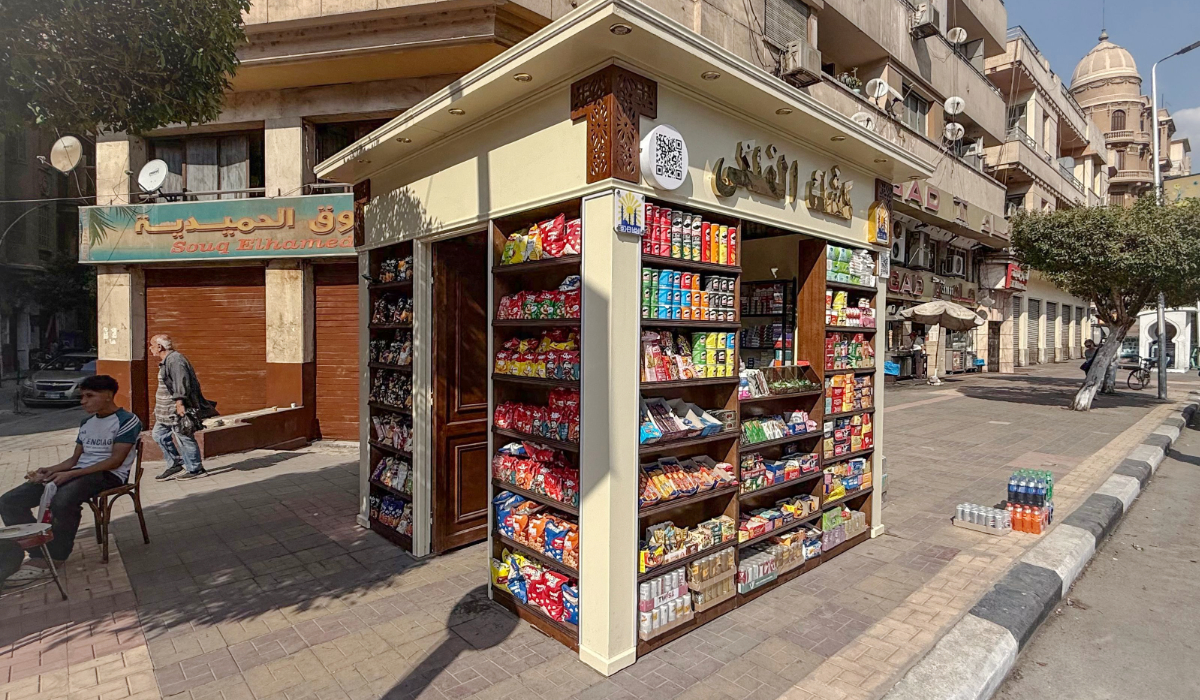
CAIRO: Cairo’s omnipresent street kiosks, where commuters grab cigarettes, children buy sweets, and residents stop for cold drinks or phone credit, are set for a makeover that some fear could price many small operators out of business.
Authorities in the Egyptian capital this week launched a scheme to standardise thousands of licensed kiosks, giving existing operators three months to adopt a unified design costing between 50,000 and 60,000 Egyptian pounds ($1,000-$1,200), a hefty sum for many small business owners.
The overhaul is the latest in a series of projects reshaping Cairo’s urban landscape, which critics say have at times come at the expense of the city’s architectural heritage and historic character.

Beneath a clutter of snack packets, soft-drink adverts and hanging cigarette displays in Cairo’s leafy Heliopolis district, shopkeeper Moamen Hassan topped up a customer’s phone credit as he voiced support for the plan but concern over the price tag.
“We definitely want the city to look better,” the 27-year-old told AFP.
“But many kiosk owners in poorer areas won’t be able to afford the cost. Some will have no choice but to close.”
Cairo Governor Ibrahim Saber described the scheme as an effort to improve the city’s appearance and keep pavements clear, and a prototype unveiled downtown offers a glimpse of that vision.
With its cream-colored exterior, gold lettering and neatly arranged shelves, it stands in stark contrast to the colorfully chaotic kiosks that line Cairo’s streets, their metal frames crowned with branded awnings and crammed with everyday goods.
‘IT MAKES LIFE EASIER’
Known locally as the koshk, the compact structures have been part of Cairo’s streetscape for generations, tucked between aging apartment blocks, transport hubs and busy intersections all across the sprawling city.
Often among the first businesses to open each morning and the last to close at night, many have become neighborhood landmarks.
“I pass by the kiosk almost every day,” 19-year-old university student Sabrine Ahmed told AFP. “It makes life easier.”
Under the new scheme, kiosks will be fitted with QR codes allowing the public and authorities to access information including license details and payment records.
The standardised structures, measuring either six or nine meters square, will also include fixtures like electricity meters and fire extinguishers.
The overhaul comes as many Egyptians are still struggling with the fallout from years of sharp currency devaluations and soaring prices.
To ease the burden, authorities say licensed kiosk owners can pay 25 percent upfront, or between 12,500 and 15,000 pounds, with the remainder spread over two years without interest.