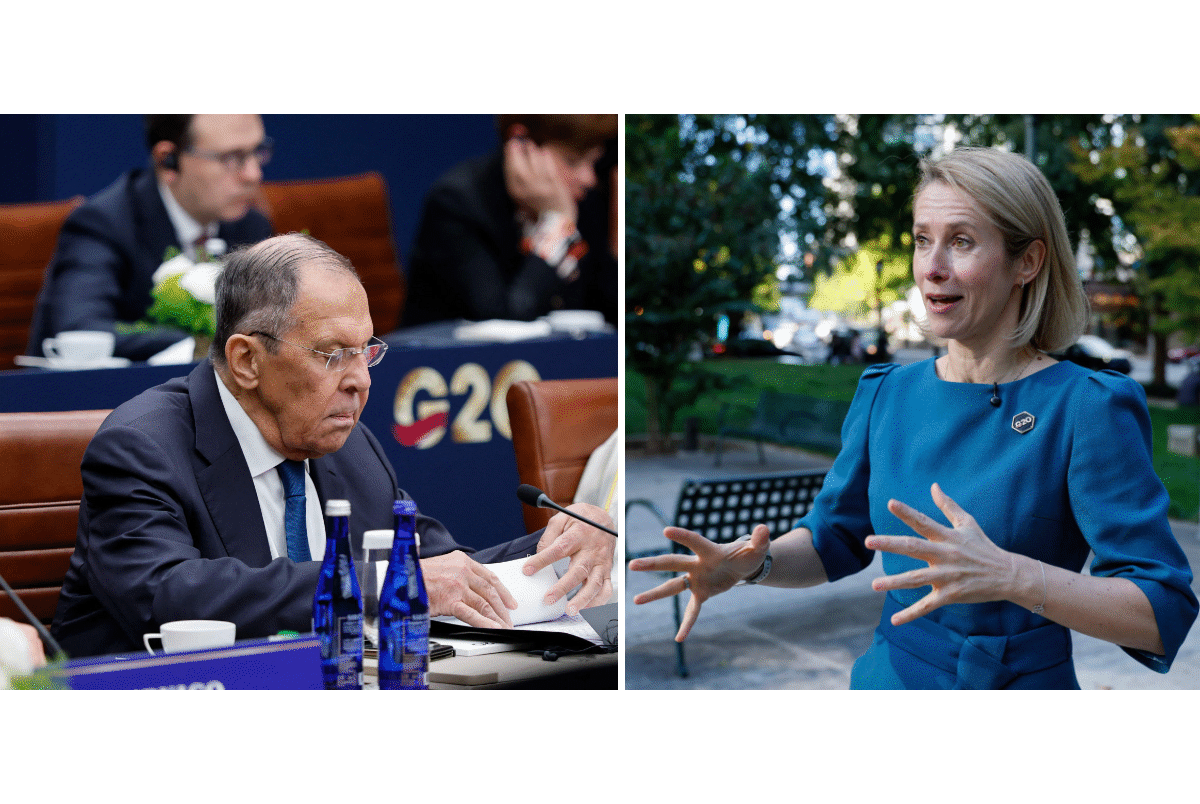

ATLANTA: Russian Foreign Minister Sergei Lavrov on Friday criticized Ukrainian President Volodymyr Zelensky’s remarks about continuing strikes on Russian targets, saying they undermined preparations for fresh peace talks, while the European Union’s top diplomat accused Moscow of spreading “lies” and showing no genuine readiness to negotiate.
The contrasting positions underscored persistent divisions over efforts to end the war in Ukraine, as foreign ministers gathered for a Group of 20 meeting in Atlanta ahead of expected trilateral negotiations involving Russia, Ukraine and the United States next month.
Lavrov, speaking to reporters on the sidelines of the two-day gathering, said Moscow’s position on the conflict remained unchanged and questioned what Kyiv intended to bring to the negotiating table.
“Our position is known, but what Ukraine intends to bring to the negotiating table, I don’t know,” he was quoted as saying by Russian news agencies.
He said Zelensky’s repeated statements about Ukraine acquiring additional weapons to strike Russian targets made preparations for negotiations more difficult.
“This kind of attitude doesn’t really help much in preparing for negotiations,” Lavrov said.
’A lot of lies’
EU foreign policy chief Kaja Kallas, however, accused the Russian minister of presenting false narratives during discussions on Ukraine at the G20 meeting.
“We were talking about the big geopolitical crises, including Ukraine, and we were able to address Sergei Lavrov head-on with this,” Kallas told AFP.
“Of course, he put forward a lot of lies, a lot of false narratives that we were also able to then rebuke,” she said.
Kallas also challenged Moscow’s claims that it was open to negotiations, arguing that its actions contradicted its stated position.
“Even if they would have said this in words, their deeds tell something else,” she said, pointing to July, August and September as the deadliest months for civilians in Ukraine.
“They should show with their deeds that they are ready to negotiate, but they are clearly, clearly not,” she added.
Kallas called for continued pressure on Russia, particularly to secure a ceasefire in the Black Sea, and said European governments remained committed to preventing Moscow’s presence at international gatherings from being normalized.
The diplomatic exchanges came as both Moscow and Kyiv have expressed willingness to resume three-sided negotiations with Washington for the first time since early this year.
Zelensky said this week that he hoped a meeting involving peace negotiators from the three countries would take place in Abu Dhabi between Nov. 6 and 10. He also said Ukraine wanted European representatives involved in discussions on ending the war.
Russian position has not changed — Lavrov
Lavrov reiterated that Russia’s position had not changed since the beginning of what Moscow calls its “special military operation,” saying it could not accept Ukraine becoming a military threat to Russia’s security interests.
He also criticized Washington’s continued support for Kyiv, saying fundamental issues in US-Russia relations remained unresolved despite the warmer contacts between the two countries.
“Fundamental issues are not being resolved. Sanctions remain, all the sanctions from (former President Joe) Biden are echoed by the current administration,” Lavrov said.
He also alleged that US intelligence-sharing cooperation with Ukraine had increased and that arms supplies were continuing.
His remarks came as the US State Department announced approval of the sale of 500 Patriot PAC-3 missiles to Ukraine.
Lavrov’s attendance at the G20 gathering had already created tensions with European representatives, reflecting the continuing diplomatic isolation of Moscow over its invasion of Ukraine.
The traditional group photograph of foreign ministers was canceled, with a diplomatic source telling AFP that some European officials had declined to appear alongside Lavrov.
Kallas said European officials had agreed not to normalize Russia’s presence at international platforms following Moscow’s invasion of Ukraine.
“We haven’t changed our policies,” she said.
A US official said the photograph was canceled to prevent a ceremonial occasion from becoming “a diplomatic distraction.”
Kallas expressed regret that the international community was not sending sufficiently clear signals over the conflict.
“For us, it is very clear that the pressure should be on the aggressor to stop this war,” she said.