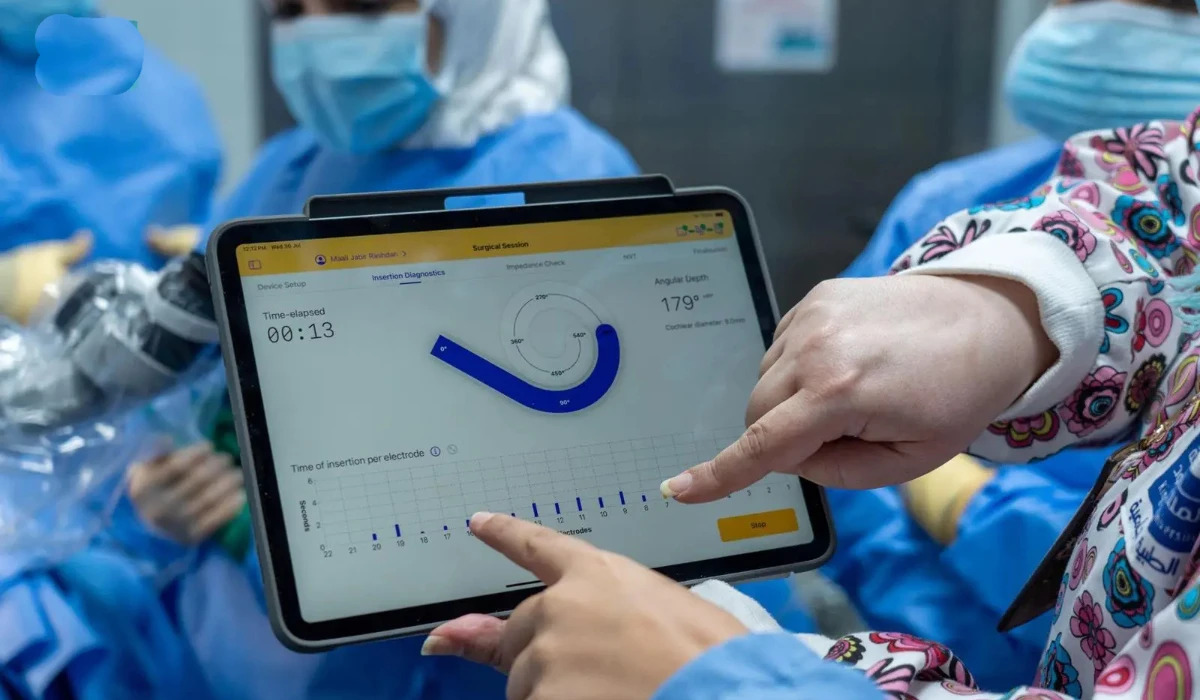

During a recent visit to the Shizuoka Cancer Center, a leading medical and research institution in Japan’s Shizuoka Prefecture, I found myself confronting two realities at once.
The first was an impressive expression of modern medicine: advanced treatment, exacting research and an institution seeking to connect clinical care with pharmaceutical innovation. The second was quieter but more powerful. Nearly every patient I passed was facing cancer and beside most stood a relative whose life had also been changed by the diagnosis.
A hospital may contain some of humanity’s most advanced knowledge. It also contains some of its oldest fears.
In such a place, medical excellence is anything but an abstraction. In a hospital, every scientific advance eventually arrives at one person in a vulnerable moment. Every diagnosis enters a life filled with memories, relationships, responsibilities and hopes. Illness inhabits one person but its consequences touch a family and a community.
This is where any serious consideration of health resilience should begin.
Health resilience is not one program within transformation; it is part of transformation’s capacity to serve human life
Dr. Ghazi Faisal Binzagr
The term is commonly associated with the ability of health systems, including hospitals, to withstand emergencies: pandemics, natural disasters, supply shortages or sudden pressure on medical capacity. These capabilities are indispensable. COVID-19 demonstrated, however, that a health emergency does not remain within healthcare. It also moves through families and schools, work and travel, economies and supply chains, and ultimately into the heart of national decision-making and security.
Yet a health system may remain operational while the health of society deteriorates.
Health resilience must therefore mean more than keeping institutions functioning through crisis. It must encompass the ability of a society to cultivate health before illness, respond intelligently when illness arrives and preserve dignity and meaning when medicine cannot restore the body to what it once was.
Such resilience is not created by strong institutions standing apart. It grows when their knowledge and capabilities remain connected — to one another and to the human being they ultimately serve.
Not far from the cancer center, at the University of Shizuoka, I encountered two practical examples of how such connections are cultivated.
Japan and Singapore are very different yet each has cultivated something approaching a national miracle
Dr. Ghazi Faisal Binzagr
Students of pharmaceutical sciences were being trained in the administration of medicines, including injections, although many would never perform such procedures professionally. The purpose was not to blur professional boundaries but to prevent pharmaceutical knowledge from becoming detached from human experience. A medicine is not only a compound to be formulated, tested or dispensed. It eventually enters a living body, carried by trust and accompanied by consequence.
Nearby, the university’s botanical garden, used in pharmaceutical, nutritional and food studies, extended the same principle in another direction. If the training connected medicine to the person who receives it, the garden connected modern science to the living world from which much medical knowledge first emerged. It did not ask students to choose between inherited observation and scientific rigor but to understand how one can inform the questions the other tests.
The cancer center, the pharmaceutical training and the botanical garden were not simply three interesting encounters. Together, they revealed that health resilience depends not only on the strength of individual institutions but on their capacity to remain connected: to the person who suffers, to the professional who carries responsibility, to the society in which illness occurs, and to the sources from which medicine continues to learn.
Saudi Arabia’s transformation gives this understanding immediate relevance. Vision 2030 has widened the connections through which the Kingdom understands progress, while COVID-19 revealed how inseparable health is from the economy, education, mobility and national security. Health resilience is not one program within transformation; it is part of transformation’s capacity to serve human life.
The burden of chronic disease makes this urgent. Diabetes affected an estimated 5.3 million Saudi adults in 2024, with an age-standardized prevalence of 23.1 percent. At such scale, illness cannot be treated as a succession of isolated clinical episodes. It is a continuous human reality and care must learn to become continuous with it.
Behind those numbers, in Saudi Arabia today is a person who can sleep while their glucose levels continue to be monitored. As family members rest nearby, readings can reach health institutions, helping reveal change, anticipate risk and guide care. Technology does not replace the concern of those beside that person; it allows the health system to join them in caring, extending institutional capability into the home without displacing the relationships that make it a place of belonging.
But continuity cannot begin only after diagnosis.
Through my years with the Saudi Sports for All Federation, I have witnessed how accessible movement, rooted in families, neighborhoods and communities, can turn health from something medicine repairs into something society creates. Health transformation, Sports for All and the Kingdom’s quality of life ambitions shape the same human life from different directions.
The encounters in Shizuoka formed part of a larger Japanese lesson. Japan’s longevity is a civilizational achievement but it is also requiring the country to reconsider care, independence, community and purpose. Its value lies in the knowledge it continues to accumulate: how to support older people within their communities, connect medical and long-term care, use technology to strengthen human presence rather than replace it, and ensure that years added to life remain years of contribution and belonging.
Japan’s use of robotics offers a striking example. Wearable systems can assist movement, surgical robots can extend the physician’s precision and robotic avatars can enable people confined by illness or disability to participate from afar. The machine matters but the deeper achievement is human: preserving agency and belonging when physical strength changes form.
Saudi Arabia is shaping new systems while its population remains comparatively young; Japan is adapting established systems as longevity transforms society. Their differences make them valuable to one another. The opportunity is not simply to transfer solutions but to discover how health systems can remain technically advanced, socially connected and fully human.
My years in Japan have reminded me of another country I have visited and studied repeatedly for more than a decade. Singapore’s achievement lies not in one health program but in its practice of national transformation: balancing access, quality and affordability while connecting health to housing, mobility, economic sustainability and quality of life.
What has impressed me most is the movement between scale and detail. National objectives provide direction; close observation reveals where policy must be refined. Concepts are tested against daily life and reconsidered whenever progress in one field creates consequences in another.
Japan and Singapore are very different yet each has cultivated something approaching a national miracle — not perfection but a distinctive capacity built from history, necessity and human effort. Saudi Arabia brings its own: the energy of a society transforming at exceptional speed, technological ambition joined to enduring family bonds, and a vision placing quality of life within national progress.
The invitation is larger than an exchange of best practices. It is for societies to bring their finest qualities into a deeper relationship. No country contains the complete wisdom the future requires. Through the quality of their connections, nations may create possibilities that none could produce alone.
These reflections return me to where they began: the Shizuoka Cancer Center and to the unsettling lesson cancer itself offers about change. Life depends upon change: cells divide, organisms adapt and societies renew themselves. Yet not every change serves life. Growth detached from the order that sustains the whole can become destructive.
The analogy must not be pushed too far. But it raises a question at the heart of every national transformation: How can change strengthen the whole rather than advance one part at the expense of others?
Speed is not, by itself, evidence of progress, nor is the accumulation of technology or wealth. A healthy transformation holds together economic sustainability, good governance, security and a quality of life that reveals what they are ultimately for. Its measure is whether the whole has grown more capable of sustaining human life — especially when life becomes vulnerable.
For vulnerability is not a temporary defect that successful societies will eliminate. It is part of being human. We begin life dependent upon others. Many will encounter illness or disability. Those who live long enough will experience some loss of physical capacity. A society reveals its understanding of progress not only in how it celebrates strength but in how it accompanies people when strength changes form.
Arabic and Islamic tradition offers a name for the wisdom such a society requires. The physician was often called “al-hakim,” the wise one. The word implied more than command of remedies. It joined knowledge with judgment, the body with the person and the act of treatment with responsibility for the balance of life.
Perhaps the future asks us to enlarge this meaning beyond the individual physician. The wisdom of al-hakim may become a collective quality: science exact enough to determine what can be done; judgment broad enough to ask what should be done; and societies humble enough to place their finest knowledge in one another’s service.
For we are embodied beings but we are not bodies alone. We are memory and relationship, aspiration and responsibility, matter and spirit. Medicine can preserve life and relieve suffering. Society must help ensure that the life preserved can still find belonging, dignity and meaning.
The future of health will not be decided only by what medicine becomes. It will also be decided by what society remembers a human being to be.