
RIYADH: Durrah had no symptoms when doctors discovered that she carried a genetic mutation that was weakening her heart muscle.
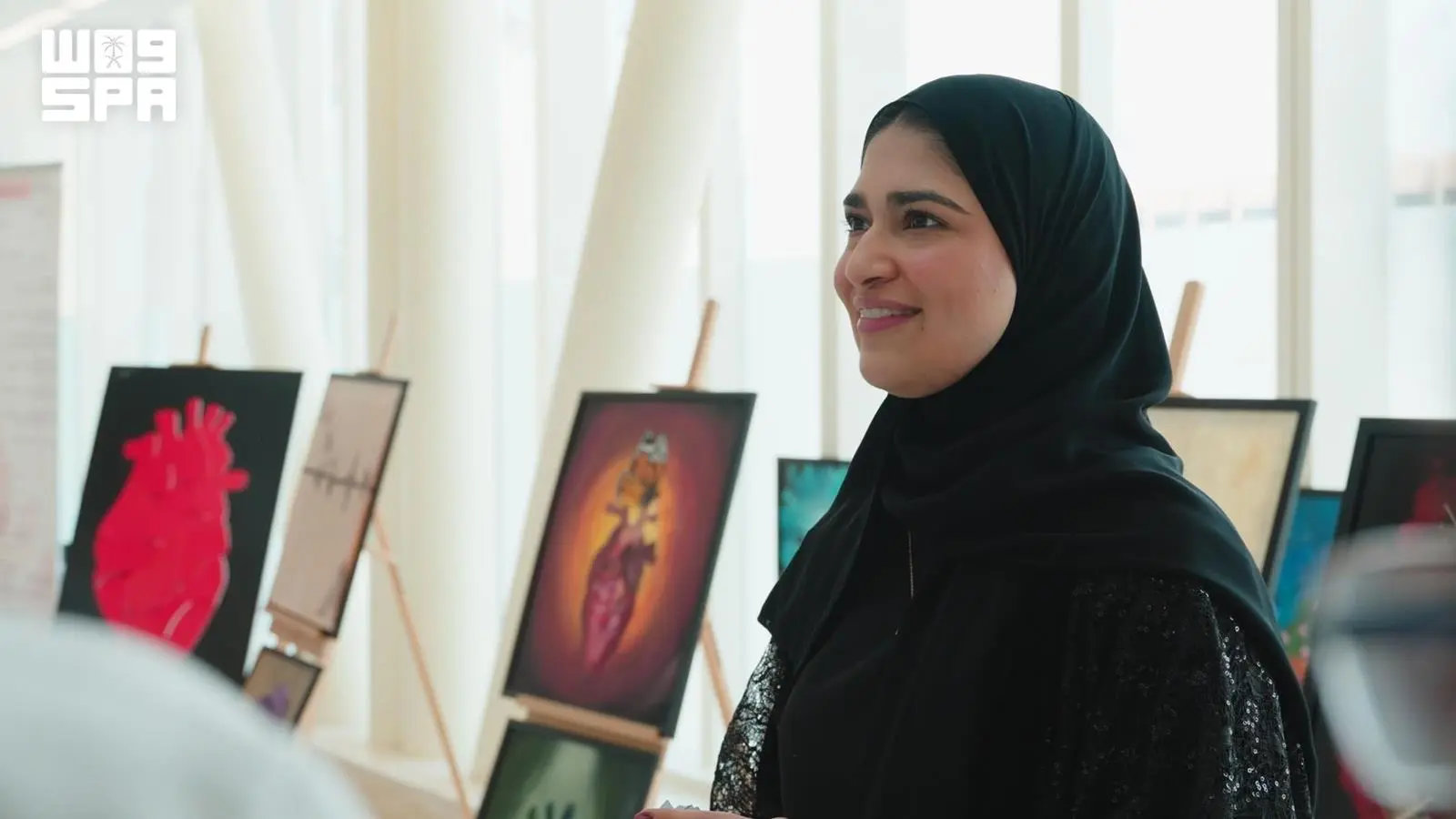
A year after undergoing a heart transplant at King Faisal Specialist Hospital and Research Center (KFSH) in Riyadh, the woman in her twenties has returned to law school and painting, often making the heart a subject of her artwork.
Her diagnosis came after her sister was found to have cardiomyopathy. Genetic testing identified a mutation linked to the disease, prompting doctors to recommend screening other family members.
Durrah carried the same mutation, allowing doctors to monitor her condition before the disease progressed.
Dr. Ahmed Almustafa, a consultant in adult heart failure at KFSH who supervised her case, said genetic testing is an important tool for identifying the causes of cardiomyopathy and detecting the condition in family members before symptoms appear.
“Cardiomyopathy has many causes, and genetic testing is one of the most important steps in finding the cause,” he said. “These conditions can appear in family members to different degrees, so testing lets us identify carriers even before symptoms appear, and follow them before the disease reaches an advanced stage.”
As her heart function deteriorated, Durrah underwent cardiac catheterization and an MRI and received medication. When treatment was no longer sufficient, a medical committee placed her on the transplant waiting list.
She waited about five months for a suitable donor, spending part of that time in intensive care under daily monitoring.
The transplant operation lasted eight hours, from noon until 8 p.m. A nurse remained with Durrah’s family throughout the procedure, while Almustafa periodically emerged to update them.
When the operation was completed, the nurse told Durrah’s mother: “That’s it. I have delivered what was entrusted to me.”
Following the transplant, Durrah was placed on extracorporeal membrane oxygenation (ECMO), a life-support system that temporarily takes over part of the work of the heart and lungs, helping reduce the strain on the newly transplanted organ.
She was taken off ECMO three days later, and her body accepted the new heart.
A year on, Durrah has returned to her studies and divides her time between lectures, sports, travel and painting — the pursuit that remains closest to her heart.
“It’s hard to receive news like that when you don’t feel anything at all,” Durrah said. “I thought I was living my life the right way.”