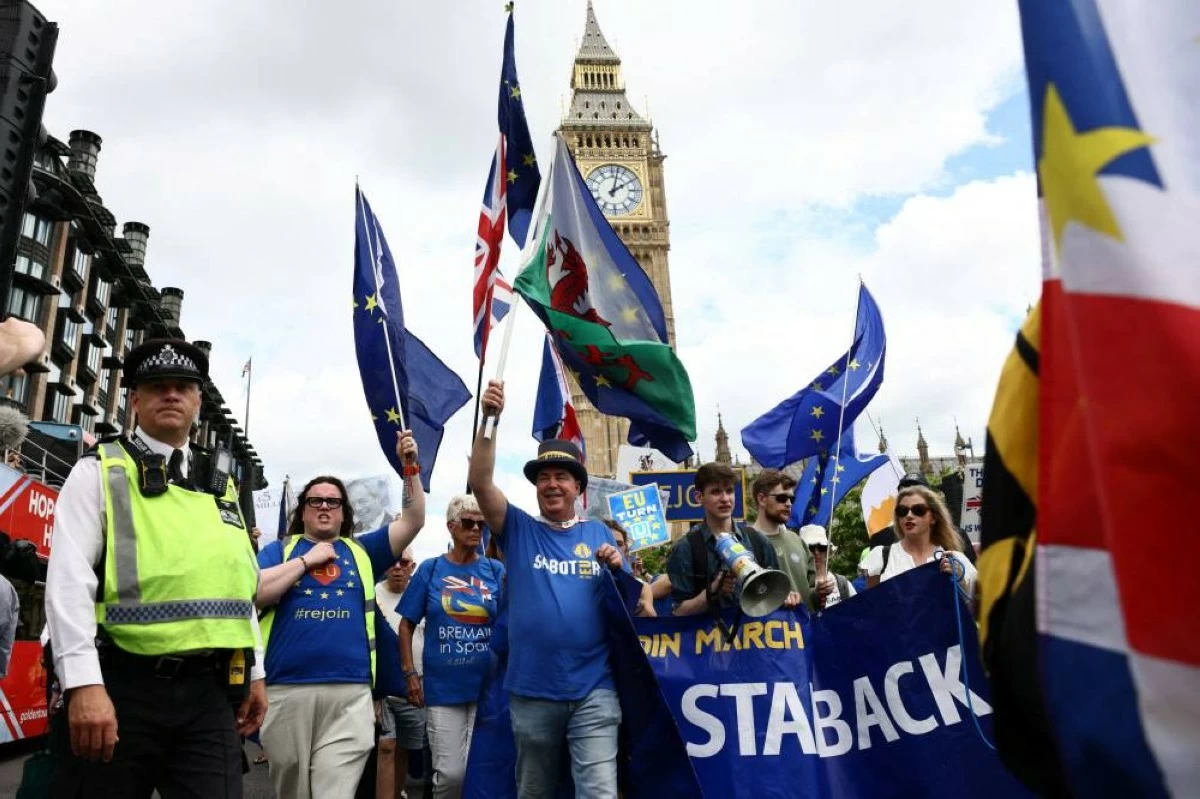

London: Ten years ago, the United Kingdom voted to leave the European Union in a referendum that continues to shape political identities and brought an end to a half-century effort to deepen ties with Europe.
Brexit, short for “British exit”, became a reality on 23 June 2016, when 52% — more than 17 million people — voted to leave the EU. Although the margin was narrow, the result triggered the most significant upheaval in the UK’s economy and society since the Second World War.
Like any divorce, the process was prolonged. It took nearly five years to complete the formal withdrawal.
Brexit emerged from growing frustration not only with the EU but also with the aftermath of the 2008 global financial crisis. Supporters argued that the UK could thrive independently, focusing on domestic priorities, while opponents warned of economic disruption and a diminished global role.
A decade on, the UK economy has not seen the revival many Brexit supporters had envisioned. Businesses continue to face new barriers when trading with the EU, which remains the UK’s largest trading partner. While tariffs have not been imposed on British goods, non-tariff barriers — such as complex customs procedures, border checks and visa requirements — have created significant challenges. Promised trade deals, particularly with the United States, have largely failed to materialise.
Economists estimate that the UK economy is between 4% and 8% smaller than it would have been had the country remained in the EU, implying lower living standards and reduced funding for public services such as the National Health Service.
“Brexit has made the UK economy smaller than it otherwise would have been,” said Jonathan Portes, professor at King’s College London, describing its impact as a gradual drag on trade, investment and productivity rather than a sudden collapse.
Brexit supporters argue that its benefits should be judged over the long term. While free movement between the UK and EU has ended, efforts to control immigration have produced mixed results. Net migration from EU countries has declined, but arrivals from non-EU countries have risen, partly due to visa changes introduced to address labour shortages.
Overall net migration has fallen sharply, from more than 900,000 in 2023 to 171,000 last year. However, illegal Channel crossings remain a major political issue, with thousands arriving in small boats each year. Public concern has focused particularly on asylum seekers, sometimes leading to protests outside accommodation sites.
Politically, Brexit has reshaped the UK landscape. Support for the long-dominant Conservative and Labour parties has declined. The Conservatives lost power in 2024 after 14 years, much of it overshadowed by disputes over relations with Europe.
The Labour government has also struggled to win strong public approval, with Prime Minister Keir Starmer reportedly nearing resignation. Meanwhile, Reform UK, led by Nigel Farage, has gained traction and led opinion polls for over a year.
Public sentiment increasingly suggests dissatisfaction with Brexit. Polling indicates that 52% of Britons would support rejoining the EU, while only 33% oppose it. Nearly half believe Brexit has performed worse than expected, and 48% would back another referendum.
Against this backdrop, Labour has taken a cautious approach, ruling out rejoining the EU or its single market while seeking to improve relations. Starmer has aimed to “reset” ties with the bloc, particularly by easing trade, and hopes to announce further measures at an upcoming EU summit.
His likely successor, Andy Burnham, has ruled out rejoining the EU, emphasising respect for the original referendum result.
A decade after the vote, Brexit remains a defining and divisive force in British life, with its long-term consequences still unfolding.