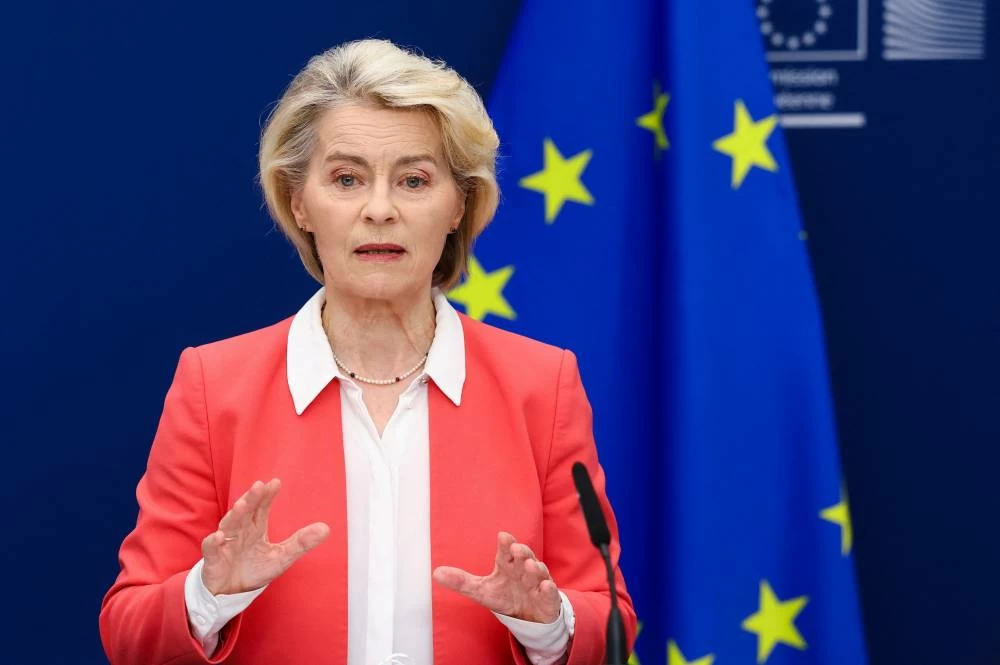

Brussels: The European Union plans to introduce restrictions on children’s access to social media platforms across its 27 member states, European Commission President Ursula von der Leyen announced on Monday.
The proposal, which would be the EU’s most significant effort yet to address online risks facing children, is based on recommendations from two experts advocating a phased approach to social media access.
Under the recommendations, children under the age of 13 would only be allowed limited access to social media under the supervision of parents, caregivers or teachers. Restrictions would gradually ease as young users grow older.
“It is clear we need age-appropriate restrictions to platforms,” von der Leyen told reporters in Brussels.
“The question is no longer if children face risks online, but what can we do to give children a safer start online,” she said.
Von der Leyen indicated that the European Commission is likely to follow the recommendations and present a formal proposal after the summer. The initiative is expected to be unveiled during her State of the Union address in September.
She said the measures would primarily target social media platforms, while also covering other services that contain age-inappropriate or potentially addictive features.
“We first need to consider the type of platforms that are harmful to our children. The evidence shows that this is mainly social media platforms, but also other providers with age-inappropriate and addictive features. So think of it as social media plus,” von der Leyen said.
The proposed restrictions would place the EU alongside countries including Australia, Britain, China, India and the United States, which have either introduced or are considering measures to limit children’s access to social media platforms.
The initiative is expected to affect major platforms such as TikTok, YouTube, Instagram and Facebook, although many already have minimum age requirements and existing child-safety measures in place.