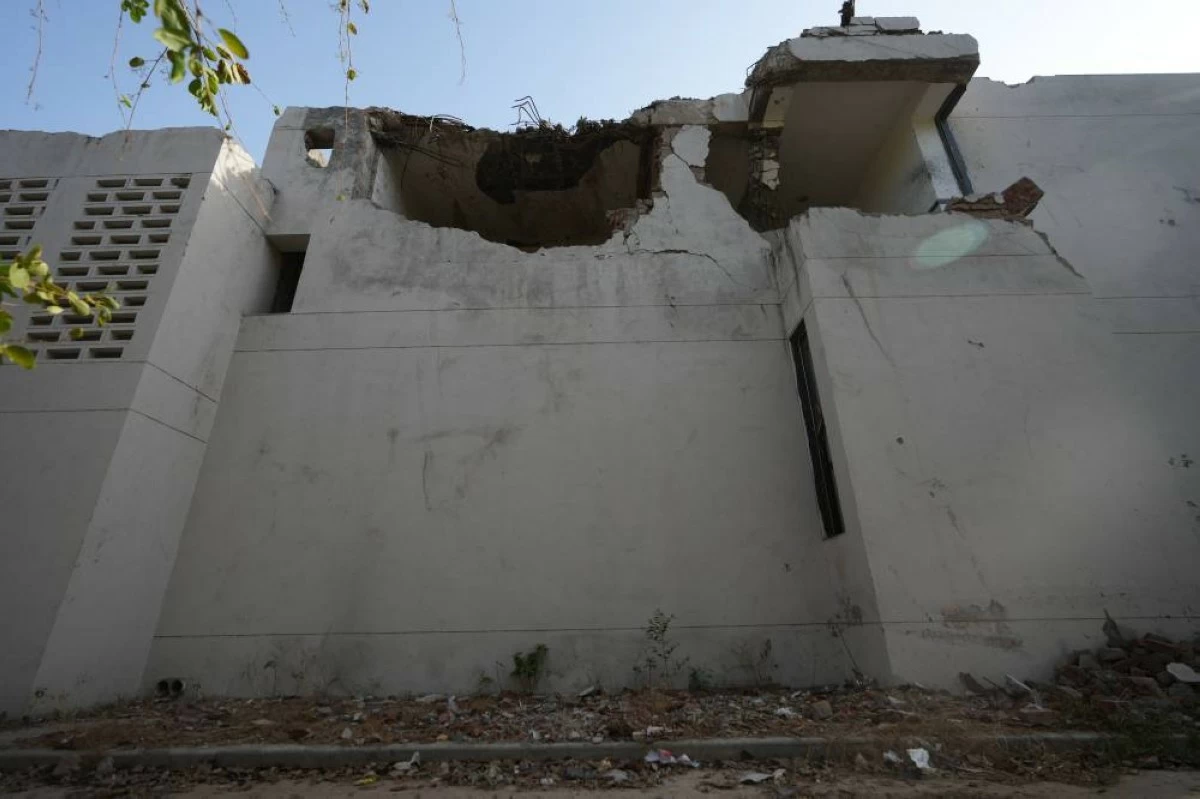

NEW DELHI: Indian investigators are expected to delay issuing a final report into a deadly Air India Boeing 787 crash by the one-year anniversary on Friday, citing the need to complete an analysis of the plane’s engines, according to a source with knowledge of the matter.
A cockpit recording of dialogue between the two pilots supported the view that the captain cut the flow of fuel to the plane’s engines, according to U.S. officials’ early assessment reported by Reuters last year. Indian investigators said at the time it was “too early to reach any definite conclusions.”
The father of the captain asked India’s top court to order an independent investigation that took into account causes other than deliberate pilot action, which has been suspected or confirmed in the following fatal crashes.
CHINA EASTERN AIRLINES, 2022:
A China Eastern Boeing 737-800 jet plunged into a hillside in southern China in March 2022, killing all 132 people on board.
Last month, the U.S. National Transportation Safety Board released data indicating the fuel supply was switched off to both engines – the first significant investigative update on the crash.
“It was found that while cruising at 29,000 feet, the fuel switches on both engines moved from the run position to the cutoff position,” the NTSB said.
Flightradar24 said the data also showed downward force was applied to the first officer’s controls after the fuel to the engines was cut off. The update from the NTSB came after China’s aviation regulator opted for the second year not to release an annual update on its investigation of the crash, letting the fourth anniversary pass without providing any insight into the cause.
GERMANWINGS, 2015:
A Germanwings Airbus A320 jet crashed into a French mountainside on March 24, 2015, on a flight from Barcelona to Duesseldorf, killing all 150 people on board. Investigators concluded that First Officer Andreas Lubitz locked the captain out of the cockpit and deliberately crashed the plane.
Prosecutors have said Lubitz, a pilot at the now-closed Lufthansa low-cost subsidiary, was suffering from a mental disorder with psychotic symptoms that led to suicidal thoughts, but he had concealed his illness from his employer. In 2018, the European Commission adopted new rules on pilot mental health requiring airlines for the first time to carry out a psychological assessment of pilots before they were hired.
MALAYSIA AIRLINES, 2014:
Based on satellite tracking and later wreckage finds, investigators believed it veered thousands of miles off course and crashed in a remote area of the southern Indian Ocean.
A final report by the Australian Transport Safety Bureau showed Captain Zaharie Ahmad Shah had flown a route on his home flight simulator six weeks earlier that was “initially similar” to the one actually taken by MH370. The Malaysian investigation team said the controls were likely deliberately manipulated to take the plane off course, but they were not able to determine who was responsible.
EGYPTAIR, 1999: An EgyptAir flight crashed off Nantucket, Massachusetts, on October 31, 1999, killing all 217 people on board the Boeing 767. U.S. investigators concluded in a final report that the flight’s relief first officer stated, “I rely on God,” and moved the controls abruptly into a nose-down position, deliberately crashing the plane. But Egyptian investigators accused the NTSB of twisting evidence to support its suicide theory and produced their own report citing technical problems.
SILKAIR, 1997:
All 104 people aboard a SilkAir Boeing 737-300 were killed when it crashed near the Indonesian city of Palembang during a routine flight from Jakarta to Singapore on December 19, 1997.
Air traffic controllers did not receive a distress call from the plane, flown by a now-closed regional subsidiary of Singapore Airlines.
Investigators found that the flight recorders had stopped minutes before it crashed, fuelling speculation about deliberate pilot action. But the exact cause has been disputed.
Indonesian investigators said in a final report that given the limited data and information from the wreckage and flight recorders, they were unable to find the reasons for the plane departing cruising altitude.
But the U.S. NTSB said the evidence suggested the cockpit voice recorder was intentionally disconnected, the recovery of the plane was possible but not attempted and it was more likely the nose-down flight inputs were made by the captain than the first officer.