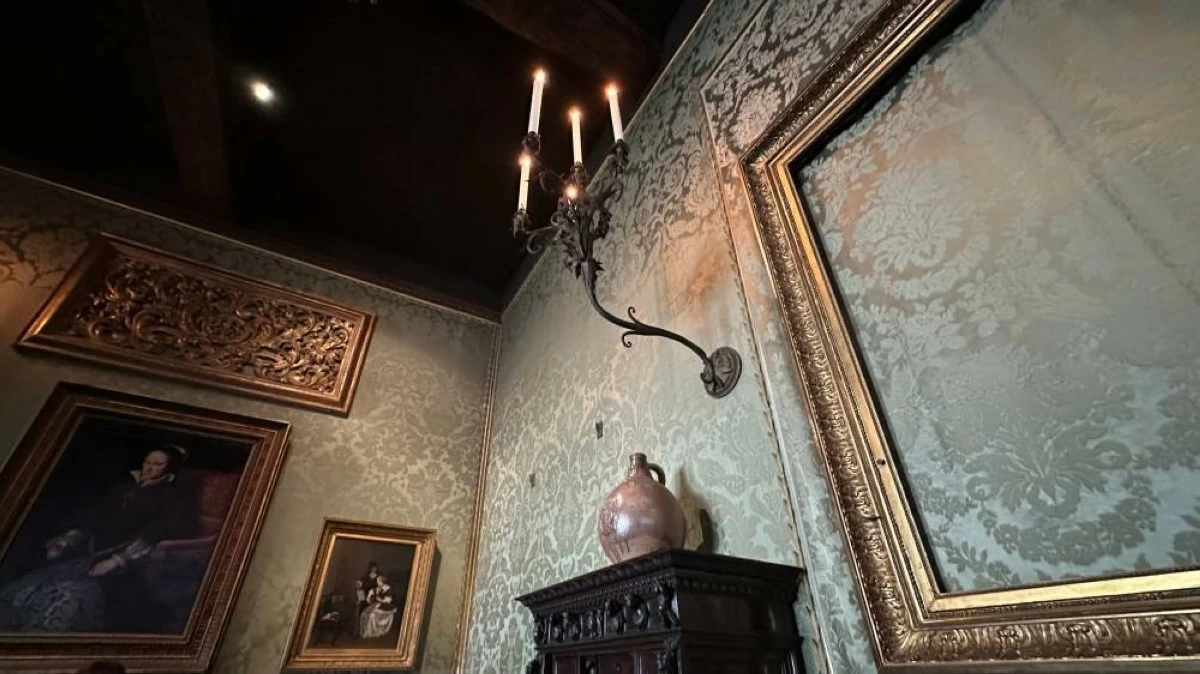

Boston: More than three decades after 13 artworks worth over $500 million were stolen from the Isabella Stewart Gardner Museum, the 1990 heist remains the largest art theft in history and an enduring mystery.
The robbery, which dwarfs more recent museum thefts in scale and value, has never been solved. In 2013, the FBI said it knew who was responsible but declined to name suspects, fuelling speculation that continues today.
A former FBI agent who led the investigation for more than 20 years is now offering the first detailed public account of how investigators reached that conclusion. In a new book, Geoff Kelly traces how the stolen artworks moved through criminal networks, alleges the involvement of specific individuals, and revisits long‑standing theories surrounding the theft.
The irony at the heart of the case lies in museum founder Isabella Stewart Gardner’s wishes. Gardner stipulated in her will that nothing in the Venetian‑style museum should ever be altered after her death in 1924. Today, the empty gilded frames of the missing works still hang on the walls, silent reminders of what was taken.
In the early hours of March 18, 1990, as Boston wound down from St. Patrick’s Day celebrations, two men dressed as police officers persuaded a security guard to let them into the museum, a clear breach of protocol. The men handcuffed the guards in the basement and made their way to the Dutch Room, cutting Vermeer’s ‘The Concert’ and Rembrandt’s ‘Christ in the Storm on the Sea of Galilee’ from their frames, along with works by Degas and Manet.
They also took a Napoleonic eagle finial — an item of relatively low value that puzzled investigators — and removed the museum’s surveillance tapes. The museum initially offered a $5 million reward for information leading to the recovery of the artworks, later doubling it.
Over the years, tips pointed to possible links to the Irish Republican Army and Boston organized crime figures, including notorious mob boss Whitey Bulger. Investigators pursued leads across the United States and Europe, even staging undercover operations involving FBI agents posing as wealthy buyers aboard a yacht in France.
Closer to home, agents relied heavily on informants. One terminally ill triple murderer secretly recorded conversations in hopes of securing money for his family. None of the leads, however, resulted in the recovery of the paintings.
Several figures believed to be connected to the heist later died violently or under suspicious circumstances. Robert “Bobby” Donati, a Boston mob associate long suspected of involvement, was stabbed to death in 1991, his body found in the trunk of a car. Investigators later learned Donati had previously discussed stealing the museum’s Napoleonic finial as his “calling card.”
Another suspect, George Reissfelder, believed to have owned the getaway car, also died under questionable circumstances. When investigators searched his home, a painting that his brother claimed to recognize as Manet’s ‘Chez Tortoni’ was gone.
Despite decades of investigation, definitive proof proved elusive. Early resource limitations and controversial decisions, including the release of unrelated surveillance footage, complicated the case and fuelled false suspicions.
Questions have also lingered about whether the theft involved inside help. A guard on duty that night denied any involvement. By the time investigators examined certain aspects more closely, the statute of limitations had expired. The guard died in 2024.
Kelly describes the missing artworks as “perfect fugitives.”
“They don’t go to the doctor. They don’t get stopped for speeding. They don’t leave fingerprints,” he said. “They can just disappear.”
Despite countless false leads over the years, Kelly remains convinced the paintings still exist — and may one day resurface.