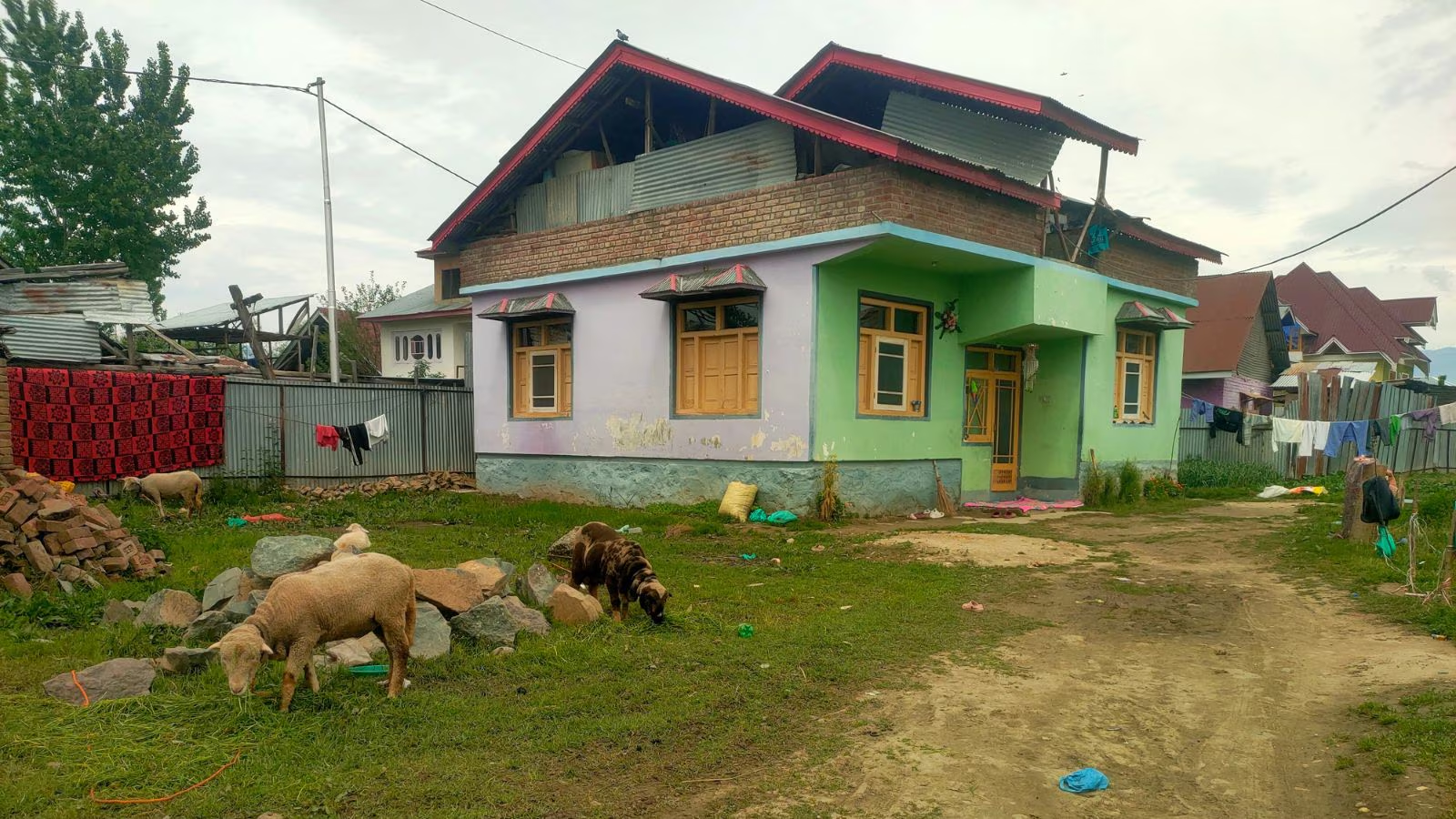
On the front porch of a single-storey house at Panzipra in Kashmir’s Sopore, Kulsooma sat alone, sobbing. Her brother, Altaf Ahmed Sheikh, was called to the local police station on April 14, and on April 24, he was booked under the stringent Public Safety Act (PSA) and sent to jail in the Bhaderwah district of Jammu.
Theirs is one of six such families in Sopore that are grappling with the “harsh treatment” meted out to their wards. All are households with limited means, and the families are unsure of the next steps to meet their children or find a lawyer.
On April 13, protests broke out in Sopore town after students of a government school alleged harassment of a girl by an Urdu teacher there. Sloganeering and stone pelting incidents were recorded despite the police’s near immediate filing of an FIR and booking the teacher. Though the protest is believed to have begun within the school compound, it spilt onto the main market.
The next day, six local men – Umar Akbar Hajam, Salman Ahmed Shala, Altaf Ahmed Sheikh, Mubashir Ahmed Gilkar, Muzammil Mushtaq Changa, and Majid Firdous Dar – were called to the police station or picked up from home, according to their families.
In a statement issued last Friday, the Sopore police said they were accused of “disturbing public order”.
Barring two, the families of those arrested claimed that the accused were “bystanders” and were “caught in the chaos of the students’ protest”. Though they have been described as “miscreants” by the police, each family claimed that the men did not have any prior run-ins with the law.
Inspector General Police (Kashmir Zone), V K Birdi, told The Indian Express on Monday, “All the processes were on the basis of sufficient evidence of involvement.”
At Shalapora, Mohammad Ramzan Shalla, imam at a local mosque, told The Indian Express that his son Salman (23), who works as a salesman at a dry fruit shop near the police station, did participate in the protest, but added: “It was not an anti-national protest. It was about schoolchildren protesting against a teacher’s behaviour. Anyone would be upset by that.”
Story continues below this ad
His daughter studies at the same school. “Salman heard about the protest and went to see what was happening.” After that, Ramzan said, he received a call from the local police station and was told that Salman had suffered a head injury. “I met him at the hospital and brought him back, but then he was called to the police station the next day, and now he’s been taken to Jammu.”
At Panzipora, Kulsooma said her brother Altaf (21) quit school after the eighth standard to learn carpentry and help out at home. “He was at a job in Baramulla and was on his way back from there. Our father is too weak to work now, so Altaf is the only earning member.”
Pregnant with her first child, she questioned the decision to book her brother under PSA. “He didn’t throw stones in 2016 when the whole state was in uproar, why would he do that now?” she said.
Chinkipora is about ten kilometres from the main town. Firdous Ahmad Dar, a resident, recalled that when he got a call about his son, Majid Firdous Dar, he asked his brother-in-law to go and check. The family said Majid worked as a driver and was “in the vicinity when the protests broke out”.
Story continues below this ad
“I can’t afford to go to Bhaderwah, and I have never been beyond Anantnag; I won’t know how to reach him,” he said. He added that his son did join the protest, “but it was not for the wrong reasons”.
A walking distance from his dilapidated house is another family with the same story. Mubashir Ahmad Gilkar (22) was sleeping at home when the protest began. The school sent out a message to parents to collect their children after classes were abruptly shut down.
“He went to get his younger sister, who studies at the school,” his father, Fayaz Gilkar, said. His younger sister added that Mubashir suffers from anxiety and is often at home with their parents since quitting school after ninth grade.
“From what I’ve heard, they have him on video coming out of the school, but we keep explaining that he went inside to get our sister, not to incite violence,” she said. Highlighting the financial strain on the house, Fayaz said they will struggle to find the means to contest his detention.
Story continues below this ad
Similarly, in Arampora, Rukaya said she does not know how to help her brother, Muzamil Mushtaq Changa. Of the six, Muzammil was pursuing education after a break due to financial difficulties at home.
“He passed his class 12 and then wanted to study further, but we didn’t have the means. Then recently, my mother sold her last pair of earrings and gave him money to join a computer centre.”
On her phone, she has a video of Muzammil standing on the sidelines of the protest with two friends and his hands behind his back. “He was called to the police station, and he left home in torn slippers. I don’t know how to get him a change of clothes,” she said.
Umar Akbar Hajam’s family in Seelu said he was picked up from home on the 14th, unlike the others who got calls to report to the PS. His father said that Umar works at a salon in town, learning how to give haircuts. He also dropped out of school after ninth grade and has been helping the family since. “I kept going to the police station, requesting them to release him. I would give any guarantee to save him. They also kept assuring me that he would be released in a day or two, until he was taken to Bhaderwah,” he said.
Story continues below this ad
Umar’s family is also banking on a relative to visit him in jail so he can at least get a few things from home. “Or he at least sees a familiar face,” Mohammad Akbar said.