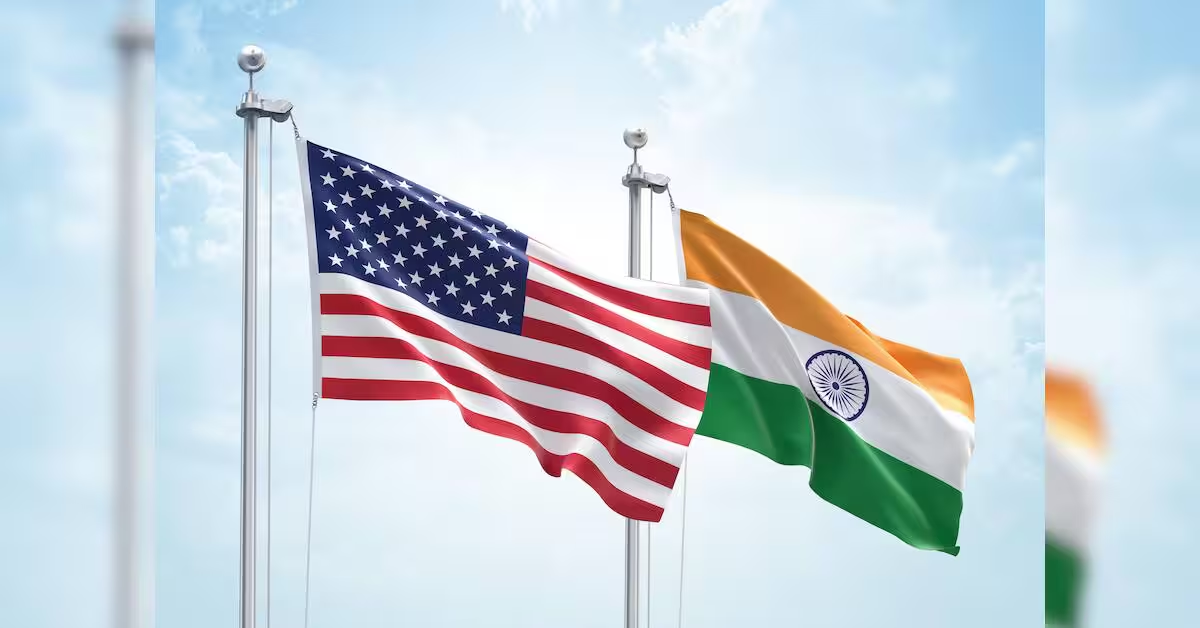
The Democratic Party’s sweep of the United States Congress in the midterm elections, a result of the backlash against US President Donald Trump’s Republican Party, has provided New Delhi new channels of communication.
After Wednesday’s verdict, New Delhi is considering reviving parallel dialogue with the Democrats, especially on issues that are crucial to India: Immigration, trade and energy. Officials in South Block feel there would be more manoeuvring space now in Washington DC as institutional checks will kick in to curb the second Trump presidency’s penchant for unilateralism. But they are wary of the considerable power Trump can still wield.
South Block feels Congressional restraint may help bring a resolution to the war in West Asia that could ease the pressure on energy costs. In addition, India sees opportunities emerging — especially in the data centre space — considering the strong opposition voiced by some prominent victors in the polls.
Indian diplomats and industry will also engage more actively with the US Congress on tariff and visa-related concerns, and step up outreach to important states in the US, sources in New Delhi said.
South Block will strive over the next two years to revive the bipartisan support that the India-US strategic partnership enjoyed from the turn of the millennium. Relations frayed in April-May 2025.
However, the midterm loss does not erode Trump’s executive authority or the White House’s hold over foreign policy. Trump could still sign executive orders, as he did in imposing tariffs and sanctions. But Wednesday’s results will ensure more oversight on policies, including on trade, since Democrats would chair House Committees.
While remaining cautious of the unpredictability of a bruised Trump administration, New Delhi, and other world capitals, could now also go slow on the investment pledges made to stave off tariffs.
Under a bilateral trade understanding announced in February 2026, India committed to importing approximately $100 billion worth of US products annually for five years, more than double the FY25 import level of $45.62 billion. In exchange for India’s import commitment, the US lowered reciprocal tariffs on Indian goods from 50 per cent to 18 per cent.
This comes just ahead of two proposed meetings between Trump and Prime Minister Narendra Modi. Trump is slated to be in Manila in mid-November to attend the East Asia Summit, where a meeting with Modi and other Asian leaders is likely. Modi is scheduled to attend the Group of 20, or G20, Summit in Florida in mid-December, where the two are likely to have a structured bilateral meeting on the margins of the Summit.
Sources pointed out that the Republican Party’s loss may not translate to an increased tolerance of India’s purchases of Russian oil, since the Sanctioning Russia and Iran Act (SRIA) received bipartisan support in the US Congress when it was passed in September.
Trump retains the leverage to still impose higher tariffs on India under that law, and there is also the threat of tariffs from ongoing investigations under section 301 of the US Trade Act of 1974, the Trump administration’s latest route to resurrecting its tariffs.
However, several of these decisions will now be open to Congressional scrutiny.
According to US-based think tank, Hudson Institute, Democrats have signalled their intent to undermine Trump’s dominance of trade policy while reclaiming the prerogatives of the legislative branch, and have already proposed ways to reclaim control over trade policy.
Trump’s admission that the cost of fuel was a major factor in the Republican loss, and his emphasising the importance of Venezuelan oil, could open the door for a more transactional diplomacy. US Secretary of State Marco Rubio’s visit to Jamnagar last month, where he toured the Reliance Industries’ refinery, assumes significance in this backdrop.
There could be opportunities for India as well. The Democrats, including in Texas and Georgia, made their opposition to data centres part of their election campaigns and called for tougher regulations. In Texas, Gina Hinojosa, elected as the first Democratic governor in more than three decades, repeatedly called for an immediate moratorium on data centre development, and accused developers of “raising our utility rates and depleting our water.”