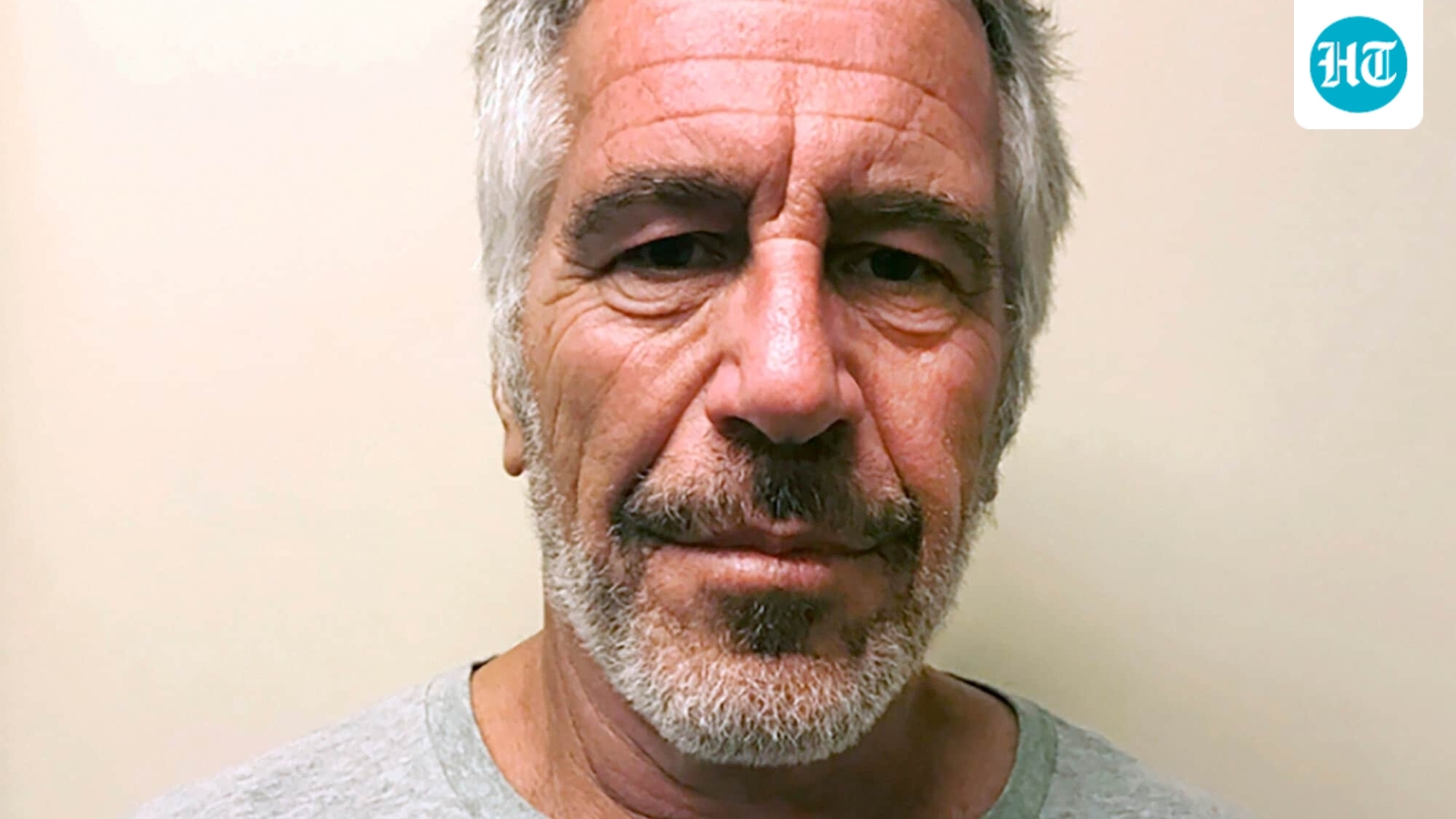
A forensic scientist, Michael Freeman, who spent a year studying Jeffrey Epstein’s autopsy records has questioned the official finding that the convicted sex offender died by suicide in jail in 2019. Freeman says injuries on Epstein’s neck and body are more consistent with homicide by strangulation and may point to a struggle before his death, according to The New York Times.
However, the official investigation concluded that Epstein died by suicide, and several investigations have found no evidence that anyone else was involved.
What Michael Freeman says
According to The New York Times, Dr Michael Freeman had one thought when he first saw a photo from Epstein’s autopsy: “Wait a minute, that doesn’t look like a hanging mark.”
As per the report, a textbook hanging leaves a smooth, consistent line on the neck that slants to a peak. Freeman says Epstein’s mark was deep and ragged, and it branched into a Y-shape on one side.
Freeman spent a year studying the autopsy file, which was given to him by Epstein’s brother, Mark. He presented his findings on Monday at the Middle Temple, a London legal society. He argues that injuries on the body suggest there was a struggle, which goes against the medical examiner’s findings.
Also read: DJ John Summit’s tour bus involved in deadly Florida crash, driver dies after collision
Freeman used the account of the jail employee who found Epstein’s body. The employee said Epstein’s rear end was about an inch above the floor. Freeman then created 3-D models using Epstein’s body measurements and autopsy photos. He said strangulation from behind could better explain the injuries, including fingernail marks above the neck mark, a scrape at the base of the neck and fresh bleeding in the left shoulder muscle, according to The New York Times. He also questioned why investigators did not test Epstein’s fingernails for DNA.
Freeman said he did not know who might have killed Epstein and was not trying to identify anyone. His main concern was how the investigation was handled. “All I’m interested in is, how did this get so sideways?” he said, according to The New York Times.
According to The New York Times, Freeman studies bias and error in death investigations. He is not a board-certified forensic pathologist, but he has doctorates in epidemiology and forensic medicine and teaches forensic medicine at two universities. He is also a fellow of the Faculty of Forensic & Legal Medicine at the Royal College of Physicians in the UK and edits its journal.
Also read: House Oversight seeks renewed Epstein probe, says government ‘failed’ survivors for decades