3 min readNew DelhiApr 25, 2026 10:07 PM IST
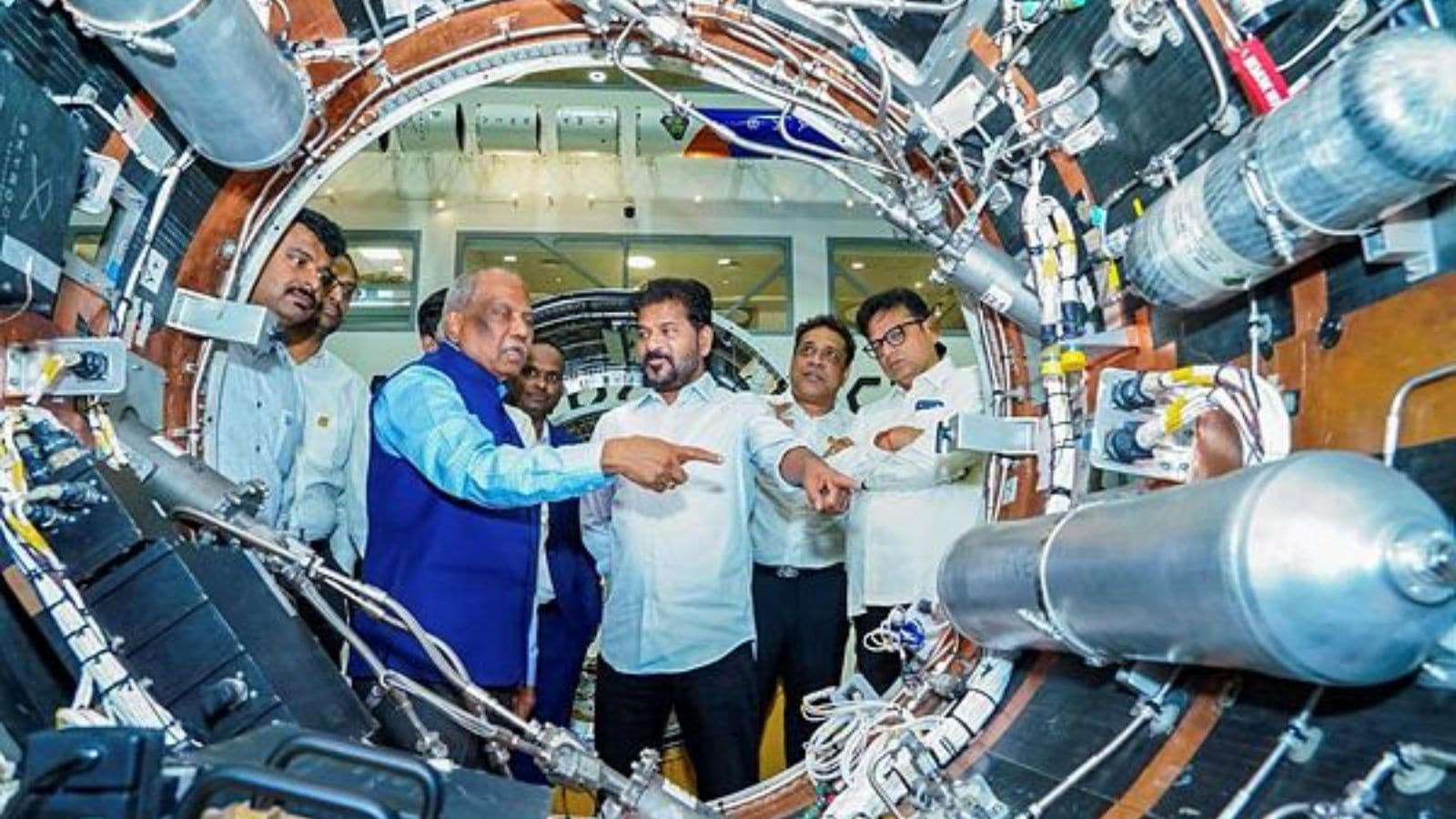
In a major boost to India’s space industry, Skyroot Aerospace is likely to become the first private company to launch an orbital space rocket. On Saturday, Skyroot flagged off the payload fairing for its Vikram-1 rocket in Hyderabad, with the launch of the rocket slated for later this year.
The payload fairing — the upper nose cone of the launch vehicle that houses the satellites — is now headed for India’s only spaceport in Sriharikota, where it will be integrated with the rest of the launch vehicle.

“We completed the most critical testing of Vikram-1 and are excited to begin integration and launch campaign activities next week at the spaceport towards this historic launch,” said Naga Bharath Daka, co-founder and COO, Skyroot Aerospace. Launch campaign is the period before a launch when the vehicle is integrated, tested and prepared.
Telangana Chief Minister A Revanth Reddy, also present at the flag-off event, said that it was a key milestone in the state’s pursuit of becoming a global leader in the aerospace sector.
Telangana is among a handful states with their own space policy — the first step towards creating space manufacturing hubs, such as the launch vehicle hub in Tamil Nadu and a satellite hub in Gujarat.
The launch of India’s first privately manufactured PSLV (polar satellite launch vehicle) — ISRO’s workhorse launcher — is also likely to take place this year.
The Vikram-1 launcher
Among Skyroot’s many small launch vehicle projects, Vikram-1 is a multi-stage launch vehicle with solid and liquid fuel-based engines designed for launching satellites weighing up to 350kg to low earth orbit. The low earth orbit is the region of space from 160 km to 2,000 km above the surface of Earth. The number of satellites being launched in this region has skyrocketed in recent years, with many being the Starlink communication satellites.
Story continues below this ad
What makes Vikram-1 different is that the rocket is made of carbon composite instead of metals, and houses a 3D-printed indigenously made engine — making its manufacturing and assembly easier, quicker and cheaper.
The launch vehicle has been named to honour Dr Vikram Sarabhai, considered to be the father of the Indian space programme, and its propulsion systems honour several other scientific greats — the solid propulsion system is called Kalam, the liquid Raman, and the cryogenic Dhawan.
“The launch of this orbital rocket will mark a major milestone for India’s emerging private space-tech industry. With Vikram-1, we aim to open up space by enabling on-demand satellite launches for a fast-growing global market,” said Pawan Kumar Chandana, co-founder and CEO, Skyroot Aerospace.
Skyroot was also the first private company to carry out a single-stage sub-orbital flight in 2022, followed by another company, Agnikul. A sub-orbital flight is launched at a slower speed than the orbital velocity, so it reaches outer space but cannot get into an orbit around Earth.