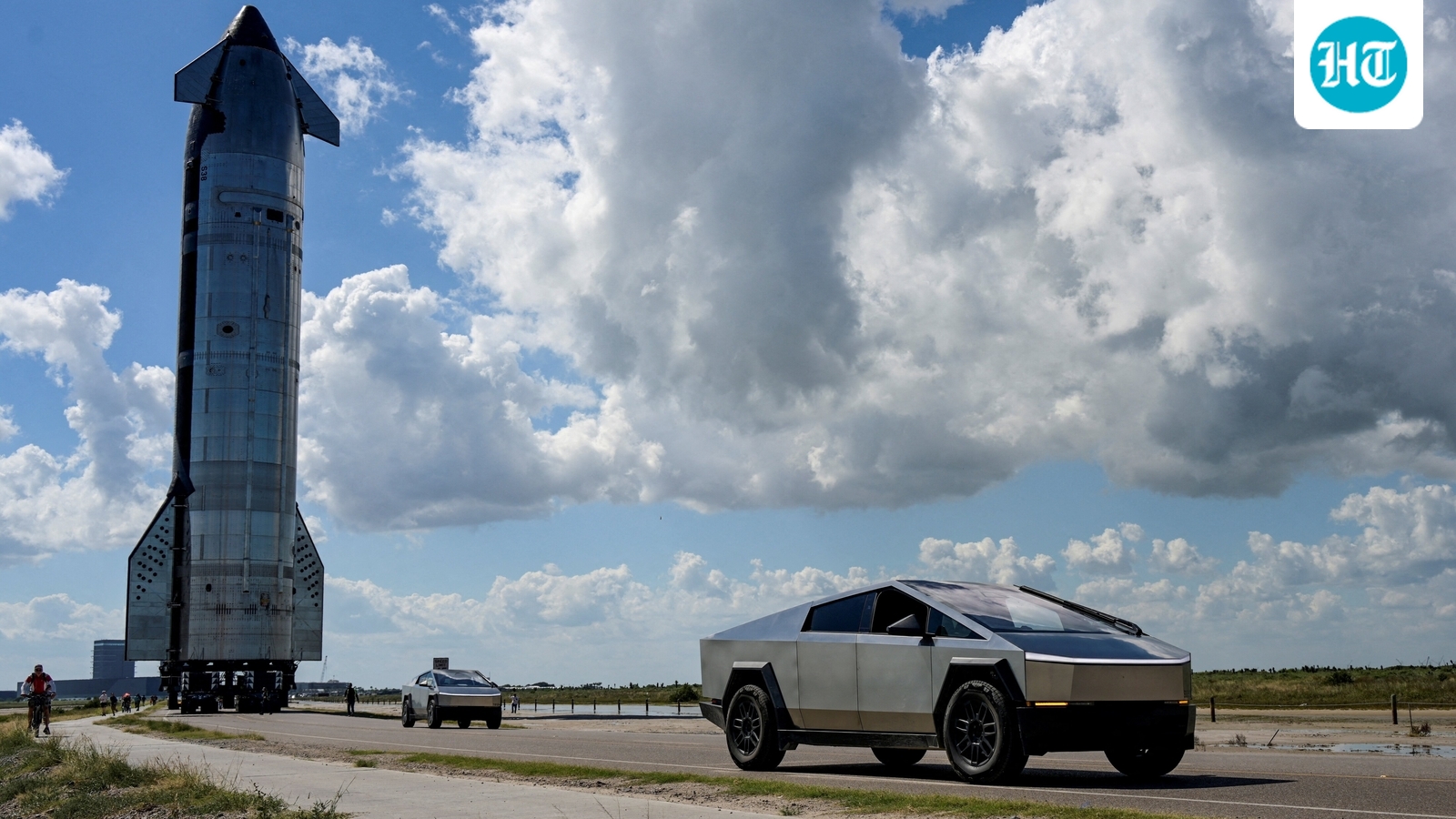
Elon Musk said that a merger between SpaceX and Tesla would be a “good idea”, adding that special committees had been formed to discuss the possibility. If the deal goes through, the combined company could be worth around $3.5 trillion, making it one of the most valuable companies in the world.
Shares of the space and technology company rose 8% in extended trading following the news. Tesla shares also gained 2% after trading slightly lower for several weeks.
Musk says SpaceX-Tesla merger is ‘good idea’
Speculation about SpaceX acquiring Tesla has grown in recent weeks. Last week, Barclays suggested that an announcement could come before Tesla’s annual meeting in December.
Musk confirmed the discussions publicly for the first time, telling investors during a conference call, “I think it would be a good idea, but it’s really up to the special committees of both companies…Because I’m a conflicted party, I can’t actually be in the discussions of the special committees,”.
He added that the committees had been formed at shareholders’ request. Shareholders would ultimately have to approve any merger.
“I do think there’s a lot of merit to combining the companies as we are pretty much in the superintelligence singularity, and there’s a lot to be gained from cooperating on developing superintelligence software, chip design, the Terafab obviously, robotics, mass-to-orbit with the Starmind constellation, connectivity,” he said.
Why Musk would merge SpaceX and Tesla
Tesla, which makes electric vehicles, and SpaceX, which develops rockets and space technology, were once viewed as separate businesses. However, their operations increasingly overlap as Musk expands into artificial intelligence, robotics, advanced manufacturing, satellite communications and computing infrastructure.
Bringing the companies together would create a single business spanning AI, energy, robotics, communications and transportation, both on Earth and beyond. The move would align their operations with Musk’s long-term vision for an integrated technology and manufacturing empire.
A merger could also make it easier to take decisions. Many of Musk’s projects involve multiple companies and require approval from separate boards and shareholders. Combining the businesses could give management greater flexibility to direct funding, engineering expertise and infrastructure towards projects it considers the most promising.
Musk has long argued that he needs greater control over Tesla to advance its AI and robotics plans. He owns nearly a fifth of Tesla and has voting control at SpaceX. A merger could bring his influence over the two companies under one structure.
Tesla shareholders would gain exposure to SpaceX’s expanding Starlink broadband service, launch business and future space projects. SpaceX investors, meanwhile, would gain a stake in Tesla’s vehicle manufacturing, energy storage, autonomous driving and robotics operations.
However, critics argue that a combined company would expose investors to a wider range of technological, regulatory and operational risks. Some of these challenges have little connection to one another.
Challenges to the possible merger
Geopolitical concerns and regulatory scrutiny could pose major obstacles to the deal.
SpaceX is a key contractor for the US military, intelligence agencies and NASA. Tesla, on the other hand, has significant ties to China through its Shanghai factory, which plays a major role in vehicle production and sales. Combining the businesses could draw greater scrutiny from US regulators, national security officials, and authorities in Beijing.
Shareholder approval and corporate governance would also present challenges. Investors would need convincing that bringing the two businesses together would create more value than allowing them to operate independently. Questions over conflicts of interest, voting rights and how capital would be allocated are also likely to arise.
Execution would be another concern. Starship, robotaxis, humanoid robots, AI data centres, mobile communications and orbital infrastructure all involve substantial costs and complex technical challenges.
A merger would not eliminate these risks. Instead, it would bring them together within a single company.
With inputs from agencies