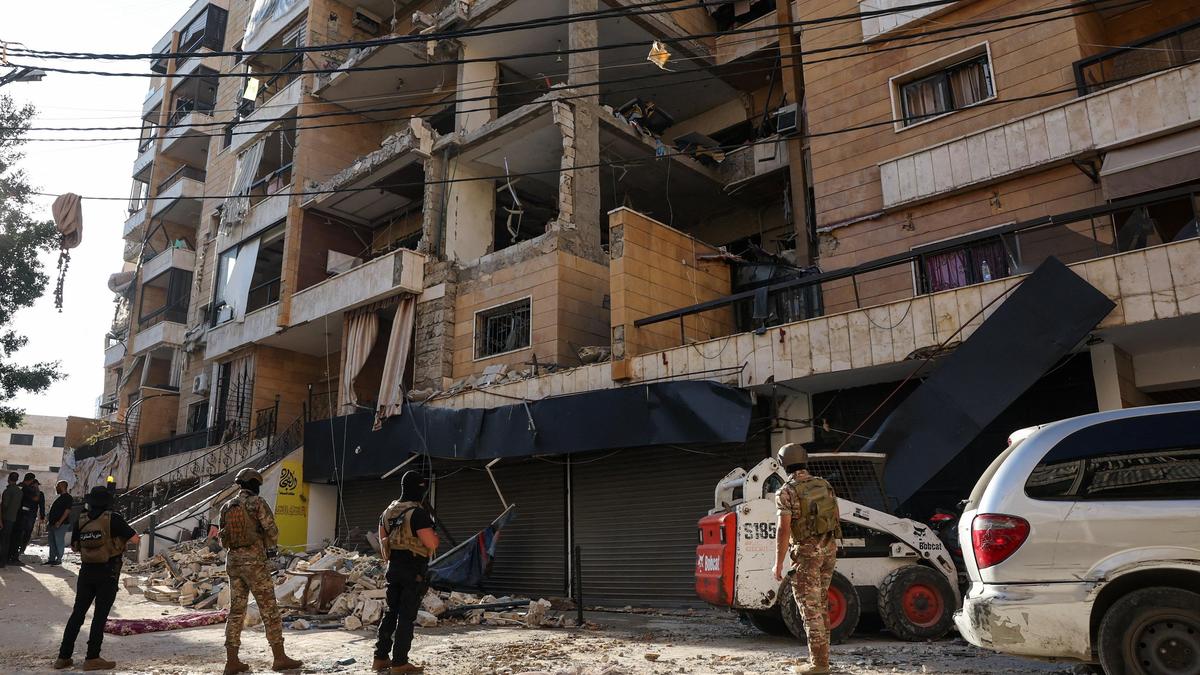

Oil prices were up more than $2 a barrel on Monday (June 8, 2026) after Israel on Sunday (June 7) launched renewed strikes on Lebanon despite a truce between the two countries, eroding hopes for an end to the wider war and a restart to crude flows through the Strait of Hormuz.
U.S. crude futures were up $2.10, or 2.32%, at $92.64 per barrel as of 0013 GMT, while Brent crude futures rose $2.33, or 2.5%, to $95.42 a barrel.
That erased most of the losses from Friday (June 5), when prices had fallen on mounting hopes of a de-escalation in the U.S.-Iran conflict, which started with U.S. and Israel strikes on Iran in February.
The latest strikes appeared to present yet another barrier to a U.S.-Iran peace deal and the reopening of the Strait of Hormuz, a key conduit for global oil and gas flows. Iran has made a ceasefire with Lebanon a condition for a peace deal with Washington.
Iran retaliated for the Beirut strikes on its ally Hezbollah by launching missiles at Israel. U.S. President Donald Trump said he would tell Israeli Prime Minister Benjamin Netanyahu not to retaliate at Iran.
Israel had invaded Lebanon in March after Iran-backed Hezbollah fired rockets and drones across the border. Lebanon and Israel said on June 3 that they had agreed to a ceasefire following negotiations in Washington.
The two countries had previously agreed to a cessation of hostilities in April but violence continued.
The wider war has been on pause since the U.S. and Israel halted their attacks on Iran in early April, but with Tehran continuing to block most shipping through the Strait of Hormuz.
Amid the resulting supply crisis, OPEC+ on Sunday (June 7) agreed its fourth increase in oil output in four months. But analysts said the decision would have little impact since most OPEC+ members could not meet their output targets because of the Hormuz closure or, in the case of Russia, infrastructure attacks that have eroded its production capacity.
“In the current market, the physical impact of such a decision would be close to zero,” Rystad Energy head of geopolitical analysis Jorge Leon said in a note.