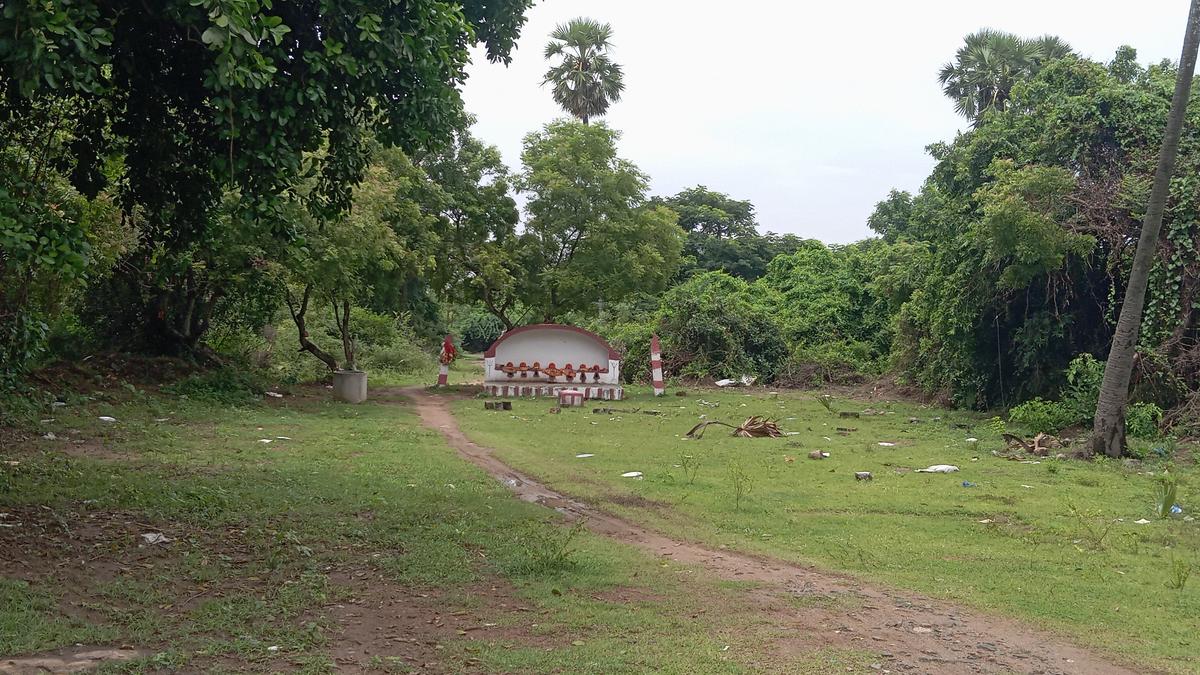

Residents and conservationists have sought protection for the four-acre Agaramthen Sacred Grove near Agaramthen Wetland by declaring it a Biodiversity Heritage Site (BHS), citing its rich biodiversity and growing threats from urbanisation.
Located about eight km southeast of Tambaram Junction, the sacred grove is one of the few surviving sacred groves in the Greater Chennai region. Revered as the abode of Kanni Amman, the grove also supports local communities, including the nearby Irula settlement.
A recent biodiversity survey recorded 222 species in the grove, including 102 plant species, 60 birds, 23 reptiles and amphibians, seven mammals, and 30 butterfly species.
The study was conducted independently by conservationists Thirumurugan Vedagiri, a resident of Agaramthen, along with Patrisha, Krishnaveni and Karthy, under the guidance of G. Gnanasekaran, assistant professor, Department of Botany, Madras Christian College and Nehru Prabakaran of the Wildlife Institute of India.
“The grove is facing increasing pressure from vegetation clearing, garbage and plastic dumping, pollution, and habitat fragmentation. Surrounding agricultural and open lands are also increasingly being converted into plots, which puts further pressure on the remaining green spaces,” said Mr. Vedagiri.
Researchers said the grove’s biodiversity has not been comprehensively documented earlier and that the latest survey provides important baseline information for conservation.
Recalling his work in the Sendiraikillai sacred grove in Chidambaram district, Mr. Gnanasekaran said the site was once revered by the local community, which protected the forest patch around the deity. Over the years, however, the grove became associated with unlawful activities involving some youngsters, drawing parallels with the situation in Agaramthen.
“As Chennai becomes increasingly urbanised, these small forest patches must be protected to preserve the biodiversity, and also to sustain the cultural traditions and community practices associated with them,” he said.