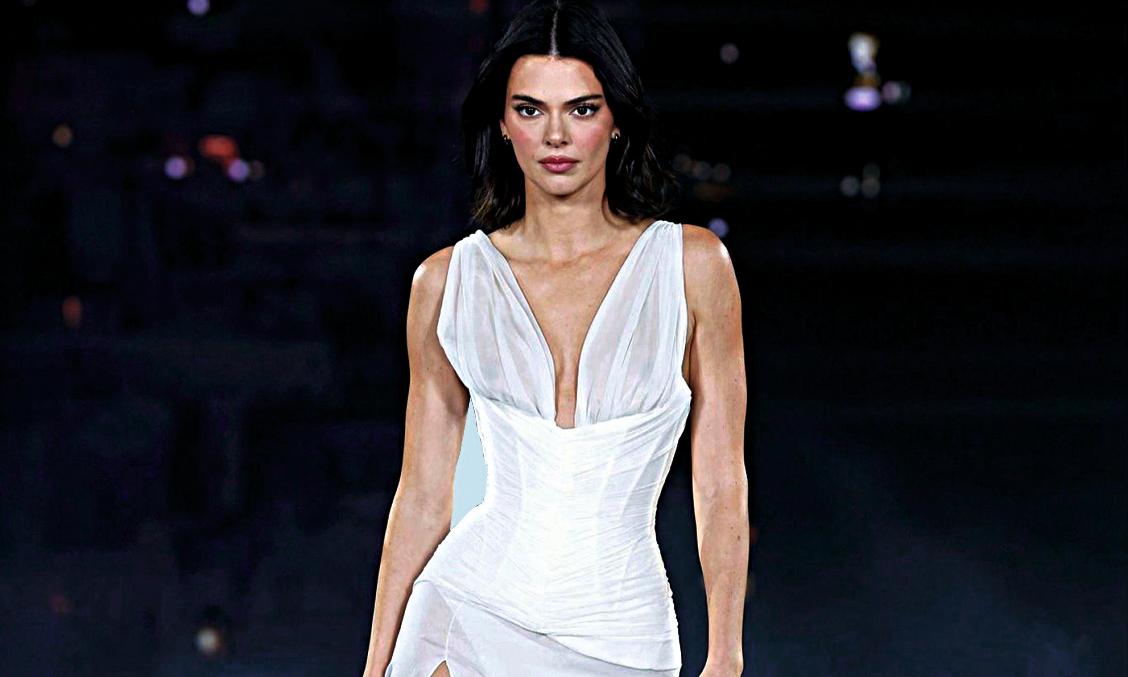
Runways have always reflected changing ideas of beauty, but the latest shift emerging from Paris Fashion Week feels unusually quiet. Instead of dramatic curves and hyper-feminine silhouettes, many designers are embracing a pared-back look built around softer tailoring, sheer fabrics, and visibly braless styling. Campaigns from Calvin Klein and other minimalist labels have amplified the same message: smaller busts and “flat” silhouettes are no longer being hidden or corrected. They are being presented as aspirational, effortless, and modern.
Less Structure, More Ease
The aesthetic marks a notable departure from the heavily sculpted ideals that dominated fashion advertising for decades. In editorials and luxury campaigns, the body is increasingly styled as natural rather than enhanced. Oversized shirts fall loosely over the torso, translucent tanks are worn without padding, and sharp suiting leans into androgyny instead of overt sex appeal. The visual language suggests confidence without construction, reinforcing the idea that less can now be more.
Retail Still Tells Another Story
Yet outside the runway bubble, the reality of lingerie shopping tells a very different story. Walk into a mainstream lingerie retailer or browse online collections from any lingerie brand, and push-up bras still dominate the conversation. Thick padding, moulded cups, and cleavage-enhancing designs continue to occupy prime retail space, even as high fashion celebrates a flatter silhouette. The contradiction reveals a wider tension between fashion imagery and the commercial systems that continue to shape how women are expected to look.
Fashion vs. Retail
Fashion designer Babita M. believes the divide comes down to how quickly different parts of the industry evolve. “High fashion tends to move instinctively; it reflects cultural moods, often before the rest of the industry is ready to follow,” she says. According to Babita, the rise of “flat” aesthetics reflects a broader move toward comfort and honesty, where the body is no longer being reshaped to fit one rigid idea of femininity. “Fashion is pointing to where we’re going, while retail is still holding on to where we’ve been,” she adds.
The Enhancement Culture
Much of that lag can be traced to decades of marketing that equated femininity with enhancement. For years, padded bras were sold not simply as products, but as tools for confidence, desirability, and empowerment. Advertising campaigns framed cleavage as aspirational, encouraging women to see augmentation as a necessity rather than a styling choice. Those messages became deeply embedded in consumer habits, making it difficult for the retail market to pivot overnight.
Changing Consumer Priorities
“The lingerie industry spent years convincing women that shaping the body was part of getting dressed,” says fashion designer Dipti Kumar. “Now consumers are beginning to ask whether comfort and authenticity can be just as powerful.” That shift is becoming increasingly visible among younger shoppers, many of whom are rejecting rigid underwires and heavy padding in favour of soft bras, bralettes, and unstructured basics.
Babita says that what appears to be consumer demand is often the result of years of conditioning. “Women have been told subtly but consistently that enhancement is desirable,” she explains. “So what looks like preference is often something that’s been carefully cultivated.” At the same time, she notes that women are increasingly prioritizing comfort, versatility, and ease, especially after years in which wellness and practicality reshaped fashion choices across categories.
A Slow Retail Shift
Some brands are beginning to respond. Wireless collections, second-skin fabrics, and minimally structured bras are becoming more common, particularly among newer labels targeting Gen Z consumers. But industry experts say many established companies are adapting cautiously, adding softer silhouettes to collections while still centering their marketing around enhancement. In many stores, bralettes remain secondary products beside rows of push-up designs that continue to define mainstream merchandising.
The disconnect highlights a familiar pattern within fashion: cultural change often appears first in imagery before it transforms retail behaviour. Luxury fashion can afford to experiment with evolving body ideals because it sells aspiration and identity. Mass-market lingerie, however, depends on predictable consumer habits and established purchasing patterns. As a result, retail tends to move more slowly, especially when older beauty standards still generate reliable profits.
Future of ‘Flat’ Aesthetic
For now, the “flat” aesthetic exists in an unusual space. On runways and in campaigns, it signals modern ease and understated confidence. In stores, however, the dominant message still leans toward lift, shaping, and enhancement. Whether the lingerie industry fully embraces the shift remains uncertain, but one thing is clear: fashion has already started redefining what femininity can look like, even if retail has not completely caught up.