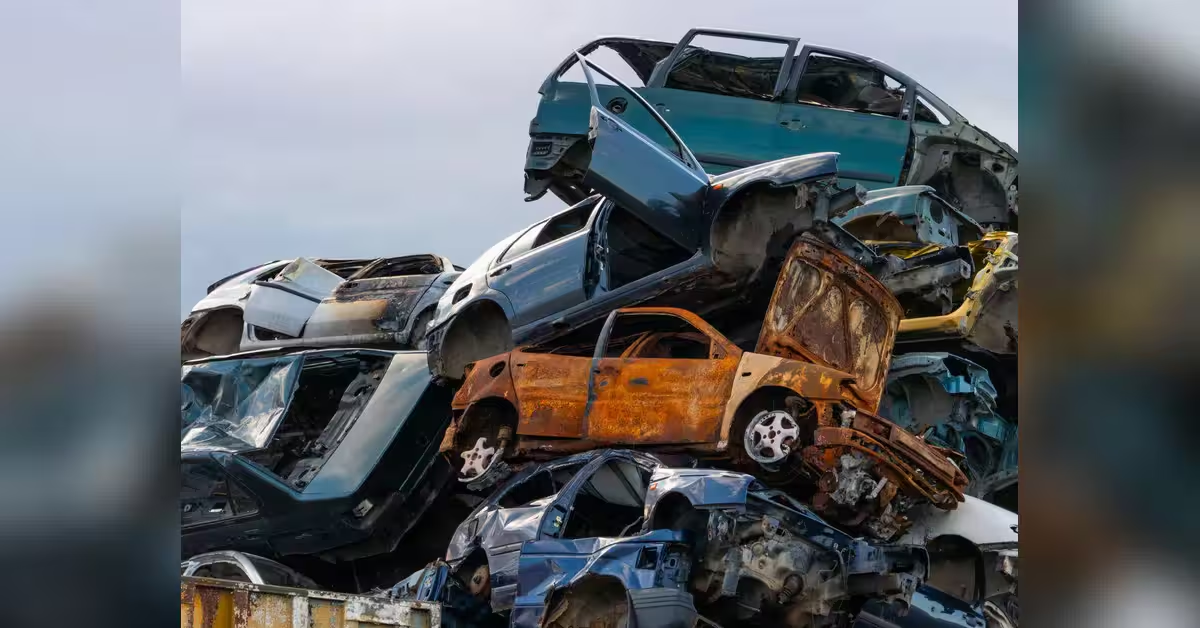
The Union Environment Ministry has amended the vehicle scrapping rules to ensure that automakers do not have to record estimated future vehicle recycling costs as liabilities in their accounts, several months after the Society of Indian Automobile Manufacturers (Siam) warned that the rules could create a ₹25,000 crore burden on the industry.
The amendment to the Environment Protection (End-of-Life Vehicles) Rules, 2025, was notified on November 20, according to a notification reviewed by Business Standard. It clarified that Rule 4(6) — which deals with a producer’s responsibilities when it shuts down operations — will apply only when a manufacturer permanently ceases operations. It will not apply to automakers that continue to operate in India.
The change addresses an industry concern over the financial implications of the 2025 vehicle scrapping rules when read alongside Ind AS 37, the accounting standard that deals with provisions, contingent liabilities and contingent assets. Automakers feared that this combination (the 2025 rules and Ind AS 37) could require them to recognise estimated costs of recycling vehicles sold in previous years as liabilities in their accounts.
The Environment Protection (End-of-Life Vehicles) Rules came into force on April 1, 2025, to ensure that vehicles reaching the end of their useful lives are scrapped in an environmentally sound manner. Under the rules, automakers must meet annual scrapping targets, which are decided on the basis of the number of vehicles they sold 15-20 years ago.
In a letter to the ministry in the first half of this year, SIAM had warned that once the Central Pollution Control Board (CPCB) notified the rate of environmental compensation for non-compliance with the rules, automakers could be required to make substantial financial provisions under Ind AS 37.
“Once the environmental compensation (EC) cost is notified by CPCB (Central Pollution Control Board), automobile manufacturers may be required to make substantial cumulative financial provisions under the accounting standards (IND AS 37). Preliminary estimates indicate a potential one-time industry impact of approximately ₹25,000 crore on a gross basis, and around ₹9,000 crore on discounted basis, in FY2025-26,” SIAM had said in the letter.
The amendment notified on November 20 made it clear that the provision would come into operation only when an automaker permanently shuts down.
The November 20 notification stated: “Provided that the provisions of sub-rule (6) shall come into operation only upon permanent cessation of operations by the producers and shall not apply to producers that continue to operate:”
It also sets out what manufacturers must do when they permanently close their operations. They will have to share details of vehicles introduced in the market over a specified period with the CPCB, which will then determine their outstanding Extended Producer Responsibility (EPR) obligations.
The notification states: “Provided further that at the time of permanent cessation of operations, the producer shall inform the Central Board about the vehicles introduced in the market in the preceding fifteen years for transport vehicles or twenty years for non-transport vehicles, as the case may be, as per the format provided by the Central Board in this regard and the Central Board shall, thereafter, determine and inform the Extended Producer Responsibility obligations in respect of the said producer, as on the date of cessation of operations…”
This means that when an automaker permanently shuts down, the CPCB will calculate its outstanding EPR obligations based on the vehicles it sold over the preceding 15 years for transport vehicles and 20 years for other vehicles. The automaker will then have to estimate the cost of meeting these obligations, including the cost of buying EPR certificates. It will also have to record this estimated amount as a liability, or provision, on its balance sheet.
Under the rules, automakers can meet their scrapping targets by purchasing EPR certificates from registered vehicle scrapping facilities through a centralised online portal. These facilities generate certificates based on the weight of steel recovered from vehicles they scrap. Automakers can buy these certificates to meet their EPR obligations without having to scrap the vehicles themselves. The cost of purchasing the required certificates would form part of the automaker’s estimate of its financial liability.