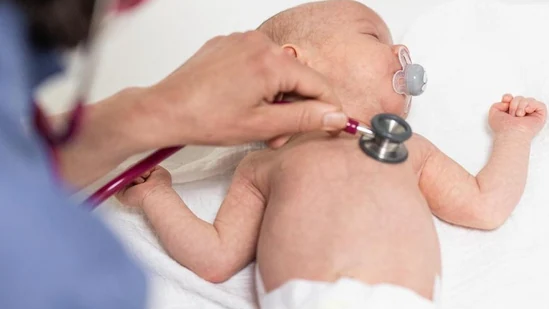
The baby was nine weeks old, brought in for what looked like an ordinary cold: a blocked nose, a small cough, a little fever, two days of it. By that evening she was breathing too fast to feed, her chest drawing in under the ribs with each breath. The sniffle had turned into bronchiolitis, and she needed a few days of hospital stay. She did well in the end, as most babies do. But her mother said the thing we hear every season: “I had no idea a cold could turn like that.”
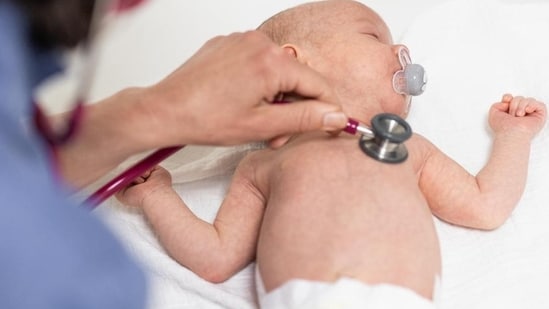
That virus was Respiratory Syncytial Virus (RSV), and it is one of the commonest infections of early childhood. Most parents have never heard of it. Almost all children have had it at least once by their second birthday. It spreads easily through cough, sneezes, kisses and a baby most often catches it from an older sibling who has brought a cold home from school or play. In older children and adults, RSV is usually just a cold: a runny nose, a cough, sometimes a mild fever and it gets better on its own in a week or two, though the cough can linger.
The very young are different, especially babies under one. Their airways are narrow and get easily blocked and their immune system has not met this virus before. So, the infection can travel from the nose down into the chest, where it swells and clogs the smallest airways. That is bronchiolitis. It can also bring on croup (a harsh, barking cough) or lead to pneumonia. For most babies it runs a mild course. But in some, the breathing turns wheezy and laboured, the oxygen in the blood can fall (doctors call this hypoxia) and they need hospital care. In rare cases, it is life-threatening.
We see it every year. In many parts of India, from the monsoon into winter, a certain kind of baby comes in: a few weeks or months old, feeding poorly, breathing too fast, the parents frightened that an ordinary cold changed overnight. Around the world, RSV is the commonest reason babies are admitted to hospital with a chest infection. The global figures are sobering. The World Health Organization estimates that RSV causes about 33 million lower respiratory infections and 3.6 million hospital admissions in children under five each year and close to 1,00,000 deaths. In the first year of life, it puts far more babies in hospital than flu does.
Here is the reassuring part. Most colds, including most RSV, stay mild and get better at home within a week or two. The trouble, when it comes, often appears a few days into the illness, as it moves to the chest. So watch the chest, not the tissues. The warning signs are worth remembering. There are some signs which parents must look for and take their babies to a doctor the same day:
- Breathing is fast, or looks like hard work
- Skin sucks in between or under the ribs with each breath
- Nostrils flare, or there is a grunt at the end of each breath
- Feeding drops off
- Baby is unusually drowsy or floppy
There are some other signs which the parents should look out for and take the baby to a hospital:
- Pauses in the breathing (this is called apnea)
- Lips, tongue or skin turn blue or grey. On brown and darker skin this is easy to miss, so check where it shows best: Palms, the soles, the gums, the lips and the inner eyelids
- Baby simply does not look right to you.
In May 2025, the World Health Organization (WHO) recommended that every country put in place a way to protect infants from severe RSV. One newer prevention option is nirsevimab. It is a long-acting antibody, given as a single injection, that helps protect a baby against severe RSV without waiting for the immune system to build its own defenses. It starts protecting almost immediately and the protection lasts around five months. In early national rollouts, it has cut babies’ risk of RSV hospitalisation by about 80%, though the impact varies by country, season and how many babies are covered. India’s drug regulator approved it in 2024, though availability, access and cost still vary.
When is the RSV season? Broadly from the monsoon into winter, though the timing varies by region and is less fixed in India than in colder countries. It tends to arrive a little sooner after the rains in the south and west, and later in the northern cold. Should every baby receive nirsevimab? Not as a routine, at least not yet in India. For high-risk babies it is worth a serious discussion with your paediatrician. For a healthy, full-term baby, it is a decision to make after discussing the risks, benefits, timing and cost with your paediatrician.
None of this is a reason to panic. RSV has been around far longer than we have, and the vast majority of babies come through it perfectly well. What matters is simple. Know the difference between a cold that will pass and one heading for the chest and do not wait to ask for help when something looks wrong.
(The views expressed are personal)
This article is authored by Dr Garima Mengi, founding partner, KinderCure and MedDivine Health.