
The results of this year’s midterm elections made it clear that Arab Americans are making a difference as an organized and empowered community. The first two Arab Americans of Egyptian descent have just been elected to federal posts — one to the Senate, the other to Congress — two of Lebanese descent are newly elected to Congress, another Arab American of Lebanese descent has been elected as a state treasurer, and a host of others from Palestinian, Lebanese, Sudanese, Somali, Syrian and Yemeni backgrounds won federal, state and local positions across the US.
These victories were supported by Arab Americans nationwide. They raised millions of dollars to support our candidates, worked to assist their campaigns and voted in their cities in record numbers to make these historic wins possible. As important was the extent to which the Arab American voters demonstrated an impressive level of convergence on the issues that were at stake this year.
Of course, the top concerns shared by most in the community were corruption and the economy. But between two-thirds and three-quarters of Arab Americans were motivated by the genocide in Gaza, the devastation of Lebanon and the impact of the anti-Arab and anti-Muslim bigotry on display in various campaigns, as well as efforts to silence free speech and debate on America’s unconditional support for Israel.
From the beginning, we faced a number of internal challenges that were a function of our incredible diversity
Dr. James J. Zogby
Building an Arab American community has never been easy. From the beginning, we faced a number of internal challenges that were a function of our incredible diversity. We shared a common heritage and a pride in our history and culture but we came from many countries and different religious traditions. These differences have sometimes been compounded by the fact that there have been separate waves of immigrants from Arabic-speaking countries, with each having its own distinct characteristics.
Throughout our history, there have been those who sought to divide us by emphasizing differences. This was especially intense during the Lebanese civil war or the period around the so-called Arab Spring. And while those who aggravated these internal fissures may have found some temporary success, none have been able to permanently disrupt the ongoing effort to build a community. This has especially been the case for younger Arab Americans, who have displayed both passion and determination in their advocacy and their penchant for finding common ground.
As I have noted, this effort to find unity was not always easy for those who had come to America fleeing wars and civil strife. But as the Rev. Jesse Jackson cautioned us back in the 1980s: “Do not import the divisions of the Middle East. Instead, take what you’ve learned here in America and export it to the Middle East.” This is what we did.
During the past five decades, when we created the National Association of Arab Americans, the American-Arab Anti-Discrimination Committee, the network of Arab American social service centers in cities across the country, the Arab American Institute or the Arab America Foundation, the logic was the same. We put aside differences and joined together to: advocate for our common concerns, combat defamation, discrimination and hate crimes, and protect our civil rights and liberties. In the process, we worked to promote and protect our shared culture and heritage, provide needed support for new immigrants and guarantee access to services. Politically, we empowered our community to play its rightful role in American life.
It is clear we are facing down and overcoming the internal and external obstacles we have been forced to confront
Dr. James J. Zogby
One of the negative consequences of our growth and increased capacity was that, as we developed as a community, we were confronted by external challenges represented by those who did not want Arab Americans to gain recognition or support. In too many instances, they worked to exclude us from politics and devoted resources and their considerable influence to have us marginalized or to defame us in our efforts.
Beginning in the 1980s, we were forced to deal with groups that worked to have Arab Americans excluded from foreign policy or human rights coalitions, fired from political campaigns or have our contributions rejected by candidates who were pressured to return “Arab money” from Arab American donors. These exclusionary tactics began with ominous warnings of “petrodollar influence,” later morphed into the danger of association with terrorism and then finally became naked anti-Arab and anti-Muslim bigotry. We met these challenges by further organizing and empowering our constituency, demonstrating our capacity to win and building alliances with other groups that shared our values and concerns.
While challenges remain, Arab Americans are winning elections and playing a leadership role in institutions that combat hate crimes, advocating for changes in US foreign policy, fighting for immigration reform and gaining recognition for the importance of Arab contributions to human history. It is clear we are facing down and overcoming the internal and external obstacles we have been forced to confront.
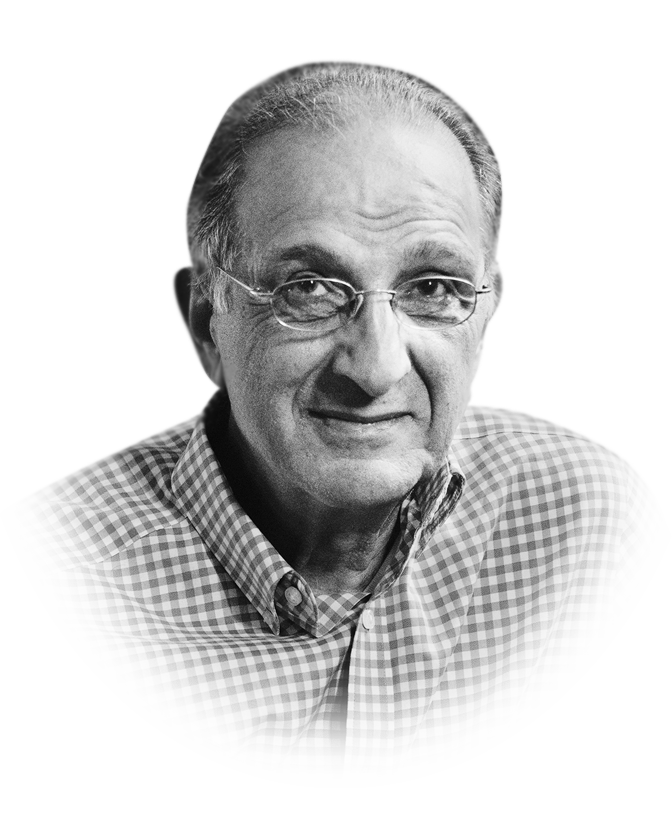
Dr. James J. Zogby is co-founder of the Arab American Institute. He has served in official roles in numerous presidential campaigns and is Director of Zogby Research Services.