
RIYADH: Saudi Arabia’s construction costs rose 2.2 percent year on year in September, driven by higher equipment rental, labour, material and energy costs, official data showed.
According to the latest report by the General Authority for Statistics, construction costs in the residential sector increased 2.1 percent year on year, while costs in the non-residential sector climbed 2.6 percent.
This comes as regional conflict threatens to disrupt supply chains and raise logistics costs.
In its October report, Knight Frank valued Saudi Arabia’s project pipeline at $2.07 trillion in the first half of 2026 and forecast construction output to rise to $190.4 billion this year from $179.4 billion in 2025, reaching $250.2 billion by 2030.
The consultancy warned that rising costs and logistical challenges could prompt developers to rephase or reassess projects to preserve commercial viability.
Saudi Arabia’s construction activity nevertheless expanded for a fifth consecutive month in September, according to the Al Rajhi Capital Saudi Construction Index compiled by S&P Global.
The seasonally adjusted index eased to 54.4 from 55.4 in August but remained above the 50-point threshold separating expansion from contraction.
In its latest report, GASTAT stated: “This increase (in the residential sector) was attributed to a 1.7 percent rise in the cost of basic materials, driven by a 3.5 percent increase in the prices of timber and joinery, as well as a 4.1 percent increase in the costs of renting equipment and machinery.”
In the residential sector, labor costs increased by 1.5 percent, while energy costs rose by 3 percent.
Munir Al-Daraawi, founder and CEO of Orla Properties, said the annual increase pointed to continued but moderate construction cost pressures.
He said: “The CCI’s annual increase suggests that construction cost pressures remain moderate. Against the scale of Saudi Arabia’s development ambitions, this is encouraging: developers need access to materials, labor and specialist services at costs they can reasonably plan for.”
The CEO added: “Costs alone cannot tell us how healthy the market is. What matters is whether projects can move forward within realistic budgets and meet demand from buyers and occupiers.”
Non-residential sector
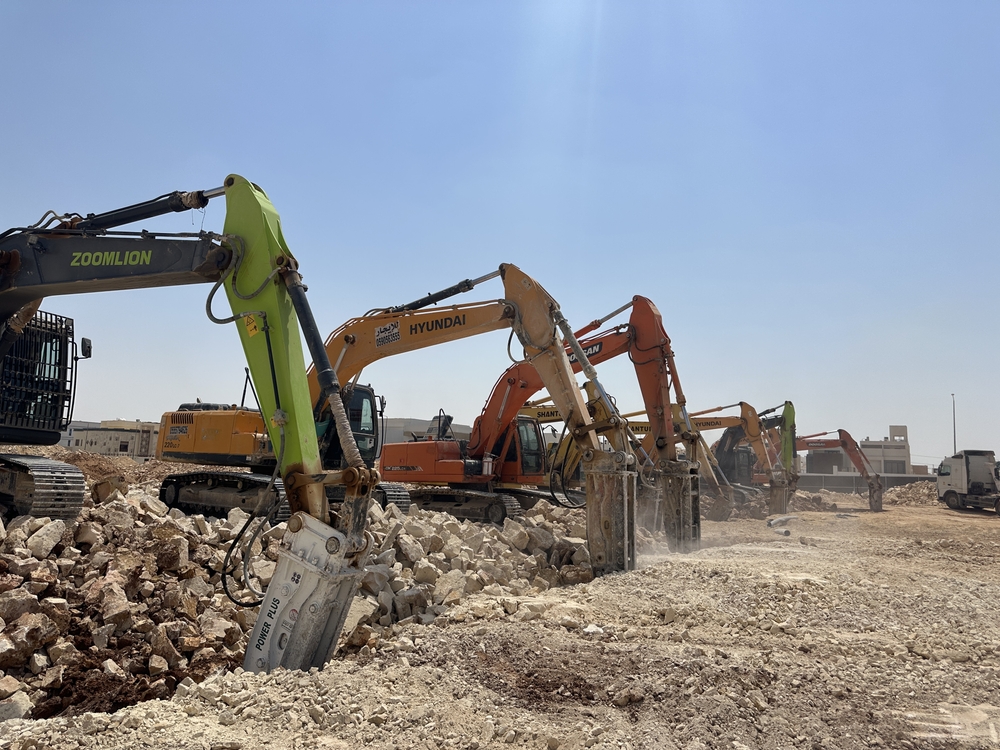
The rise in construction costs in the non-residential sector was driven by a 5.8 percent increase in equipment and machinery rental costs, including a 7.2 percent increase for equipment and machinery rented with an operator.
Labor costs rose 2 percent, and energy costs increased 3 percent. Basic materials costs rose 1.8 percent, with other building materials increasing by 4.3 percent and timber and joinery by 2.1 percent.
Monthly analysis
The overall CCI was unchanged in September compared with August, as costs remained stable in both the residential and non-residential sectors.
“While cargo has been rerouted through Red Sea ports and materials that would normally arrive by sea are being trucked in, the flat-to-modest increase readings month-on-month suggest contractors and suppliers have been quietly absorbing much of the extra freight and input cost rather than passing it on to clients,” Rajesh Duneja, a partner at Arthur D. Little Middle East, told Arab News.
He added: “This would not be permanent, though. If the disruption at the Gulf’s chokepoints drags on, those costs will eventually find their way into project budgets.”
Al-Daraawi said September’s stability was a positive short-term signal, although the trend needed to be sustained before drawing broader conclusions about supply chains or efficiency.
“The practical opportunity for developers is to use this period to strengthen procurement plans and maintain sensible budget contingencies,” he said.