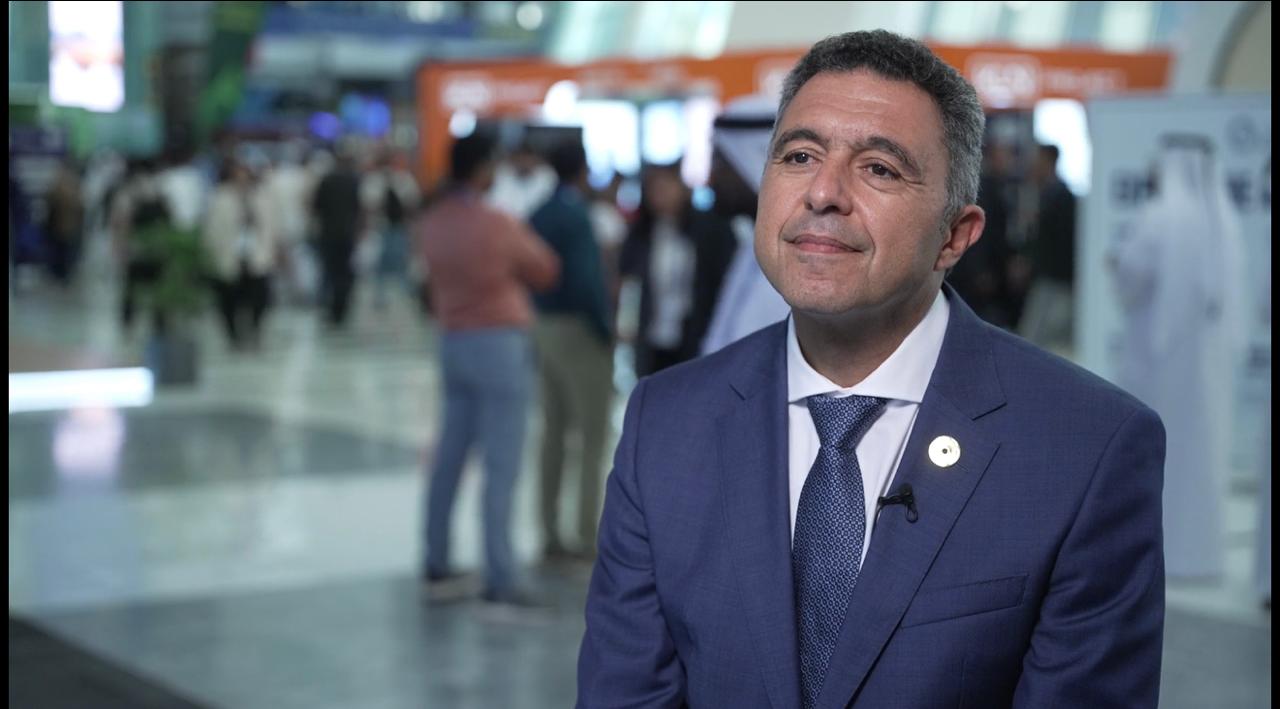

DUBAI: The Gulf’s AI story is usually told in gigawatts and billions of dollars. Walid Sheta, Schneider Electric’s president for the Middle East and Africa, thinks the number that matters more is distance: how far a data centre sits from the factory that builds it.
“To build a data centre, you’d better have capabilities not only in engineering but also in assembly and manufacturing, close to where you build the data centre,” Sheta told Arab News.
The pressure to build is real. PwC Middle East projects that data centre capacity in the region will triple, from 1 GW in 2025 to 3.3 GW within five years. In its Global Data Centre Outlook, PwC says the region could attract $1.1 trillion in cumulative data centre investment by 2050, the fastest growth rate in the world.
Every Gulf state is in the race. MEED Insight tracks more than 174 active and planned data centre projects across the six GCC countries, worth over $93 billion combined.
The pipeline runs from AI campuses in Saudi Arabia and the UAE to Ooredoo’s $1 billion expansion in Qatar, Kuwait’s first sovereign AI data centre, a $3 billion AI facility planned in Oman, and a $320 million data centre park in Bahrain.
The power stakes are just as high. The International Energy Agency reported this year that global electricity demand from data centres rose 17 percent in 2025, more than five times faster than overall demand, and expects it to double by 2030.
That is why speed and proximity matter, Sheta told Arab News. Schneider designs and builds prefabricated units at application centres across the region, delivering them “in every country where we operate.”
It also runs a prefab factory with a partner, usually co-invested, “to design and manufacture very, very rapidly the IT pods that our customers want.”
Building locally also offers a buffer against supply risk. PwC models a scenario with tighter export controls on advanced chips and limits on critical raw materials.
In that scenario, the Middle East is the most exposed region in the world, with cumulative data centre investment falling 29 percent.
From server halls to factory floors
The second part of the strategy is software. On Oct. 5, Schneider agreed to acquire US industrial software firm PTC in an all-cash deal valuing PTC’s equity at about $22.6 billion, according to the announcement filed with the US Securities and Exchange Commission.
The companies expect to complete the deal by the third quarter of 2027.
“Throughout the product lifecycle of any factory, PTC gives the manufacturer an excellent AI-powered overview, from the design to the afterlife of the product,” Sheta said. “Imagine that applied to all the industries in the Gulf countries.”
The appetite is there. Sheta said that when Schneider polled its Gulf customers, half said AI would change their production.
Rockwell Automation’s 2026 State of Smart Manufacturing report ranks the Middle East as the most committed region globally to digital transformation, with manufacturers spending close to 30 percent of operating budgets on industrial technology.
The gap between appetite and results
Ambition is not the same as results. Rockwell’s global survey of 1,560 manufacturers found only 43 percent of the data they collect is used effectively.
Schneider’s own 2026 survey of 1,453 manufacturers in 14 countries, including Saudi Arabia, found just 13 percent have AI embedded end to end in their core operations. The top barriers were skills gaps and legacy systems.
Closing that gap is what Sheta is betting on: build the infrastructure close to home, then connect it to software that follows a product from design to retirement.
“They are already ready to welcome such a new technology in our region,” he told Arab News.