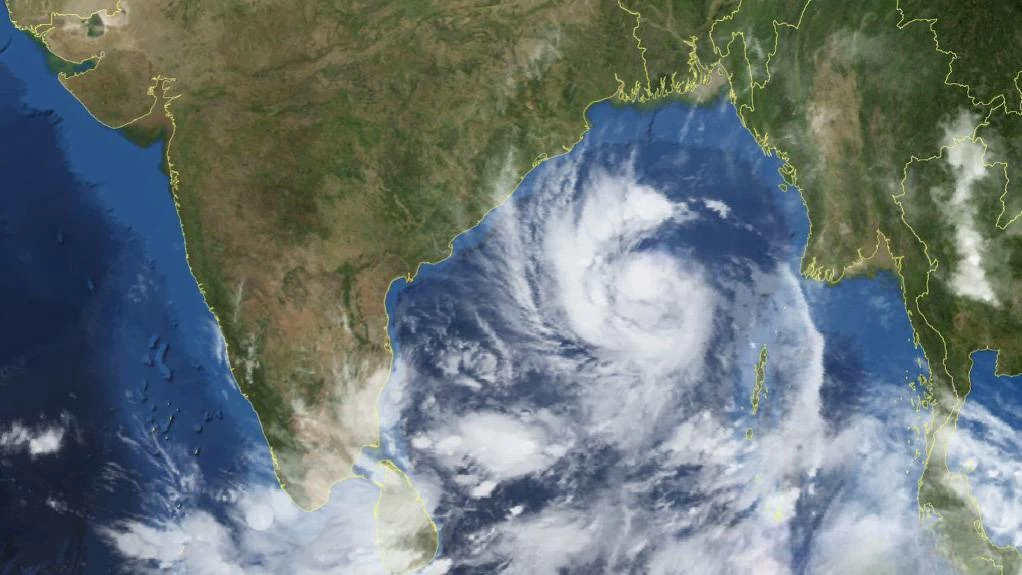

BHUBANESWAR: Thousands of people were evacuated along India’s eastern coast, and some train services cancelled, authorities said on Tuesday, one day before a severe cyclone was scheduled to make landfall, bringing gusting winds and heavy rain.
In neighbouring Nepal, authorities cautioned tourists against venturing into high altitude areas as they feared Cyclone Arnab could trigger torrential downpours, snowstorms and avalanches in the Himalayan region from Thursday night through Saturday.
The risks come at a time when the mountainous country is starting to recover from a deadly flash flood in August, which killed about 1,500 people.
Arnab, which formed over the Bay of Bengal, has intensified since Monday, India’s weather office said on Tuesday.
It is expected to make landfall in the southern coastal state of Andhra Pradesh by Wednesday morning, bringing strong winds and intense showers to parts of the state as well as neighbouring Odisha state.
Nearly 50,000 people had been moved to shelters from vulnerable areas by Monday night, out of 400,000 estimated to need evacuation, Prakhar Jain, Managing Director of Andhra Pradesh State Disaster Management Authority, told Reuters.
“Evacuation is continuing,” Jain added.
There have been no evacuations in Odisha so far, Rajesh Prabhakar Patil, Special Relief Commissioner of Odisha, told Reuters. The state had already announced closure of schools and colleges in five districts for Tuesday and Wednesday.
Televison showed waves crashing on deserted beaches and shuttered shops lining the streets along affected areas.
At least 12 trains were cancelled in the east, while rail services on 53 routes along the southern coast were suspended for Tuesday and Wednesday, regional railway authorities said in social media posts.
The Bay of Bengal is one of the world’s major regions for tropical cyclones, which makes India’s eastern coast particularly vulnerable to sea-linked weather disasters.